

The Definition of Courage: A Philosophical Journey
Courage, at its core, is more than just the absence of fear; it is a profound human virtue that manifests in the face of adversity, risk, or pain. This article delves into the philosophical definition of courage, tracing its evolution from ancient Greek battlefields to modern existential struggles. We will explore how thinkers from the Great Books of the Western World have grappled with its meaning, examining its intricate relationship with emotion – particularly fear – and distinguishing it from both vice and mere recklessness. Ultimately, courage emerges not as a simple act, but as a complex, reasoned, and often moral choice to act despite internal or external challenges.
What is Courage, Really? An Introduction to a Timeless Virtue
We often praise courage in tales of heroism: the soldier on the battlefield, the activist standing up to injustice, the individual facing a personal crisis with unwavering resolve. But what, precisely, are we praising? Is courage simply a lack of fear, or is it something deeper, something that engages our intellect and moral compass? The common understanding of courage often points to an act of bravery in the face of physical danger. However, a philosophical inquiry reveals a much richer tapestry, encompassing moral, intellectual, and even spiritual dimensions. To truly grasp its definition, we must journey through the minds of history's greatest thinkers.
Courage in the Ancient World: From Battlefields to Moral Fortitude
The foundational ideas of courage in Western thought largely stem from ancient Greece, where its definition was inextricably linked to the polis, warfare, and the pursuit of the good life.
Plato's Laches and the Socratic Inquiry
In Plato's dialogue Laches, Socrates famously questions what courage truly is. He challenges common assumptions, such as courage merely being steadfastness in battle. Through rigorous questioning, Socrates suggests that courage might be a form of knowledge – the knowledge of what is truly to be feared and what is not. It's not just about enduring danger, but about enduring it wisely and for a good reason. This elevates courage beyond a mere physical attribute to an intellectual and moral quality.
Aristotle's Nicomachean Ethics: The Golden Mean
Perhaps the most influential definition of courage comes from Aristotle. In his Nicomachean Ethics, courage (andreia) is presented as a central virtue, a "mean" between two extremes, or vices:
- Cowardice: The vice of having too much fear or too little confidence.
- Rashness (or Foolhardiness): The vice of having too little fear or too much confidence.
Aristotle argues that true courage lies in the middle. The courageous person experiences emotion (fear, confidence) but feels them in the right way, at the right time, and for the right reasons. They face what is genuinely frightening, not because they feel no fear, but because it is noble to do so. This requires phronesis, or practical wisdom, to discern the appropriate course of action.
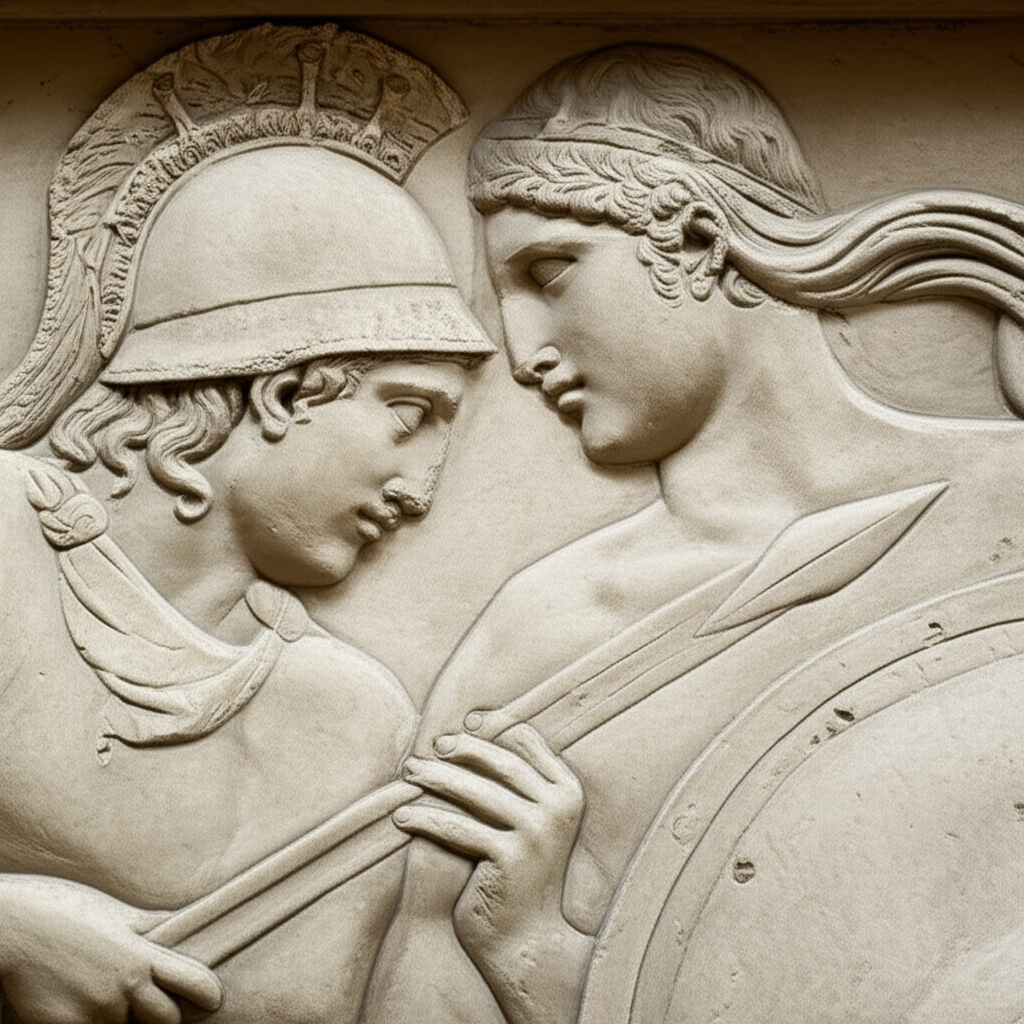
The Medieval Synthesis: Courage as a Cardinal Virtue
Building on the Greek foundations, medieval philosophers, notably Thomas Aquinas, integrated courage into Christian theology, rebranding it as "fortitude."
Aquinas and Christian Fortitude
For Aquinas, fortitude is one of the four cardinal virtues (alongside prudence, temperance, and justice). It maintains Aristotle's emphasis on the mean, but extends its scope. Fortitude enables an individual to persevere in the face of difficulties and dangers, particularly those that threaten life or the integrity of the soul. It's not just about facing physical threats, but also about resisting temptations and enduring long-term suffering for the sake of goodness or faith. Here, courage is seen as essential for spiritual perseverance, linking directly to the concept of virtue and vice in a theological context.
Modern Perspectives: New Dimensions of Bravery
As philosophy evolved, so too did the understanding of courage, moving beyond battlefield bravery to encompass internal struggles and moral conviction.
Montaigne on Fear and Control
Michel de Montaigne, in his Essays, explored the psychological dimensions of courage. He observed that much of our fear is self-created, and true courage often lies in mastering one's own mind and emotions. For Montaigne, understanding and accepting human vulnerability was a form of courage itself, a bravery in confronting one's own nature rather than solely external threats.
Hobbes and the Social Contract
Thomas Hobbes, in Leviathan, views human nature as inherently self-preserving. While he doesn't explicitly define courage as a primary virtue, his framework implies a different kind of bravery: the courage to enter into a social contract, to cede individual freedoms for collective security, despite the inherent risks of trusting others. The courage here is civic, intellectual, and foundational to political order.
Kant and Moral Courage
Immanuel Kant offered a profoundly different perspective, emphasizing moral courage. For Kant, true courage is acting purely from duty, according to the moral law, regardless of personal inclination, fear, or potential consequences. This form of courage is detached from emotion and rooted in rational will. It takes courage to do what is right simply because it is right, even when it is difficult, unpopular, or dangerous, and offers no personal reward.
The Nuance of Courage: Virtue or Vice?
The philosophical journey reveals that courage is not always inherently good. Its definition is refined by its context, intention, and outcome.
| Characteristic | True Courage (Virtue) | Cowardice (Vice) | Rashness (Vice) |
|---|---|---|---|
| Fear Level | Experiences fear appropriately | Excessive fear | Insufficient fear |
| Confidence | Appropriate confidence | Lack of confidence | Excessive confidence |
| Action | Acts despite fear for noble reasons | Avoids necessary action | Acts recklessly without reason |
| Reason | Guided by practical wisdom (phronesis) | Guided by self-preservation/comfort | Guided by impulsivity/ignorance |
| Outcome | Aims for good, often achieves it | Fails to achieve good, suffers | Often leads to harm or failure |
This table illustrates that courage, like any virtue, exists within a spectrum, bounded by two detrimental vices. The distinction lies in the reason for action and the proper management of emotion.
The Interplay of Courage and Emotion
A recurring theme across philosophical interpretations is the relationship between courage and emotion, especially fear. Courage is almost universally understood not as the absence of fear, but as the ability to act appropriately despite fear. It is the capacity to confront what is genuinely frightening, whether it be physical danger, social ostracization, personal failure, or existential dread. This necessitates a degree of self-mastery and rational control over one's internal states.
Conclusion: An Enduring Human Quest
The definition of courage, as explored through the Great Books of the Western World, is multifaceted and deeply interwoven with our understanding of human nature, morality, and the good life. From Plato's intellectual steadfastness to Aristotle's golden mean, Aquinas's spiritual fortitude, Montaigne's self-mastery, Hobbes's civic bravery, and Kant's unwavering moral duty, courage remains a pivotal virtue. It is a complex interplay of reason, emotion, and action, requiring us to navigate the delicate balance between virtue and vice. To cultivate courage is not merely to be fearless, but to understand what is truly worth fearing, and more importantly, what is truly worth fighting for.
YouTube Video Suggestions:
-
📹 Related Video: ARISTOTLE ON: The Nicomachean Ethics
Video by: The School of Life
💡 Want different videos? Search YouTube for: "Aristotle Nicomachean Ethics Courage Explained"
-
📹 Related Video: PLATO ON: The Allegory of the Cave
Video by: The School of Life
💡 Want different videos? Search YouTube for: "Plato Laches Courage Analysis Philosophy"