

The Philosophical Purse: Unpacking the Connection Between Wealth and Happiness
The age-old quest for happiness often finds itself entangled with the pursuit of wealth. Is there a direct link, or is the relationship far more nuanced, a complex interplay of desire, circumstance, and good and evil? From the lofty dialogues of Plato to the practical ethics of Aristotle, and indeed, through the entire sweep of the Great Books of the Western World, philosophers have grappled with this fundamental question. This article delves into the intricate philosophical landscape of wealth and its elusive connection to true happiness, exploring how our understanding of one shapes our experience of the other.
The Enduring Question of Riches and Contentment
For millennia, humanity has sought to understand what constitutes a good life. Is it the accumulation of material possessions, the security of abundant resources, or something entirely different? While popular culture often equates prosperity with contentment, the philosophical tradition, particularly as articulated in the Great Books, frequently challenges this simplistic equation. It forces us to distinguish between transient pleasures and enduring happiness, between mere affluence and a flourishing existence.
Ancient Wisdom: Wealth as a Means, Not an End
Many of the foundational texts of Western thought, from the Stoics to the Peripatetics, view wealth not as an intrinsic good, but as an instrumental good.
- Aristotle, in his Nicomachean Ethics, posits that happiness (eudaimonia) is the highest human good, an activity of the soul in accordance with virtue. While he acknowledges that certain external goods, including a moderate amount of wealth, can facilitate a virtuous life (e.g., providing resources for generosity or leisure for contemplation), he explicitly states that they are not sufficient for happiness and can even be detrimental if pursued for their own sake. Wealth, for Aristotle, is a tool, a means to an end, not the end itself.
- Plato, through Socrates in the Republic, likewise emphasizes the importance of justice and the harmony of the soul over material riches. The pursuit of excessive wealth is often depicted as a distraction from the pursuit of wisdom and the cultivation of a just character, leading to societal imbalance and individual unhappiness.
The consensus from antiquity suggests that while wealth can remove obstacles to happiness (such as poverty and insecurity), it does not guarantee it. In fact, an overzealous desire for riches can actively impede the path to genuine contentment.
The Peril of Desire: When Aspiration Becomes Affliction
Perhaps one of the most potent philosophical insights regarding wealth and happiness lies in the examination of desire. Many thinkers, from the Cynics to the Stoics, warned against the insatiable nature of material desire.
- Epicurus, despite being associated with pleasure, advocated for a life free from pain and mental disturbance (ataraxia), which often meant tempering desires and living simply. The endless pursuit of more wealth inevitably leads to anxiety, fear of loss, and a perpetual state of dissatisfaction, thus undermining happiness.
- The Stoics, such as Seneca and Epictetus, went further, advocating for indifference to external goods like wealth. They argued that true happiness comes from within, from virtue, reason, and accepting what is beyond our control. Placing our happiness in the hands of fleeting possessions or financial status is a recipe for suffering.
The lesson here is clear: uncontrolled desire for wealth can transform what might be a neutral or even beneficial resource into a source of profound unhappiness, leading individuals down paths that are far from good and often into the realm of evil.
Wealth's Dual Nature: A Force for Good or a Path to Corruption?
The question of good and evil is inextricably linked to the acquisition and use of wealth. Is wealth inherently good or evil? Philosophers generally agree that wealth itself is morally neutral; it is the intent behind its acquisition and the manner of its use that determine its ethical valence.
Table: The Dual Nature of Wealth
| Aspect of Wealth | Potential for Good | Potential for Evil |
|---|---|---|
| Acquisition | Through honest labor, innovation, value creation | Through exploitation, fraud, unjust means |
| Use | Philanthropy, supporting arts, community development, providing for family, enabling virtuous acts | Hoarding, ostentation, oppression, funding vice, perpetuating inequality |
| Impact | Societal progress, alleviating poverty, fostering education | Corruption, social division, moral decay, personal enslavement to materialism |
This duality is explored repeatedly in the Great Books. From the warnings against avarice in biblical texts to the critiques of economic exploitation by later thinkers, the capacity of wealth to both elevate and degrade humanity is a recurring theme. The pursuit of wealth can become an evil when it tramples on justice, compassion, or the common good. Conversely, when guided by virtue, wealth can be a powerful force for good, enabling individuals and societies to flourish.
The Modern Predicament: Quantifying the Unquantifiable
In contemporary society, the philosophical nuances surrounding wealth and happiness are often overshadowed by economic metrics and consumer culture. However, the core questions remain. Are we truly happier with more? Or have we merely exchanged one set of anxieties for another?
- The pursuit of "more": Modern consumerism often encourages an endless cycle of desire, where new possessions are constantly presented as paths to happiness, echoing ancient warnings against insatiable appetites.
- The "hedonic treadmill": This psychological concept suggests that people quickly adapt to new levels of wealth or luxury, returning to a baseline level of happiness. The initial joy of a new acquisition fades, and the desire for the next thing emerges, mirroring the philosophical critique of material pursuits.
- The paradox of affluence: In wealthy societies, despite unprecedented material comfort, rates of anxiety, depression, and existential dissatisfaction can remain high, prompting a re-evaluation of what truly constitutes a fulfilling life.
Conclusion: The Philosophical Pursuit of True Prosperity
The connection between wealth and happiness is not a simple equation but a profound philosophical inquiry. The Great Books of the Western World consistently teach us that while wealth can be a useful servant, it makes a terrible master. True happiness, as explored by countless thinkers, is found not in the accumulation of external goods, but in the cultivation of virtue, the pursuit of wisdom, the moderation of desire, and the ethical application of one's resources for the good of oneself and society. To genuinely connect wealth with happiness requires a conscious philosophical choice: to understand wealth as a tool for living a good life, rather than the definition of one.
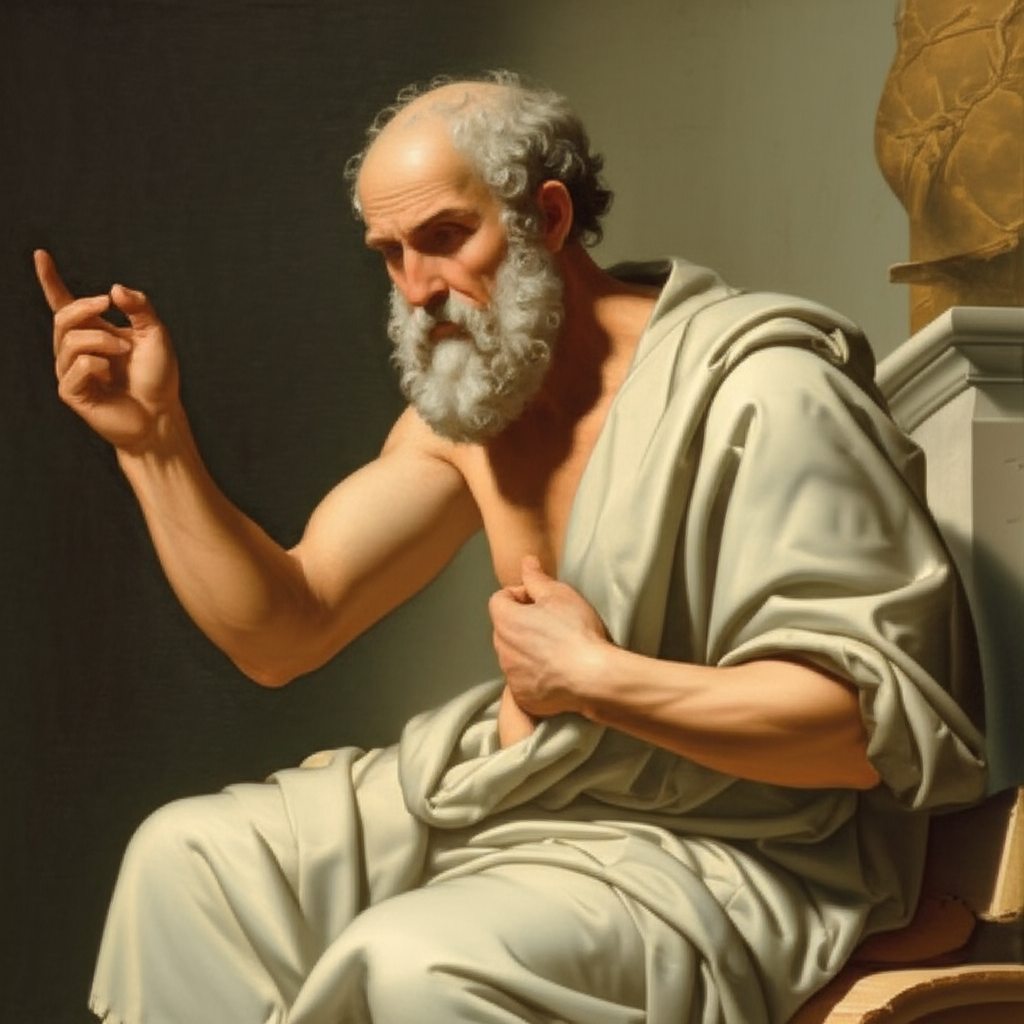 in simple attire, engaged in deep thought or teaching, while in the background, figures in opulent clothing appear distracted or engaged in frivolous activities, symbolizing the contrast between intellectual pursuit and material indulgence.)
📹 Related Video: What is Philosophy?
Video by: The School of Life
💡 Want different videos? Search YouTube for: ""Ancient Greek Philosophy on Wealth and Happiness""
📹 Related Video: STOICISM: The Philosophy of Happiness
Video by: The School of Life
💡 Want different videos? Search YouTube for: ""Stoicism and Money: Finding Contentment Beyond Riches""