

The Unsettling Dance: Unpacking the Connection Between Revolution and Justice
Summary: The connection between revolution and justice is a profound and often volatile one, a recurring theme throughout human history and philosophical inquiry. While revolutions are almost invariably ignited by a deep-seated perception of injustice within the existing State, the path they forge towards a more equitable order is rarely straightforward. This article explores how calls for justice fuel revolutionary fervor, examines the philosophical underpinnings of such movements, and critically assesses whether the often-violent upheaval of revolution ultimately delivers on its promise of justice.
The Genesis of Upheaval: Injustice as the Spark
History teaches us that societies do not simply unravel; they are torn apart by forces, often born from the very fabric of their governance. When a State fails to uphold what its citizens perceive as fundamental fairness, when rights are denied, resources are hoarded, or power becomes concentrated and oppressive, the seeds of revolution are sown. This is the initial, undeniable connection between the two concepts: injustice is the primary catalyst.
Philosophers across the ages have grappled with this dynamic. John Locke, a cornerstone figure in the Great Books of the Western World, articulated the idea of a social contract, suggesting that government derives its legitimacy from the consent of the governed. When a government acts "contrary to the trust reposed in them," he argued, the people retain the right to dissolve or alter it. This right to rebellion, in Locke’s view, is not a call for anarchy but a mechanism for restoring justice when the established order has fundamentally broken faith with its purpose.
Similarly, Jean-Jacques Rousseau, in The Social Contract, posited that true liberty and justice could only exist when the "general will" of the people was paramount. When an oppressive regime, often embodied by a tyrannical monarch or corrupt aristocracy, subjugates the individual will to its own arbitrary power, it creates an environment ripe for revolutionary change, a violent reassertion of the collective desire for justice.
The Many Faces of Injustice that Fuel Revolution:
- Political Injustice: Lack of representation, suppression of dissent, arbitrary rule, tyranny.
- Economic Injustice: Extreme wealth disparity, exploitation of labor, landlessness, famine amidst plenty.
- Social Injustice: Discrimination based on race, religion, gender, or class; denial of fundamental human rights.
- Legal Injustice: Unequal application of laws, corruption in the judicial system, lack of due process.
Revolution as a Violent Pursuit of Justice
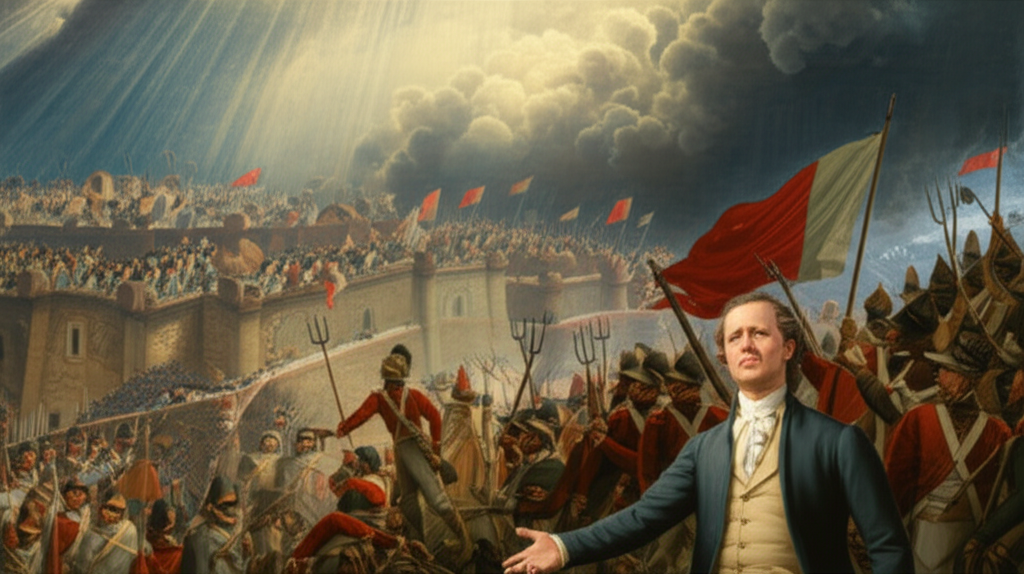
Once ignited, a revolution often becomes a fervent, sometimes brutal, pursuit of a new vision of justice. The rhetoric of revolutionary movements is invariably steeped in moral indignation, promising to right historical wrongs and establish a more equitable future. The French Revolution, for instance, famously championed "Liberté, égalité, fraternité" – liberty, equality, and brotherhood – as its guiding principles, directly targeting the perceived injustices of the Ancien Régime.
However, the path from revolutionary ideal to practical justice is fraught with peril. The very act of overthrowing an existing State often necessitates violence, which can itself breed new forms of injustice. The question then becomes: Can a just society truly be born from violent upheaval?
Philosophical Perspectives on Revolutionary Justice:
| Philosopher/School | Stance on Revolution & Justice to the. It's important to remember that such a right is not a license for wanton destruction, but a solemn obligation to restore the fundamental principles of justice. This is where the connection becomes most visible and most dangerous.
The Perilous Aftermath: When Revolution Betrays Justice
The tragic irony of many revolutions is their capacity to devour their own children. While born from a cry for justice, the revolutionary process can sometimes lead to new forms of tyranny, equally (if not more) brutal than the regime it replaced. The Reign of Terror during the French Revolution, or the purges under Stalin following the Russian Revolution, serve as stark historical reminders of how the pursuit of an idealized justice can morph into a justification for widespread injustice.
This phenomenon highlights a critical philosophical dilemma: Does the end of achieving a just society justify any means, however violent or oppressive, in the interim? Thomas Hobbes, observing the English Civil War, argued vehemently against the chaos of rebellion in Leviathan, positing that even an autocratic State was preferable to the "war of all against all." For Hobbes, the ultimate justice lay in the preservation of order, even if it meant sacrificing some individual liberties.
The connection between revolution and justice is therefore not merely causal but often dialectical, a struggle where the initial thesis of injustice meets the antithesis of revolution, hoping to forge a synthesis of true justice. Yet, the synthesis can often be elusive, leaving behind a legacy of further injustice or a fragile peace built on compromise.
Redefining Justice in the Ashes of the Old State
A successful revolution doesn't just dismantle the old State; it faces the immense challenge of constructing a new one, imbued with a fresh understanding of justice. This is where the theoretical debates of philosophers like Plato and Aristotle become acutely relevant.
Plato, in The Republic, envisioned a perfectly just polis governed by philosopher-kings, where each individual performs their role in harmony, and justice is the underlying principle of the entire structure. While his ideal state is perhaps unattainable, it offers a framework for considering how a revolutionary society might strive for internal coherence and fairness. What kind of laws, what kind of distribution of resources, what kind of political participation truly embodies justice in the wake of upheaval?
Aristotle, in Nicomachean Ethics and Politics, meticulously categorized different forms of justice: distributive (fair allocation of goods and honors), corrective (rectifying wrongs), and reciprocal (fair exchange). A revolutionary government must contend with all these facets, attempting to not only punish the injustices of the past but also to build systems that prevent their recurrence and foster genuine equity.
The connection here is that the very act of revolution forces a society to confront its deepest values and explicitly redefine what justice means for its future. It is a moment of profound moral reckoning, where abstract ideals must be translated into concrete policies and institutions.
Conclusion: The Enduring Paradox
The connection between revolution and justice is undeniable, yet profoundly paradoxical. Revolutions are born from a desperate yearning for justice against an oppressive State, representing humanity's refusal to tolerate systemic unfairness. They are violent acts of hope, often undertaken by those with little left to lose, in pursuit of a better world.
However, the very act of revolution, with its inherent chaos and potential for brutality, often tests the limits of what can be considered just. The promise of an ideal future can be betrayed by the harsh realities of power struggles, ideological purges, and the inevitable imperfections of human nature. The ultimate lesson from the Great Books and from history itself is that while revolution may be a necessary, albeit tragic, response to profound injustice, the establishment of lasting justice is a far more arduous and ongoing endeavor, requiring constant vigilance, compromise, and a steadfast commitment to the very principles that sparked the initial uprising.
YouTube Video Suggestions:
-
📹 Related Video: PLATO ON: The Allegory of the Cave
Video by: The School of Life
💡 Want different videos? Search YouTube for: "John Locke Social Contract Theory Revolution Justice"
2. ## 📹 Related Video: What is Philosophy?
Video by: The School of Life
💡 Want different videos? Search YouTube for: "French Revolution Reign of Terror Justice Philosophy"