

The Unbreakable Bond: How Mind and Language Shape Our Reality
The intricate dance between the mind and language is not merely a subject for academic debate, but a fundamental aspect of what it means to be human. This article explores how these two seemingly distinct faculties are, in fact, inextricably linked, each shaping and defining the other. We will delve into how language serves as both the crucible and the architect of our thoughts, enabling the acquisition and transmission of knowledge, and how the very fabric of our understanding is woven from the threads of signs and symbols. From the silent internal monologue to the grand narratives of civilization, the connection between mind and language dictates our perception, our reasoning, and ultimately, our shared reality.
The Mind's Crucible: Where Thought Takes Form
Before words, there is sensation, perception, and an raw, unarticulated stream of consciousness. The mind, in its primal state, grapples with the world through sensory input, forming nascent concepts and impressions. But how do these fleeting thoughts crystallize into coherent ideas? This is where language enters the scene, not just as a tool for expression, but as a framework for cognition itself.
Philosophers throughout the "Great Books of the Western World" have grappled with this pre-linguistic stage. Is there a "mentalese" – a language of thought independent of spoken or written words? Or is the very act of thinking, beyond the most basic sensory reactions, inherently linguistic? The prevailing view suggests that while some rudimentary thought may exist without language, the capacity for complex reasoning, abstraction, and sustained introspection is profoundly enhanced, if not entirely dependent upon, linguistic structures.
Language as the Architect of Thought
Imagine trying to conceive of "justice" or "infinity" without the words to name and define them. Language provides the categories, the distinctions, and the relational structures that allow the mind to move beyond mere apprehension to complex understanding. It is the scaffolding upon which our intellectual edifice is built.
- Structuring Perception: Language helps us categorize the world. When we learn the word "tree," we group countless individual instances under a single concept, enabling us to recognize patterns and make generalizations.
- Enabling Abstraction: Abstract concepts – like freedom, truth, or beauty – are almost entirely products of language. They exist in the realm of shared understanding, mediated by the words we use to describe them.
- Facilitating Reasoning: Logic, argument, and critical thinking rely on the precise arrangement of words and ideas. Language allows us to formulate premises, deduce conclusions, and articulate complex chains of thought.
- Expanding Memory: While individual memories might be visual or sensory, the ability to narrate, recall, and organize vast amounts of information is deeply tied to linguistic encoding.
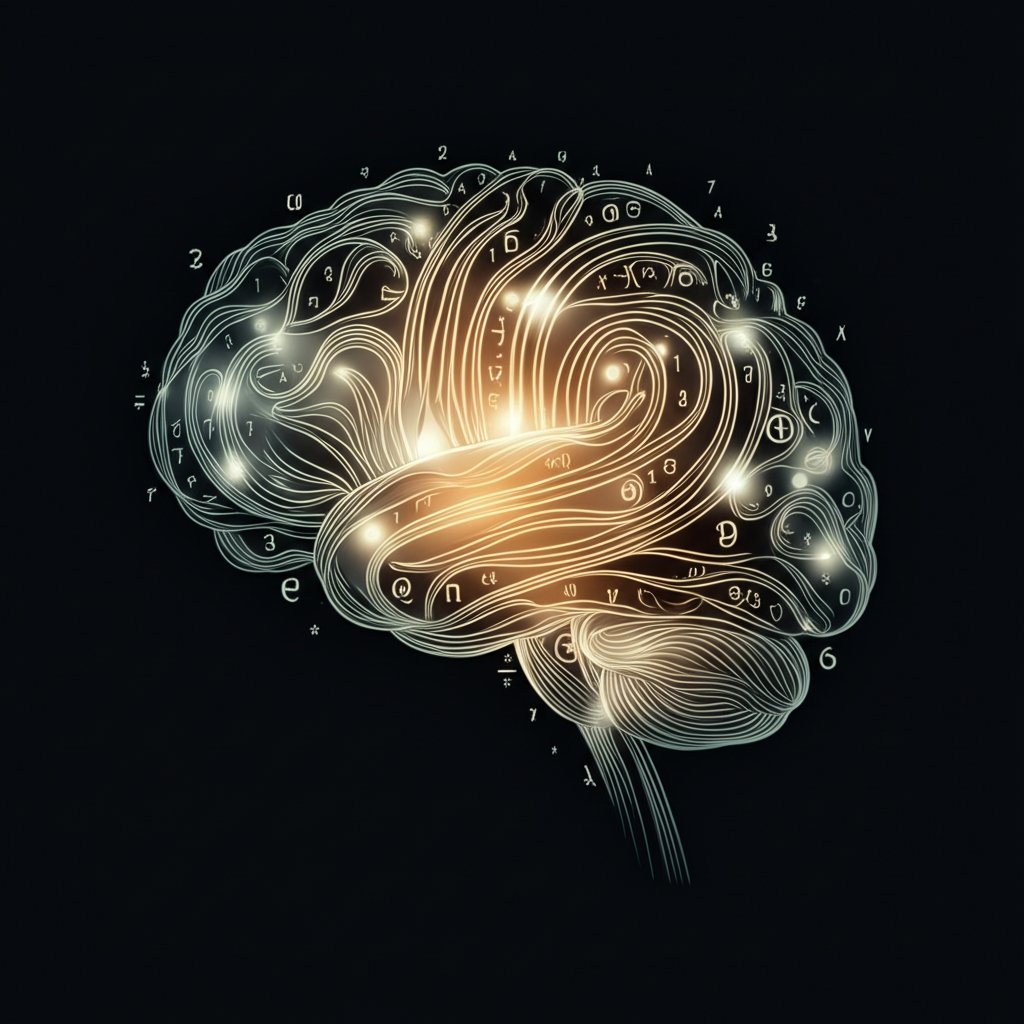 . The symbols are arranged in a dynamic, flowing pattern, suggesting the constant interplay and transformation between thought and expression. The background is a muted, abstract representation of human interaction and cultural exchange, subtly hinting at the social dimension of language.)
Signs, Symbols, and the Shared Reality
Central to understanding the mind-language connection is the distinction and interplay between signs and symbols.
- Signs: A sign typically has a direct, often natural, connection to what it signifies. Smoke is a sign of fire. A footprint is a sign of a passing animal. Their meaning is relatively fixed and often universal across cultures, rooted in direct experience.
- Symbols: A symbol, conversely, derives its meaning through convention, agreement, and cultural context. The word "tree" is a symbol for the leafy plant; there's no inherent "tree-ness" in the sound or letters. A flag is a symbol of a nation. The cross is a symbol of Christianity. Symbols are arbitrary yet immensely powerful, allowing for the communication of complex, abstract ideas that transcend immediate sensory data.
This distinction, explored by thinkers from Aristotle to Saussure, highlights how language operates primarily through symbols. It is through these shared, conventional symbols that individual minds can connect, exchange knowledge, and build a collective understanding of the world. Without this symbolic capacity, our minds would be isolated, trapped within their own immediate perceptions, unable to transmit the rich tapestry of human experience.
Knowledge: The Linguistic Legacy
The accumulation and transmission of knowledge are perhaps the most profound outcomes of the mind-language connection. From the oral traditions of ancient societies to the vast digital libraries of today, language is the primary vessel for preserving and expanding human understanding.
Thinkers like John Locke, in his An Essay Concerning Human Understanding, explored how words are tied to "ideas" in the mind, enabling us to communicate those ideas and build a shared body of knowledge. Without a shared linguistic framework, each generation would have to start anew, rediscovering fundamental truths and inventing basic tools. Language allows for:
- Cultural Transmission: Stories, histories, scientific discoveries, and moral codes are passed down through generations via language, forming the bedrock of culture.
- Collective Intelligence: Language enables collaboration, allowing multiple minds to work together on complex problems, sharing insights and building upon previous findings.
- Record-Keeping: Written language, in particular, provides a permanent record of human thought, allowing for scrutiny, debate, and the incremental growth of knowledge over centuries. The very existence of the "Great Books of the Western World" is a testament to this power.
Philosophical Perspectives on Mind and Language
The relationship between mind and language has been a perennial concern for philosophers:
- Plato and Aristotle: While Plato posited a realm of Forms independent of language, Aristotle focused on language as a tool for categorizing and understanding the world, emphasizing its role in logic and definition.
- The Empiricists (e.g., Locke): Saw language as a system of signs representing "ideas" in the mind, crucial for communicating those ideas.
- The Idealists (e.g., Kant): Suggested that the mind imposes categories on experience, and language plays a role in articulating and solidifying these categories, shaping how we perceive reality.
- The Linguistic Turn (e.g., Wittgenstein): Argued that meaning is use, and that our understanding of reality is deeply intertwined with the "language games" we play within our communities. For Wittgenstein, the limits of our language are the limits of our world.
These diverse perspectives, all stemming from the philosophical tradition found in the "Great Books," underscore the complexity and depth of this relationship. They challenge us to consider not just what we think, but how we think, and the indispensable role language plays in that process.
The Unspoken Dialogue: Language's Influence on Self and Society
Beyond its cognitive functions, language profoundly shapes our sense of self and our place in society. The internal monologue, the voice of our mind, is often conducted in our native tongue. The words we use to describe ourselves, our emotions, and our experiences influence our identity and self-perception.
Socially, language creates communities. Shared vocabulary, idioms, and narrative traditions bind people together, fostering a sense of belonging and collective identity. Conversely, linguistic barriers can create divisions. The ability to communicate effectively, to articulate one's thoughts and understand others', is fundamental to social cohesion and progress.
Conclusion: An Inseparable Partnership
The connection between mind and language is not a simple cause-and-effect relationship, but a dynamic, reciprocal partnership. Language provides the structure and tools for the mind to organize its thoughts, acquire knowledge, and build complex understandings. In turn, the mind's capacity for creativity and abstraction continually pushes the boundaries of language, creating new signs and symbols to express evolving insights.
To truly understand the human condition, we must appreciate this profound interdependency. Our ability to reason, to create, to connect, and to transmit wisdom across generations rests squarely on this unbreakable bond. It is through language that our inner worlds become outer realities, and through the collaborative construction of meaning that humanity continues its extraordinary journey of discovery.
YouTube: "Wittgenstein language games explained"
YouTube: "Noam Chomsky language and mind"
📹 Related Video: What is Philosophy?
Video by: The School of Life
💡 Want different videos? Search YouTube for: "The Connection Between Mind and Language philosophy"