

The Indivisible Bond: Exploring the Connection Between Courage and Honor
The human spirit has long grappled with the profound concepts of courage and honor. From the epic battlefields of ancient Greece to the quiet struggles of modern morality, these two virtues have been celebrated as cornerstones of a noble life. This pillar page delves into their intricate connection, exploring how they are not merely related but often inseparable, each acting as a crucible for the other. We will trace their philosophical lineage through the Great Books of the Western World, examining how thinkers from antiquity to the Renaissance understood their essence, their interplay, and their critical role in shaping both individual character and societal values. Understanding this profound relationship is essential to grasping the full spectrum of virtue and vice that defines the human experience.
The Foundations: Defining Courage and Honor in Antiquity
To truly appreciate the connection between courage and honor, we must first understand their individual philosophical definitions, particularly as they emerged in ancient thought.
Courage: The Mean Between Extremes
In the classical world, courage was far more than mere bravery. For Aristotle, in his Nicomachean Ethics, courage (ἀνδρεία, andreia) is a cardinal virtue, a mean between two vices: rashness (excess) and cowardice (deficiency). It's not the absence of fear, but the ability to act rightly in the face of fear, especially fear of death in battle. Aristotle emphasizes that true courage is displayed for a noble cause, not for pleasure, gain, or ignorance.
Plato, in dialogues like Laches and Republic, also grapples with courage. In Laches, Socrates famously questions what courage truly is, concluding that it might be "the knowledge of what is to be feared and what is not to be feared." This elevates courage beyond a mere physical act to an intellectual and moral discernment.
Honor: The Pursuit of Kleos and Moral Esteem
Honor (τιμή, timē in Greek) in antiquity was multifaceted. For the Homeric heroes of the Iliad and Odyssey, honor was often synonymous with kleos (glory or fame), earned through heroic deeds, especially in battle. Achilles' dilemma, choosing between a long, inglorious life and a short, honorable one, epitomizes this pursuit. This external recognition was crucial for one's standing in society.
However, honor also encompassed an internal sense of worth and integrity. For philosophers like Aristotle, while external honors were desirable, true honor was a recognition of virtue itself. One should strive to be honorable, not just to be honored. It became an internal compass guiding moral action, a commitment to principles that command respect.
Table 1: Ancient Perspectives on Courage and Honor
| Philosopher/Text | View of Courage | View of Honor |
|---|---|---|
| Homer (Iliad) | Bravery in battle, willingness to face death for glory. | Kleos (glory/fame) earned through heroic deeds, public recognition. |
| Plato (Laches, Republic) | Knowledge of what to fear and what not to fear; a moral and intellectual virtue. | Acknowledgment of virtue, internal integrity, a just reward for good deeds. |
| Aristotle (Nicomachean Ethics) | A mean between rashness and cowardice, acting rightly in the face of fear for a noble cause. | Recognition of virtue, a just reward, but true honor comes from being virtuous, not merely being honored. |
The Intertwined Nature: When Courage Forges Honor
The connection between courage and honor becomes most apparent when we observe how acts of genuine courage are the very crucible in which honor is forged. It is not enough to simply possess courage; one must exercise it, often at great personal risk, to truly earn honor.
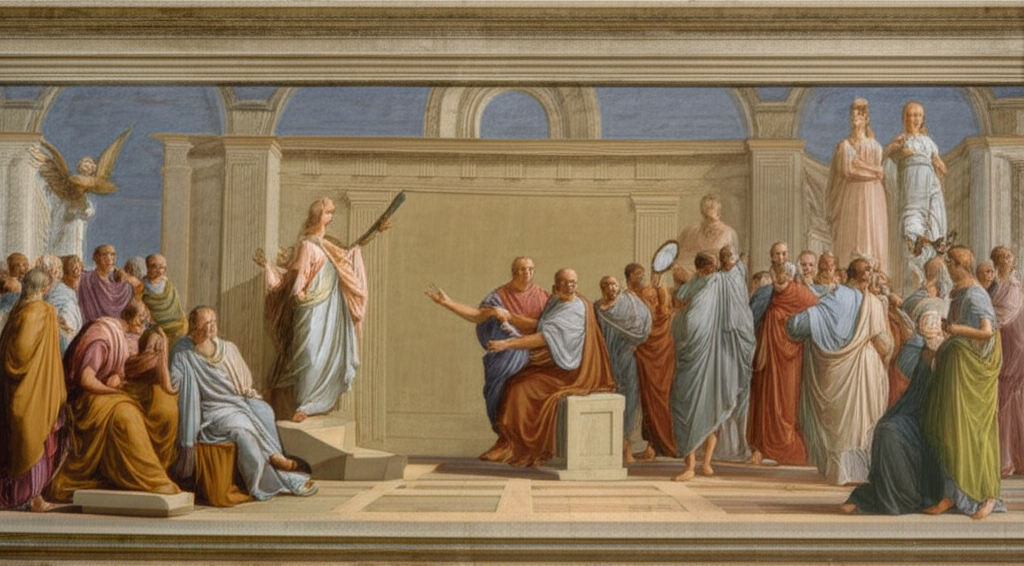
Consider Socrates in Plato's Apology. Faced with a death sentence for impiety and corrupting the youth, Socrates courageously chooses to uphold his philosophical principles rather than compromise his integrity or flee. His unwavering commitment to truth, even in the face of death, immortalized him as a paragon of philosophical courage, and it is this act that cemented his honor for millennia. His courage wasn't rashness; it was a deliberate, principled stand.
Similarly, throughout history, whether in the soldier's defiance on the battlefield, the whistleblower's exposure of injustice, or the civil rights activist's nonviolent resistance, acts of moral and physical courage are universally recognized as honorable. These individuals demonstrate a willingness to endure hardship, face ostracization, or even death, not for personal gain, but for a higher principle, a greater good, or to uphold justice. This is where the concept of virtue truly shines. Courage, when directed towards noble ends, becomes the pathway to genuine honor.
The Shadow Side: Dishonor and the Absence of Courage
Just as courage elevates one to honor, its absence, or the presence of its opposite – cowardice – inevitably leads to dishonor. This inverse connection highlights the moral weight attached to these concepts.
Shakespeare, a master of human nature, frequently explores this dynamic. In Henry IV, Part 1, the character of Falstaff famously questions the value of honor, stating, "Can honor set to a leg? no... What is honor? a word. What is that word honor? air." Falstaff's cynical view contrasts sharply with Prince Hal's eventual embrace of kingly responsibilities and the courageous acts required to defend his realm and earn his people's respect. Falstaff's vice of gluttony and self-preservation often leads him to ignoble, cowardly actions that bring him shame rather than honor.
Dishonor is often the consequence of moral failure, a betrayal of trust, a retreat from duty, or an act of cowardice. It's not merely the absence of recognition, but a specific negative judgment, a stain on one's character. When individuals prioritize self-preservation above all else, abandoning principles or comrades in the face of danger, they are deemed dishonorable. This is the realm of vice, where the lack of courage manifests as a moral failing that degrades one's standing in the eyes of others and, crucially, in one's own conscience. The shame associated with dishonor serves as a powerful deterrent, reinforcing the societal value placed on courageous action.
Enduring Relevance: Courage and Honor in the Modern World
While the specific contexts may change, the fundamental connection between courage and honor remains profoundly relevant in the contemporary world. We may no longer fight with swords for kleos, but the demand for moral courage is perhaps greater than ever.
- Moral Courage: This involves speaking truth to power, standing up for the marginalized, or defending unpopular but just causes, even when it means personal sacrifice or social ostracization. Whistleblowers, activists, and ethical leaders all embody this form of courage.
- Intellectual Courage: The willingness to challenge conventional wisdom, admit when one is wrong, or pursue uncomfortable truths, even if they undermine one's own cherished beliefs.
- Personal Honor: Today, honor is often understood as integrity, trustworthiness, and adherence to a strong moral code. It's about living authentically and consistently with one's values.
In each of these modern manifestations, acts of courage – whether physical, moral, or intellectual – are still the primary means by which individuals earn respect, trust, and ultimately, honor. Conversely, a lack of courage to uphold one's values, to speak out against injustice, or to take responsibility for one's actions, continues to lead to a loss of respect and a tarnished reputation. The enduring power of these concepts lies in their capacity to inspire individuals to transcend self-interest for the sake of higher ideals, making them perennial guides in the navigation of virtue and vice.
YouTube: "Aristotle Nicomachean Ethics Courage Explained"
YouTube: "Plato Laches: The Nature of Courage"
Conclusion: The Pillars of a Virtuous Life
The exploration of courage and honor through the lens of the Great Books reveals an undeniable and profound connection. From the Homeric heroes seeking glory on the battlefield to Socrates' unwavering commitment to truth in the face of death, and Aristotle's meticulous philosophical definitions, it becomes clear that true honor is rarely, if ever, achieved without an accompanying display of courage.
Courage, as a cardinal virtue, is the active principle that allows individuals to overcome fear and act in accordance with their moral compass, thereby earning respect and esteem. Its absence, manifesting as cowardice or other forms of vice, inevitably leads to dishonor and a diminished moral standing. In a world constantly challenging our principles, the integrated pursuit of courage and honor remains a vital philosophical endeavor, guiding us towards lives of integrity, purpose, and genuine human flourishing. They are not just abstract ideals but practical necessities for navigating the complexities of existence with dignity and moral fortitude.
📹 Related Video: What is Philosophy?
Video by: The School of Life
💡 Want different videos? Search YouTube for: "The Connection Between Courage and Honor philosophy"