

The Concept of God's Will: A Philosophical Inquiry
The notion of God's Will stands as one of the most profound and perennially debated concepts within philosophy and Theology. It touches upon the very nature of divine agency, cosmic order, human freedom, and the ultimate Cause of all existence. From ancient cosmologies to modern ethical dilemmas, understanding what is meant by "God's Will" has shaped civilizations, inspired profound spiritual journeys, and provoked some of humanity's most challenging intellectual inquiries. This pillar page will explore the multifaceted interpretations of God's Will, drawing upon the rich tapestry of thought found within the Great Books of the Western World, examining its implications for our understanding of reality, morality, and our place within the grand design.
Defining the Indefinable: What is God's Will?
At its core, "God's Will" refers to the divine intention, purpose, or desire that governs the universe and all within it. However, the simplicity of this definition belies a complex array of interpretations. Is God's Will an active, deliberative choice, akin to human volition but on an infinite scale? Or is it more akin to the inherent nature of the divine, an immutable principle from which all reality flows?
Philosophers and theologians have often distinguished between several facets of God's Will:
- God's Antecedent Will: What God desires before considering human choices or the consequences of evil. This is typically understood as God's desire for all good, for salvation, and for the flourishing of creation.
- God's Consequent Will: What God wills after considering all factors, including human free will and the existence of evil. This often involves God permitting certain evils for a greater, ultimate good that is only fully known to the divine.
- God's Decretive Will: The divine decrees that infallibly bring about what God has decided. This relates to predestination and the ultimate Cause of all events.
- God's Preceptive Will: The moral commands and laws revealed by God, indicating what humans should do. This is often found in sacred texts and ethical injunctions.
The distinction between these aspects is crucial, particularly when grappling with the problem of evil or the tension between divine sovereignty and human freedom.
Philosophical and Theological Perspectives on Divine Volition
The Great Books offer a panorama of thought on God's Will, each perspective contributing to a richer, if sometimes conflicting, understanding.
Early Philosophical Foundations
While ancient Greek philosophers like Plato and Aristotle did not speak of "God's Will" in the Abrahamic sense, their concepts of a divine, ordering principle laid crucial groundwork.
- Plato's Republic and Timaeus hint at a benevolent Demiurge or a Form of the Good that imposes order on chaos, suggesting an inherent cosmic purpose or intention. The universe is not random but reflects a rational, beautiful design.
- Aristotle's Metaphysics posits a Prime Mover, an unmoved mover that is the ultimate Cause of all motion and change, acting as a final cause—that toward which all things strive. While not a personal Will in the conventional sense, it is the ultimate source of teleology in the cosmos.
The Patristic and Medieval Synthesis: Augustine and Aquinas
With the advent of monotheistic religions, the concept of a personal, volitional God became central.
- Augustine of Hippo (e.g., Confessions, City of God) grappled extensively with God's Will. For Augustine, God's Will is omnipotent and ultimately good, the Cause of all creation. He famously articulated the idea that evil is not a substance willed by God, but a privation of good, often resulting from the misuse of human free Will. God's Will also plays a crucial role in his doctrines of predestination and grace, where divine election is an act of God's sovereign volition.
- Thomas Aquinas (Summa Theologica) meticulously elaborated on God's Will, asserting that it is identical with God's essence. God's Will is perfectly rational and always wills the good. Aquinas distinguished between God's will of antecedent desire (that all humans be saved) and consequent permission (allowing some to fall due to their own choices, for a greater, inscrutable divine purpose). For Aquinas, God's Will is the ultimate efficient Cause of all things, yet it does not negate secondary causes or human free Will; rather, it establishes and sustains them.
Modern Philosophers: Divergent Paths
The Enlightenment brought new challenges and reformulations to the concept of God's Will.
- René Descartes (Meditations on First Philosophy) posited God's Will as the ultimate guarantor of eternal truths, suggesting that even mathematical axioms are dependent on divine volition. God's omnipotence means God could have willed things to be otherwise, making God the ultimate Cause of even logical necessity.
- Baruch Spinoza (Ethics) offered a radical departure. For Spinoza, God (or Nature) acts solely from the necessity of His own nature, not from free Will in the human sense. God's Will is the eternal and immutable laws of the universe; there is no deliberative choice. This view sees God as the immanent Cause of all things, where everything that happens necessarily follows from God's infinite attributes.
- Gottfried Wilhelm Leibniz (Theodicy) sought to reconcile God's goodness, omnipotence, and the existence of evil through the concept of God's Will choosing the "best of all possible worlds." God's intellect comprehends all possibilities, and God's Will, being perfectly good, chooses the optimal one, making God the ultimate Cause of this particular reality.
Table 1: Key Philosophical Approaches to God's Will
| Philosopher/Tradition | Core Understanding of God's Will | Key Implications |
|---|---|---|
| Plato/Aristotle | Implicit cosmic purpose/teleology; Prime Mover as Final Cause | Universe ordered by inherent reason, not personal volition |
| Augustine | Omnipotent, benevolent, sovereign; ultimate Cause of good; permits evil for greater good | Predestination, grace, problem of evil, human free will |
| Aquinas | Identical with God's essence; perfectly rational; ultimate Efficient Cause | God's Will sustains freedom; antecedent vs. consequent will |
| Descartes | Ultimate source of eternal truths; could have willed different logic | Divine omnipotence extends to logical necessity |
| Spinoza | Identical with laws of Nature; acts from necessity, not choice | Deterministic universe; God as immanent Cause; no 'free will' for God |
| Leibniz | Chooses the "best of all possible worlds" from infinite possibilities | Optimistic view of reality; problem of evil addressed by divine choice |
The Problem of Evil and God's Will
Perhaps no other aspect of God's Will has generated more philosophical anguish than its relationship to the problem of evil. If God is omnipotent (all-powerful), omniscient (all-knowing), and omnibenevolent (all-good), and if God's Will is sovereign, why does evil and suffering exist?
This classic theological dilemma has prompted numerous responses:
- The Free Will Defense: This argument, prominent in Augustine's Theology, posits that God, in His goodness, willed humanity to have free Will. Evil arises not from God's direct Will, but from human misuse of this divine gift. God permits evil as a necessary consequence of allowing genuine freedom, which is itself a greater good.
- The Greater Good/Soul-Making Theodicy: Some argue that God's Will permits suffering because it serves a higher purpose, such as character development, moral growth, or the realization of greater goods (e.g., compassion, courage) that would not be possible in a world devoid of challenge.
- Inscrutability of God's Will: Many traditions simply acknowledge that God's ways are beyond human comprehension. God's Will is just and good, even if its reasons for permitting evil are hidden from us. This perspective emphasizes faith and humility in the face of divine mystery.
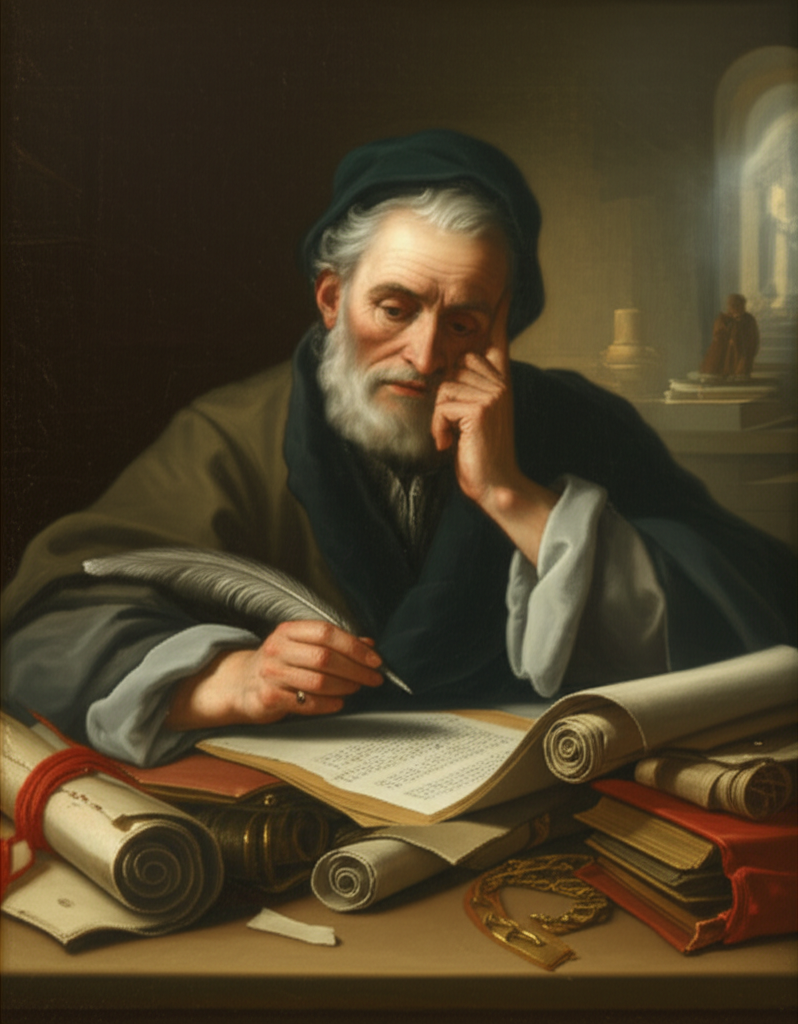
Free Will and God's Will: A Perennial Tension
The relationship between human free Will and divine Will is a cornerstone of philosophical Theology. If God's Will is the ultimate Cause of all things, does this negate human agency?
- Determinism: Some interpretations suggest a strong form of divine determinism, where God's Will preordains every event, making human choices merely apparent. Thinkers like Spinoza, while not explicitly using "God's Will" in the traditional sense, describe a universe where everything unfolds by necessity from God's nature.
- Compatibilism: Many philosophers, notably Aquinas, argue for compatibilism. God's Will is indeed the primary Cause, but it is a cause that enables secondary causes, including human free Will. God's Will does not coerce but rather sustains our ability to choose, making our choices genuinely our own, even within a divinely ordered universe.
- Libertarianism: This view emphasizes that for human choices to be truly free, they cannot be fully determined by God's Will or any other external Cause. God's Will might set the parameters of existence, but within those, humans possess genuine alternative possibilities.
This tension remains a vibrant area of discussion, central to understanding moral responsibility and the nature of divine interaction with the created order.
Discerning God's Will: Human Endeavor and Divine Revelation
For many, the concept of God's Will is not merely an abstract philosophical problem but a practical guide for life. How does one discern what God's Will is for them, or for humanity?
- Scripture and Revelation: Many religious traditions believe God's Will is primarily revealed through sacred texts, prophets, and divine commandments. These provide direct guidance on ethical behavior, spiritual practices, and the nature of God.
- Reason and Conscience: Philosophers like Kant, while not directly discussing God's Will in a theological sense, posited that moral laws are accessible through universal reason. For many, a rational conscience, informed by moral principles, can reflect God's design for human flourishing.
- Prayer and Contemplation: Spiritual practices often involve seeking direct guidance or understanding through communion with the divine, trusting that God can illuminate the path forward.
- Community and Tradition: Collective wisdom, the guidance of religious leaders, and the accumulated experience of a faith community often play a role in interpreting and applying the understanding of God's Will to specific situations.
Discerning God's Will is rarely a simple task; it often involves a combination of these approaches, demanding humility, critical thought, and a willingness to engage with both personal intuition and established wisdom.
The Enduring Significance of God's Will
The concept of God's Will, explored through centuries of philosophical and theological discourse, continues to be a cornerstone of human understanding. It forces us to confront fundamental questions: What is the ultimate Cause of existence? What is the purpose of life? How do we reconcile suffering with a benevolent God?
Whether viewed as an active, personal volition, an immutable cosmic principle, or the necessary unfolding of divine nature, God's Will profoundly shapes our worldview. It informs our ethics, provides a framework for understanding destiny and freedom, and offers a profound lens through which to interpret the meaning of human striving and the grand narrative of the universe. The ongoing dialogue surrounding this concept underscores its timeless relevance and its power to inspire both profound faith and rigorous intellectual inquiry.
Further Exploration:
📹 Related Video: What is Philosophy?
Video by: The School of Life
💡 Want different videos? Search YouTube for: ""Problem of Evil and God's Will Philosophy""
📹 Related Video: PLATO ON: The Allegory of the Cave
Video by: The School of Life
💡 Want different videos? Search YouTube for: ""Free Will vs Determinism Theology""