

b–a–c–h is the beginning and end of all music– Max Reger, 1912
!! Classical music listeners preferred !!Let’s embark on a whimsical journey to a special place filled with memories, creativity, and delightful soundscapes! I want to awaken your ears to a world of enchanting melodies, where you can pause your background music and simply savor the moment. 🎶
When we think of classical music, we often picture one of four charming scenarios. Imagine it’s a cozy Monday or Tuesday morning, and you’ve decided to set the mood:
- The Baroque Circus: Picture a lutist strumming awkwardly while a piccolo-wielding performer hops around the royal court, desperately trying to catch the attention of a distracted king who’s more interested in his breakfast pastries. Meanwhile, some early piano is clattering away like a toddler on a sugar high! This lively scene makes up about 30% of the classical fare served on many channels. It’s fun and spirited, but you can’t really do homework to this—unless your assignment is to chase farm animals!
- The Symphony Wind Tunnel: Now, envision a symphony where violins create a swirling wind of woodwinds and trumpets, like an orchestra trying to blow away a flock of pigeons. A pianist dazzles us with trills, probably while thinking, “I hope this impresses my date!” This is the Classical Symphony—making up about 50% of what you hear. It’s beautiful, yet sometimes it feels like an academic lecture on how to play a handstand on a keyboard.
- The Waltz of Confusion: Then there are the waltzes, with glorious horns and an orchestra that sounds like they’re all practicing different songs at once—like a musical game of telephone gone wrong! Many Russian composers have crafted pieces that feel like clever excuses to avoid the battlefield. It’s like saying, “I can’t go fight; I’m busy composing!” “I play the notes as they are written, but it is God who makes the music.” — J.S. Bach
- The Fugues of Fate: Lastly, we stumble upon fugues that pop up at odd moments, like that one friend who always shows up uninvited to the party. They’re squeezed between a dramatic Russian symphony and the sweet strains of Madame Butterfly, just hanging out, awkwardly waiting for their moment to shine.
We’ve been surrounded by these musical styles all our lives! Sure, they are dramatic and sophisticated, deserving of respect, but a classical music workday on the stations I’ve sampled often misses the mark. It’s like a high school band warming up before recess—lots of enthusiasm, but where’s the actual music?
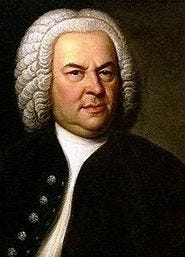
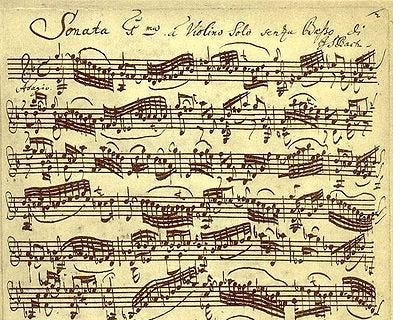
We need a Shakespeare of classical music and the only candidate is J.S. Bach. I categorically need my Bach, a musician who wrote in sheer, precise mathematics. Perhaps the most remarkable “mathematics” in Bach’s music are the instances of the golden ratio, usually denoted with the Greek letter ø = (1 + sqrt(5))/2 = 1.6180339887…, together with the Fibonacci numbers, whose limiting ratio is equal to ø (i.e., the Greek letter phi). Bach wrote for the inclined mathematical ear through his subtle cues in notes and nuanced chords, making him the greatest composer of all time.
But he had a secret called "The Bach Motif."
Pachelbel's Canon in D is a perfect example of the Bach Motif
If you take a moment to reflect, you might be surprised at how classical music can sometimes miss the mark for your health. Unlike other genres, classical music often lacks lyrics (unless we’re talking opera), which means it interacts with our minds in unique ways. Some pieces soothe like a day at the spa, while others blast triumphantly with noise, making you feel like you’re stuck in a blender!
This genius of a composer knew how to weave magic into his music, famously using the notes B, A, C, and H—his name transformed into a musical cryptogram! It’s like he left a secret code for all of us to discover. Pachelbel’s Canon in D, known as the Wedding Song, is a prime example of this motif in action. Who doesn’t recognize that catchy tune?
So, let’s bring life back to classical music! Whether it’s Bach’s melodic genius or the soothing modern sounds of incredible artists, there’s a whole world waiting to be discovered in classical crossover music, a whole new generation of artists who have tapped in to the Bach Motif, which is a note progression that floods the soul. And remember, music should make you smile, not make you feel like you’re at a dentist’s office!
If you are into classical but find it kind of 18th century, chunky, and too dynamic on the piano, harpsichord, or trumpet, try a Classical Crossover Artist.
I've limited my preferences to offer the best of which I'm most sure I can pass on these artists as gold. If you like simply desirable, ambient slow music (often with slight jazz influences), these artists will not disappoint, Dirk Maassen - (Solstice D'Été is currently my favorite driving album of all time):
Classical Crossover artists:
Dirk Maassen - Solstice D'Été https://music.apple.com/ca/album/to-the-sky-feat-london-dc/651100556?i=651100563
Chad Lawson - https://music.apple.com/ca/album/you-finally-knew/1522519865
Piano Novel - https://music.apple.com/ca/album/lumino-forest/1477986159
Jóhann Jóhannsson - https://music.apple.com/ca/album/orphée/1440775286
Helen Jane Long - https://music.apple.com/ca/album/perspective/1340074880
Fiona Joy Hawkins - https://music.apple.com/ca/album/blue-dream/1683035534
Brian Crain - https://music.apple.com/ca/album/life-is/701063793
Ryan Stewart - https://music.apple.com/ca/album/one-journey/914003887
Ludovico Einaudi - https://music.apple.com/ca/playlist/ludovico-einaudi-essentials/pl.227d82cd5cb843bda2839d3c964a368e
Ambient Soundscape Artist:Marconi Union - https://music.apple.com/ca/album/different-colours/522438587
SOURCES:
Bach Motif: https://en.wikipedia.org/wiki/BACH_motif
iTunes: https://apps.microsoft.com/store/detail/itunes
Spotify: https://www.spotify.com/ca