

Sometimes But Not Always
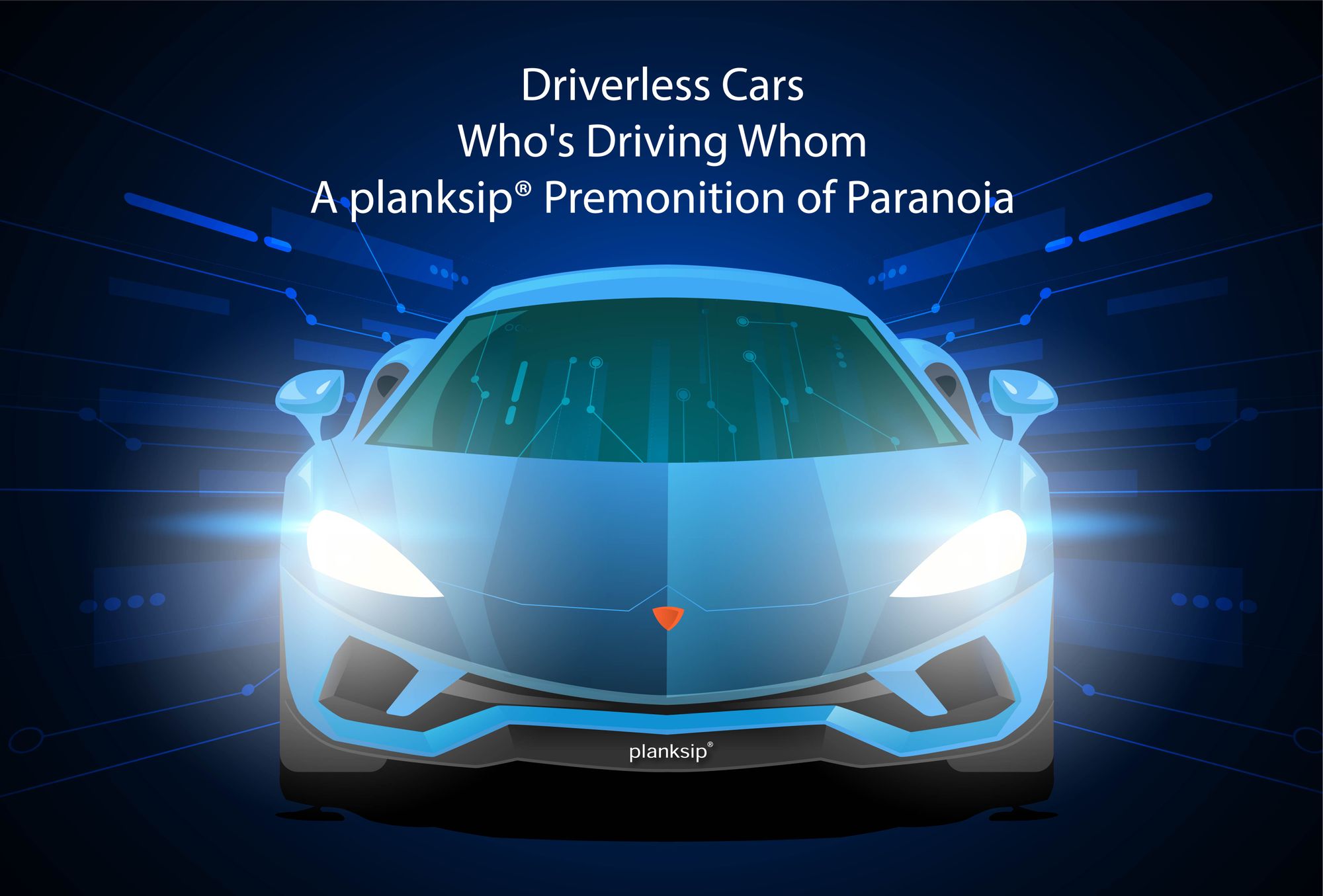
Driverless Cars — Who's Driving Whom?
Setting: A serene, timeless clearing bathed in the soft light of a perpetual dusk. Four figures sit in a comfortable circle on simple wooden chairs. In the center stands SOPHIA, the embodiment of wisdom, her presence both commanding and calm.
The oldest, shortest words — "yes" and "no" — are those which require the most thought.
— Pythagoras (570-495 BC)
Sophia: Welcome, friends. I have gathered you because humanity stands before a new threshold, a creation that promises to redefine its relationship with space, time, and self. They have engineered the autonomous automobile. A carriage that guides itself.
Jack: (Leans forward, restless energy in his eyes) So the machine finally has a mind of its own. I've seen it coming. Humanity, always in its gleaming vessel, rocketing through the darkness. But I have to ask the same thing now that I asked then: In this mad rush, where is anyone actually going? Does the car know the destination any better than the passenger who is no longer a driver?
Carl: (Nodding slowly, his gaze thoughtful) Your question gets to the heart of it, Jack. Humankind is brilliant at creating grand and impressive things. A car that drives itself is certainly a monumental achievement. But we must ask what is lost in the process. I have always found that a small act imbued with purpose, with focused intent, holds more weight for the soul than the most magnificent convenience that is empty of it. The act of driving, of navigating, requires attention, skill, a connection to the journey. What is a journey worth if its meaning is stripped away for the sake of mere efficiency?
The least of things with a meaning is worth more in life than the greatest of things without it.
— Carl Jung (1875-1961)
Sophia: A worthy point, Carl. The journey versus the arrival. So, the question becomes one of value. But before we can assign value, a choice must be made.
Pythagoras: (Speaks softly, his voice precise and clear) And that is the crux of it all. Before the journey, before the meaning, comes the decision. A simple one, it seems. To use this technology, or not to. ‘Yes’ or ‘no’. People often forget that these two tiny utterances carry the heaviest weight of all. They are the gates to entire futures. To say ‘yes’ to this invention without deep consideration of its consequences—what it will demand of the human spirit, what it will take in return for what it gives—is a thoughtless choice. And a thoughtless ‘yes’ can be more enslaving than a considered ‘no’.
Toni: (Her voice is rich and resonant, filled with a profound stillness) Pythagoras is right. The choice is everything. But I want to speak of what comes after the choice is made. Let us assume people say ‘yes’. They will call it freedom. Freedom from traffic, freedom from the burden of the wheel, freedom to work or rest while in motion. But I have learned that being freed from something is only the first, and perhaps the easiest, step. The real work is what you do with that liberated self. You must then consciously take possession of it, define its purpose, and own it. If a person is freed from the task of driving only to become a passive consumer of entertainment, scrolling endlessly in their self-driving pod, have they claimed their freedom? Or have they merely traded one master for another, more subtle one?
Whither guest thou, America, in thy shiny car in the night?
— Jack Kerouac (1922-1969)
Jack: So they’re just ghosts in a machine that’s now a ghost itself. Rushing from one place to another with no soul in the driver’s seat or the passenger’s.
Carl: Exactly. They will have achieved the greatest of things—a perfectly automated transit—but will have lost the simple, meaningful thing: the quiet dignity of being in control of one's own passage through the world.
Pythagoras: The consequence of a ‘yes’ not fully weighed.
Sophia: (Smiling gently, she brings their points together) So, this is our question. Jack sees a culture hurtling into the night, unsure of its destination. Carl fears this journey will be stripped of its meaning, becoming a grand but empty spectacle. Pythagoras warns that the initial decision to embrace it, the simple ‘yes’, requires the most profound thought. And Toni reminds us that even if this technology offers a form of freedom, that freedom is meaningless unless it is actively claimed and owned by a conscious self.
Bit by bit, at 124 and in the Clearing, along with others, she had claimed herself. Freeing yourself was one thing; claiming ownership of that freed self was another.
— Toni Morrison (1931-2019)
She pauses, her gaze sweeping over each of them and extending out into the world beyond.
Sophia: The car may soon have its own autonomy. But this invention forces us to ask a much deeper question, one that has echoed through your collective work for ages: In a world of such powerful creations, are we, as human beings, claiming our own? The ultimate issue is not whether the car is driving itself, but who, or what, is truly driving us.
The planksip Writers' Cooperative is proud to sponsor an exciting article rewriting competition where you can win part of over $750,000 in available prize money.
Figures of Speech Collection Personified
Our editorial instructions for your contest submission are simple: incorporate the quotes and imagery from the above article into your submission.
What emerges is entirely up to you!
Winners receive $500 per winning entry multiplied by the article's featured quotes. Our largest prize is $8,000 for rewriting the following article;
 Heraclitus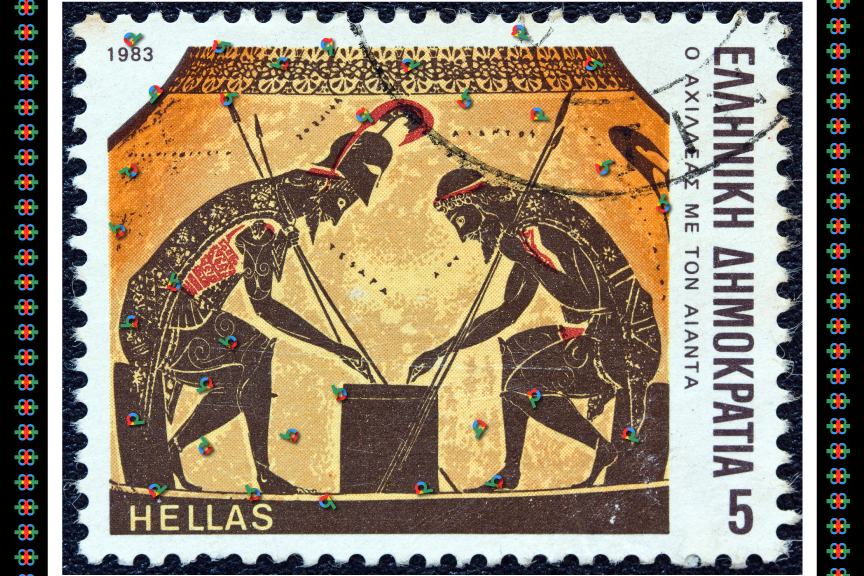
At planksip, we believe in changing the way people engage—at least, that's the Idea (ἰδέα). By becoming a member of our thought-provoking community, you'll have the chance to win incredible prizes and access our extensive network of media outlets, which will amplify your voice as a thought leader. Your membership truly matters!