

The Language of the Sacred: Unpacking Sign and Symbol in Religious Ritual
Summary: Religious rituals are profound expressions of human belief, operating through an intricate interplay of sign and symbol. This article explores how these elements function within religion, distinguishing their unique roles in conveying meaning, shaping experience, and binding communities. We will delve into how custom and convention imbue specific gestures, objects, and words with sacred significance, and how language itself becomes a primary vehicle for articulating the ineffable, drawing insights from the rich philosophical traditions found within the Great Books of the Western World.
The Foundations of Meaning: Sign vs. Symbol
At the heart of religious experience lies the human quest to understand and interact with the transcendent. This quest is often mediated through systems of meaning that rely heavily on both signs and symbols. While often used interchangeably in common parlance, philosophy and semiotics distinguish them, particularly in their religious application.
- Signs are typically direct, indicative, and often referential. They point to something specific, acting as a proxy or an indicator. A sign's meaning is generally more fixed and less open to interpretation. Think of a traffic light: red means stop. In a religious context, a specific posture in prayer might be a sign of submission or reverence.
- Symbols, by contrast, are richer, more complex, and evocative. They not only point to something but often participate in the meaning they convey, encompassing multiple layers of interpretation and resonance. A symbol can represent ideas, emotions, or spiritual truths that are difficult to articulate directly.
Distinguishing Characteristics
| Feature | Sign | Symbol |
|---|---|---|
| Relation | Direct, indicative, referential | Evocative, representational, participatory |
| Meaning | Generally fixed, singular | Multi-layered, open to interpretation |
| Function | Points to something | Embodies or is something |
| Cognition | Primarily intellectual, rational | Often emotional, intuitive, spiritual |
| Example | A specific gesture in a ritual | The cross, the mandala, the chalice |
Custom, Convention, and the Sacred
The power of sign and symbol in religion is not inherent in the material itself, but rather is conferred through custom and convention. Over generations, communities agree upon and reinforce the meanings attached to specific objects, actions, and narratives. This collective agreement transforms an ordinary object into a sacred one, a simple gesture into a profound act of worship.
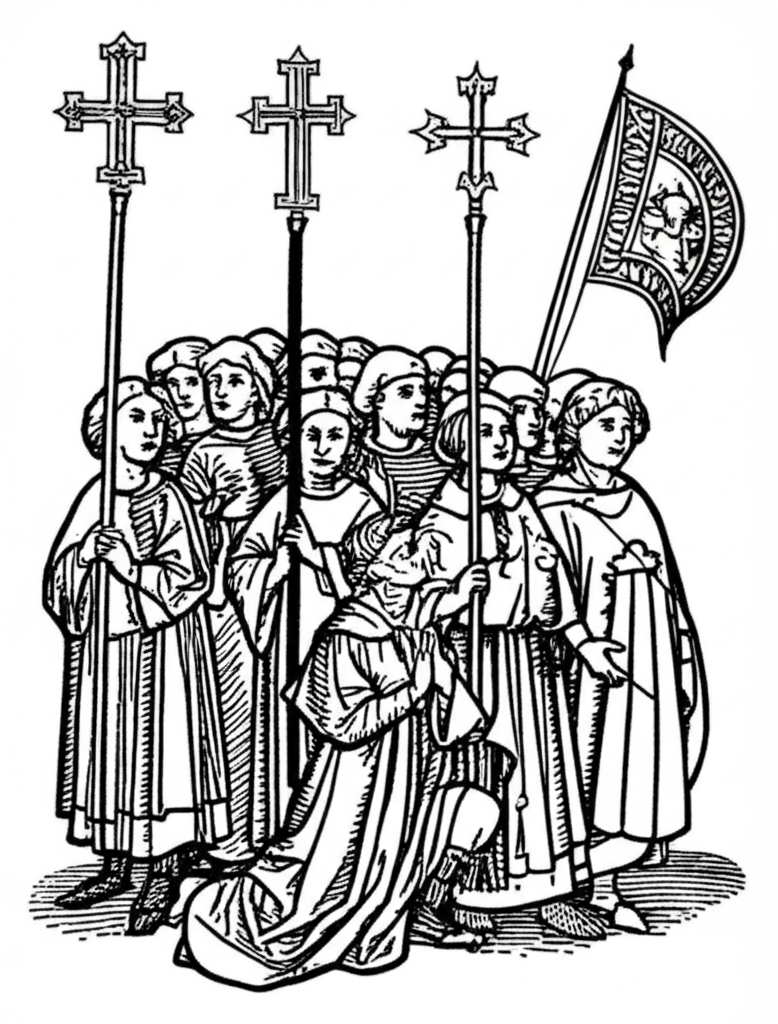
Consider the act of kneeling. While physically just bending the knees, within a religious context, it becomes a sign of humility, respect, or supplication. Through centuries of custom and convention, this physical act is imbued with deep spiritual significance, understood and replicated by adherents. Similarly, the breaking of bread in certain Christian traditions is not merely a meal; it is a symbol of communion, sacrifice, and divine presence, its meaning solidified by millennia of communal practice and theological interpretation.
The Role of Language in Ritual
Language is arguably the most pervasive system of sign and symbol we possess. In religious ritual, its role is paramount, extending far beyond mere communication. Sacred texts, prayers, chants, and sermons utilize language not just to convey information but to evoke spiritual states, consecrate objects, and articulate divine truths that often defy empirical description.
- Words as Signs: Specific words or phrases can function as signs, indicating a particular deity, a sacred place, or a prescribed action. The utterance of "Amen" is a sign of affirmation.
- Words as Symbols: More profoundly, religious language often operates symbolically. Metaphors, allegories, and parables found in scriptures are not literal accounts but symbolic narratives designed to convey complex spiritual teachings and moral insights. The concept of God as "shepherd" or "rock" uses familiar earthly signs to symbolize divine attributes like guidance and steadfastness.
- Performative Utterances: In many rituals, words are not just descriptive but performative. The pronouncement of a blessing, a vow, or an anointing ceremony uses language to actively bring about a change in spiritual status or to invoke divine presence. Here, the words themselves become potent symbols, charged with the power to transform.
The philosophical exploration of language, from Plato's ideas about the relationship between words and Forms to the later analytical traditions, provides a rich backdrop for understanding how religious language attempts to bridge the gap between the finite and the infinite, the spoken and the unspeakable.
The Enduring Power of Religious Symbols
Religious symbols provide a shared vocabulary for believers, transcending cultural and linguistic barriers. They act as mnemonic devices, encapsulating complex theological doctrines and historical narratives in an accessible form. The enduring power of these symbols lies in their capacity to:
- Connect the individual to the collective: Shared understanding of symbols fosters community and a sense of belonging.
- Bridge past, present, and future: Symbols link current adherents to ancient traditions and future aspirations.
- Express the inexpressible: They offer a means to approach and contemplate mysteries that lie beyond rational articulation.
- Inspire and motivate: Symbols can stir deep emotional and spiritual responses, influencing behavior and belief.
In conclusion, the sophisticated interplay of sign and symbol is fundamental to the structure and experience of religion. Through the lens of custom and convention, and mediated by the profound capacity of language, these elements allow humanity to engage with the sacred, transforming abstract beliefs into tangible, meaningful, and deeply personal realities.
📹 Related Video: What is Philosophy?
Video by: The School of Life
💡 Want different videos? Search YouTube for: "Philosophy of Language and Religious Belief"
📹 Related Video: PLATO ON: The Allegory of the Cave
Video by: The School of Life
💡 Want different videos? Search YouTube for: "Semiotics and Ritual Studies"