

The Unseen Architecture: Sign and Symbol in Religious Ritual
The very fabric of human understanding, particularly in matters transcending the mundane, is woven with threads of Sign and Symbol. In the realm of Religion, these elemental components are not mere embellishments but the fundamental architecture through which the ineffable is expressed, shared, and experienced. This article explores how religious rituals, through centuries of Custom and Convention, harness the power of signs and symbols, transforming abstract belief into tangible practice and profound meaning, often echoing the deep philosophical inquiries found within the Great Books of the Western World concerning Language and representation.
Decoding the Sacred: Understanding Sign and Symbol
To comprehend the profound role of signs and symbols in religious ritual, we must first distinguish between them, though their functions often intertwine:
- The Sign: A sign typically points to something specific and often has a relatively direct, unambiguous meaning. It is a marker, an indicator.
- Examples: A road sign indicating a curve ahead, a smoke signal indicating fire, or the ringing of a church bell signalling the start of a service. Its meaning is primarily denotative.
- The Symbol: A symbol, in contrast, is far richer and more complex. It not only points to something but participates in the meaning of that to which it refers. Symbols evoke, suggest, and resonate, often carrying multiple layers of meaning that can be understood intuitively or through cultural context. They are connotative and often deeply emotional.
- Examples: A cross symbolizing sacrifice and redemption, a dove symbolizing peace and the Holy Spirit, water symbolizing purification and new life.
In Religion, symbols are crucial because they bridge the gap between human experience and divine mystery. They allow for the apprehension of truths that might be too vast or abstract for direct articulation, much like how ancient philosophers grappled with the representation of ideal forms.
Ritual as a Language of the Divine
Religious rituals are essentially structured sequences of actions, gestures, and words that are imbued with symbolic meaning. They are the performative dimension of belief, where abstract tenets are made concrete and communal.
Key Aspects of Ritualistic Symbolism:
- Enactment of Myth: Rituals often re-enact foundational myths or historical events, making them present and alive for participants. The symbols used (e.g., bread and wine in communion) become conduits to the sacred narrative.
- Transformation and Transition: Many rituals mark rites of passage (birth, initiation, marriage, death), using symbols to signify a change in status or being. The symbolic acts facilitate the psychological and spiritual transition.
- Communal Identity: Shared symbols and rituals foster a sense of belonging and collective identity. Participating in a common symbolic Language reinforces the bonds within a religious community.
Custom and Convention: The Grammar of Sacred Action
The power of Sign and Symbol in Religion is not inherent in the objects themselves but is largely derived from Custom and Convention. Over generations, communities agree upon and transmit the meanings associated with particular acts, objects, and words.
- Tradition's Role: It is tradition that consecrates a gesture, imbues an object with sanctity, or makes a particular phrase resonate with spiritual significance. Without this shared understanding, a ritual act might appear arbitrary or meaningless to an outsider.
- The Weight of Repetition: The repeated performance of rituals reinforces their symbolic power. Each iteration deepens the collective memory and emotional resonance, transforming simple actions into profound expressions of faith.
- Evolution of Meaning: While conventions provide stability, the meaning of symbols can also evolve over time, adapting to new contexts while retaining core significance, demonstrating the dynamic interplay between fixed forms and living interpretation.
Language and the Sacred: Beyond Words
While verbal Language is a primary tool for expressing religious thought (scriptures, prayers, sermons), religious rituals often transcend mere words. The symbolic Language of gesture, posture, silence, music, and visual art speaks directly to the soul.
- Liturgical Language: Specific words and phrases used in liturgy are often highly symbolic, carrying layers of historical and theological meaning that go beyond their literal definitions. Think of the archaic or poetic Language often employed in sacred texts, chosen for its evocative power.
- Non-Verbal Communication: The bowing of a head, the lighting of a candle, the chanting of a mantra – these are powerful forms of symbolic communication that convey reverence, devotion, and presence in ways that words alone cannot. They engage the entire person in the act of worship.
- The Unspeakable: For many religious traditions, the divine is ultimately ineffable. Symbols provide a means to approach and apprehend that which cannot be fully articulated, offering glimpses into mysteries that defy complete rational comprehension.
The Enduring Echo
From the earliest human societies to the most complex modern faiths, Sign and Symbol have been indispensable for navigating the spiritual landscape. They provide the framework for understanding, the vocabulary for expression, and the mechanism for participation in the sacred. Religious rituals, forged through centuries of Custom and Convention, are living testaments to humanity's profound need to connect with the transcendent, transforming the abstract into the tangible through a universal Language of meaning.
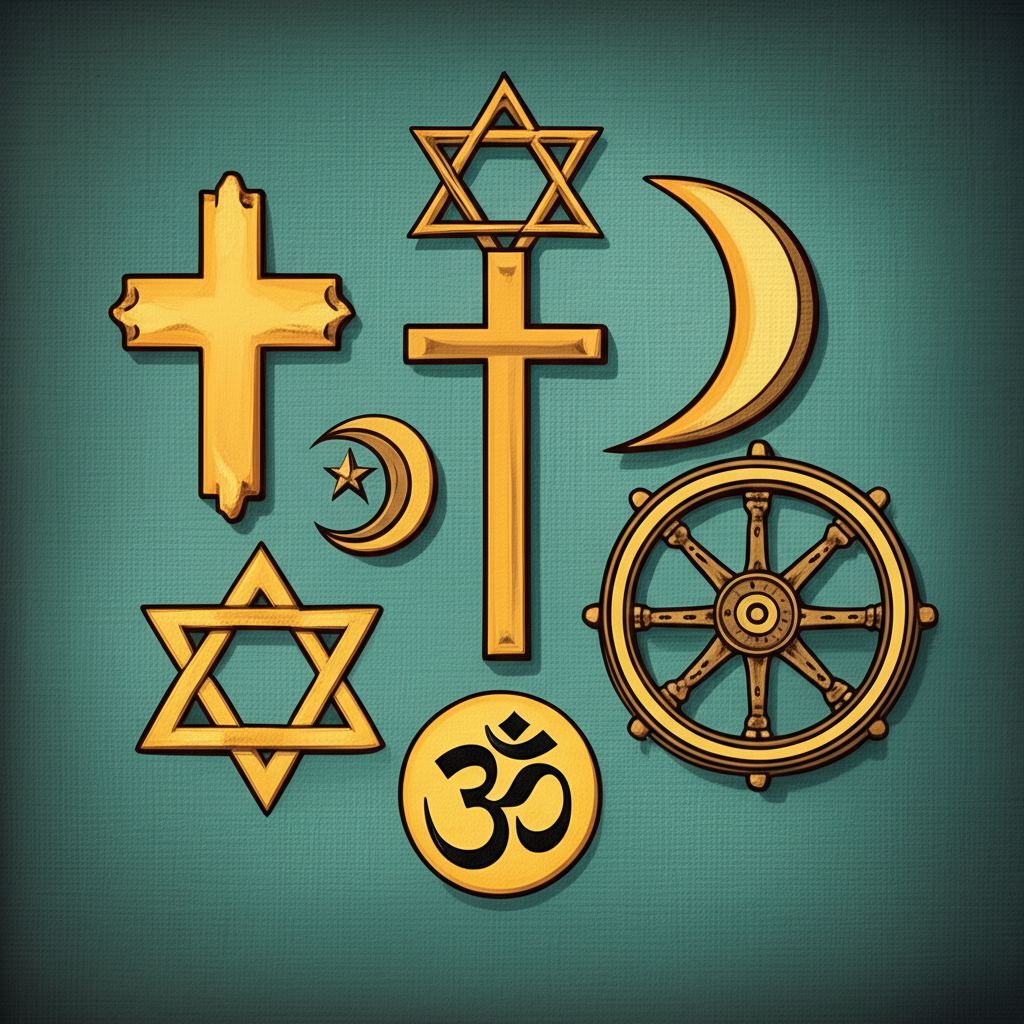 arranged in a harmonious, interconnected mandala-like pattern, subtly glowing against a backdrop of ancient script fragments from various sacred texts, emphasizing their shared role in conveying spiritual meaning across cultures.)
📹 Related Video: What is Philosophy?
Video by: The School of Life
💡 Want different videos? Search YouTube for: ""The Philosophy of Symbols and Rituals""
📹 Related Video: ARISTOTLE ON: The Nicomachean Ethics
Video by: The School of Life
💡 Want different videos? Search YouTube for: ""Meaning and Interpretation: Semiotics in Religion""