

The Paradox of Perception
When a human eye moves from one end of the Andromeda galaxy to the other — an act known as a saccade — it performs a feat that defies physical limits. In that blink of attention, the mind leaps across more than 220,000 light-years of cosmic structure.
No physical entity, not even a beam of light, could make that trip in less than the time light itself would take. And yet, perception does it — instantly. Effortlessly.
How?
The Photon’s Strange Advantage
The key may lie in the behavior of photons, the quantum particles of light that carry information from the universe to our eyes. Photons have no rest mass and experience no time. From their perspective, if such a thing can be imagined, the space between origin and destination is nonexistent.
They do not travel through spacetime. They simply arrive.
When Consciousness Mimics Light
Human perception appears to echo this strange behavior. When you look at a distant object, your awareness doesn't traverse the space between — it collapses it.
This collapse is not a metaphor. It is an experiential fact. The mind doesn’t measure or cross. It jumps. It is there, without the burden of scale. Just as a photon collapses the wavefunction when measured, so does consciousness collapse vastness into nowness.
The Quantum Nature of Awareness
This raises a provocative suggestion:
Perception is not metaphorically quantum. It is kin to the quantum act.
Awareness may be the cognitive equivalent of a photon’s timeless motion — not a process of movement, but an event of arrival. If so, then perception itself could be understood as an act of spacetime compression — a moment in which distance, time, and selfhood all fold inward.
It is not a metaphorical leap. It is a structural resonance with the fundamental nature of reality.
Beyond Gravity: Folding the Real
Einstein taught us that gravity is the curvature of spacetime. But what if it also bends duration? What if awareness, like gravity, acts upon the fabric of experience — not by moving, but by folding?
In this light (no pun intended), awareness becomes the bridge between presence and infinity — the singular axis through which time, space, and meaning compress into a single act:
To look across Andromeda is not merely to see a galaxy.
It is to enact a microcosmic miracle:
- A timeless event.
- A conscious collapse.
- A particle of presence, shaped like you.
A Final Invitation
In a world where attention spans are shrinking and perception is commodified, the realization that our eyes perform quantum acts every moment should not just astonish — it should humble.
To see is not passive. It is collapse, recursion, and resonance.
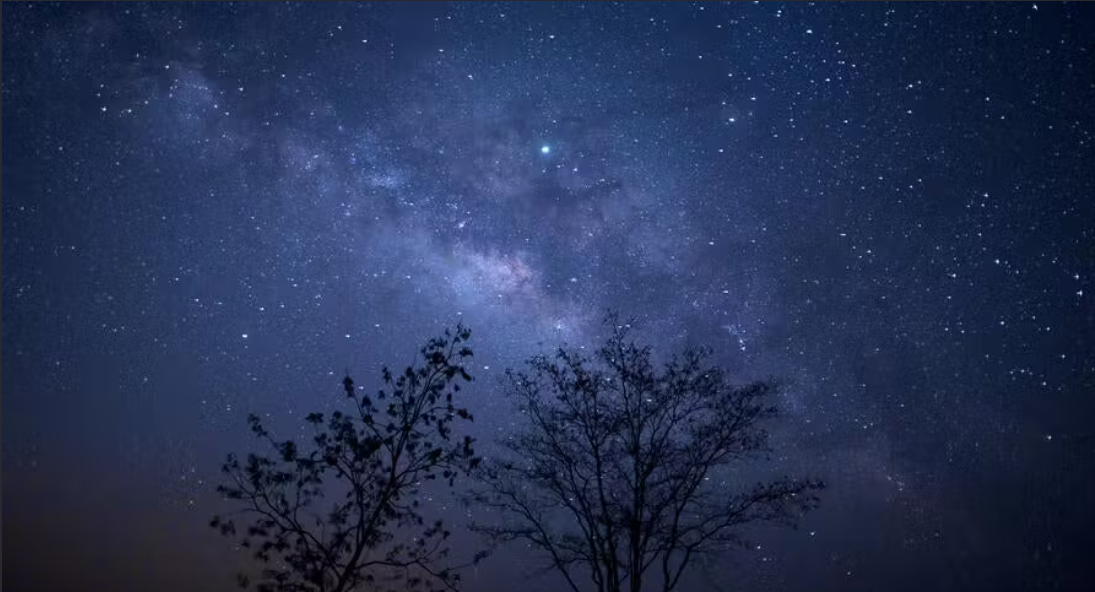
So next time you look up at the night sky, remember:
You’re not watching the light arrive.
You are, in a very real way, arriving with it.