

Prophecy and the Knowledge of the Future: A Philosophical Inquiry
The concept of Prophecy has captivated humanity for millennia, offering tantalizing glimpses into what lies ahead. This article delves into the philosophical implications of prophecy, exploring how the notion of knowing the future challenges our understanding of Time, the nature of Knowledge, and the very foundations of Religion. Drawing upon the rich tapestry of Western thought, we will examine whether true prophetic insight is possible, what it might mean for human free will, and how it shapes our quest for understanding our place in the cosmos.
The Allure of Foresight: What is Prophecy?
At its core, prophecy refers to the claim of knowing events that have not yet occurred, often through divine inspiration or supernatural means. Unlike mere prediction, which might be based on observable patterns or scientific models, prophecy typically purports to reveal a divinely ordained or otherwise hidden future. From ancient oracles to biblical prophets, the belief in such foresight has profoundly influenced societies, cultures, and individual destinies.
- Prediction vs. Prophecy:
- Prediction: Based on Knowledge of established laws, patterns, and current conditions (e.g., weather forecasting, economic modeling).
- Prophecy: Often presented as a revelation from a higher power, transcending empirical observation or rational deduction. It speaks to a future that is known through extraordinary means.
The enduring fascination with prophecy stems from a deep-seated human desire to mitigate uncertainty, to understand purpose, and to glimpse the ultimate unfolding of Time.
Prophecy and the Nature of Time
Perhaps no philosophical concept is more directly challenged by prophecy than our understanding of Time. If the future can be known, what does this imply about its nature? Is Time merely a linear progression, or is it a more complex, perhaps even eternal, present in the eyes of a divine beholder?
Philosophers from Augustine to Kant have grappled with the nature of Time. For Augustine, in his Confessions, Time is a "distention of the soul," a subjective experience rather than an objective reality independent of consciousness. Yet, for God, all Time is eternally present. If God possesses complete Knowledge of the future, as many religions assert, then the future is, in some sense, already known and fixed.
- Philosophical Dilemmas of Prophetic Time:
- Determinism vs. Free Will: If the future is known through prophecy, does this negate human free will? Are our choices merely playing out a predetermined script? This question has vexed theologians and philosophers for centuries, notably explored by figures like Thomas Aquinas in his Summa Theologica, who sought to reconcile divine foreknowledge with human liberty.
- The "Block Universe" Theory: Some modern philosophical interpretations suggest that all moments of Time (past, present, future) exist simultaneously, like points on a line. Prophecy could then be seen as a privileged access to these "future" points.
The very possibility of prophecy forces us to reconsider whether Time is a river flowing inexorably forward or a landscape that can be surveyed from a vantage point beyond our limited temporal experience.
The Epistemology of Prophetic Knowledge
How is prophetic Knowledge acquired, and can it truly be considered Knowledge in a rigorous philosophical sense? Plato, in works like Ion and Phaedrus, discussed divine madness and inspiration, suggesting that poets and prophets might operate not through rational Knowledge but through a divine gift, a state of being "out of their minds."
- Sources of Prophetic Knowledge:
- Divine Revelation: Direct communication from a deity (e.g., biblical prophets).
- Visions and Dreams: Symbolic or literal glimpses of future events.
- Intuition or "Sixth Sense": A non-rational apprehension of what is to come.
The challenge for epistemology lies in verifying such Knowledge. How can we distinguish genuine prophecy from mere speculation, delusion, or clever manipulation? The criteria for Knowledge typically involve justification, truth, and belief. While prophets may believe their visions are true, and their followers may believe them, philosophical inquiry demands a justification that often transcends the empirical realm.
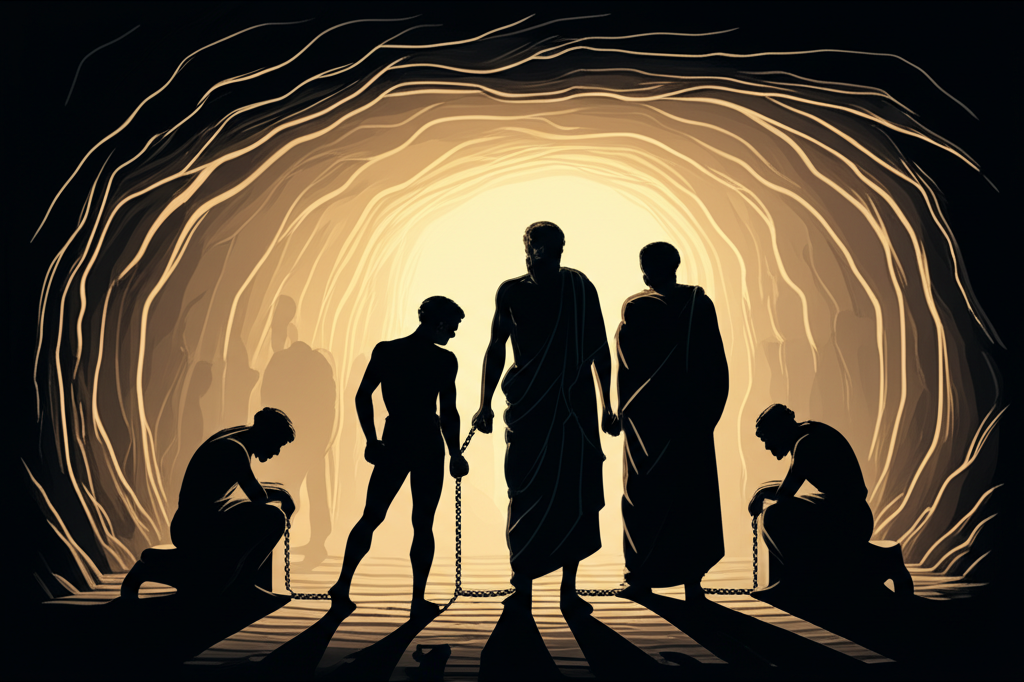
Prophecy, Religion, and the Human Condition
The relationship between Prophecy and Religion is profound and inextricable. For many faiths, prophecy serves as a cornerstone, validating divine authority, guiding moral conduct, and offering hope or warning about ultimate destinies.
- Roles of Prophecy in Religion:
- Validation: Fulfilling prophecies are often cited as proof of divine power and the truth of a religion's claims.
- Guidance: Prophetic messages can provide moral codes, warnings, and directions for communities.
- Eschatology: Prophecies often describe the end of Time, judgment, and the ultimate fate of humanity, providing a framework for understanding purpose and meaning.
The belief in prophecy offers comfort in chaos, structure in uncertainty, and a sense of cosmic significance. It suggests that human history is not random but part of a larger, divinely known plan, giving meaning to suffering and hope for redemption.
Critiques and Philosophical Skepticism
Despite its widespread appeal, prophecy has faced significant philosophical skepticism. Thinkers like Baruch Spinoza, in his Theological-Political Treatise, argued for a rational interpretation of scripture, often seeing prophetic claims as expressions of imagination or moral exhortation rather than literal foretelling. Immanuel Kant, in his Critique of Pure Reason, delineated the limits of human Knowledge, suggesting that attempts to know things beyond the realm of possible experience (like the future) fall outside the scope of legitimate reason.
- Points of Skepticism:
- Lack of Empirical Verification: Prophecies are notoriously difficult to test rigorously.
- Ambiguity and Interpretation: Many prophecies are vague, allowing for multiple interpretations after the fact.
- The Problem of False Prophecies: History is replete with prophecies that failed to materialize, raising questions about the authenticity of any such claims.
- Psychological and Social Factors: Belief in prophecy can be explained by cognitive biases, wishful thinking, or the power of suggestion within a community.
Conclusion
The concept of Prophecy challenges us to confront fundamental questions about Time, Knowledge, and the very nature of reality. Whether viewed as a divine gift, a psychological phenomenon, or a philosophical puzzle, its presence across cultures and throughout history demands our intellectual engagement. While modern philosophy often favors empirical evidence and rational deduction, the enduring allure of Prophecy reminds us that the human quest for Knowledge extends beyond the immediately observable, probing the mysteries of the future, the limits of our understanding, and the profound interplay between fate and free will.
YouTube Video Suggestions:
-
📹 Related Video: KANT ON: What is Enlightenment?
Video by: The School of Life
💡 Want different videos? Search YouTube for: "Augustine on Time and Eternity"
2. ## 📹 Related Video: What is Philosophy?
Video by: The School of Life
💡 Want different videos? Search YouTube for: "Determinism vs Free Will Philosophy"