

Philosophy as the Pursuit of Wisdom: An Enduring Quest
The Heart of Inquiry: A Summary
At its core, philosophy is not merely an academic discipline or a collection of abstract theories; it is, fundamentally, the philo-sophia – the love of wisdom. This ancient and profound pursuit distinguishes itself from the accumulation of mere knowledge by seeking a deeper understanding of Being itself, our place within it, and the principles that govern a well-lived life. From the Socratic dictum "know thyself" to contemporary existential inquiries, the philosophical journey is an unending quest for insight, meaning, and a comprehensive grasp of reality, inviting us to transcend superficial understanding and embrace a richer, more reflective existence.
What is Wisdom? A Philosophical Inquiry
The concept of wisdom often eludes simple definition, yet it stands as the ultimate prize in philosophical endeavor. Unlike knowledge, which can be accumulated and categorized (facts, data, theories), wisdom implies a synthesized understanding, an ability to discern truth, make sound judgments, and live in accordance with ethical principles.
Key Distinctions:
| Aspect | Knowledge | Wisdom |
|---|---|---|
| Nature | Accumulation of facts, information, skills | Deep understanding, insight, discernment |
| Focus | "What" and "How" | "Why" and "What for" |
| Application | Problem-solving, technical proficiency | Ethical living, meaningful action, profound insight |
| Scope | Specific domains | Holistic, interconnected understanding |
| Source | Learning, experience, study | Reflection, experience, critical thought, moral compass |
For ancient Greek thinkers, particularly those chronicled in the Great Books of the Western World, wisdom encompassed intellectual clarity, moral virtue, and a harmonious relationship with the cosmos. It was not just knowing more, but knowing better, and, crucially, knowing how to live.
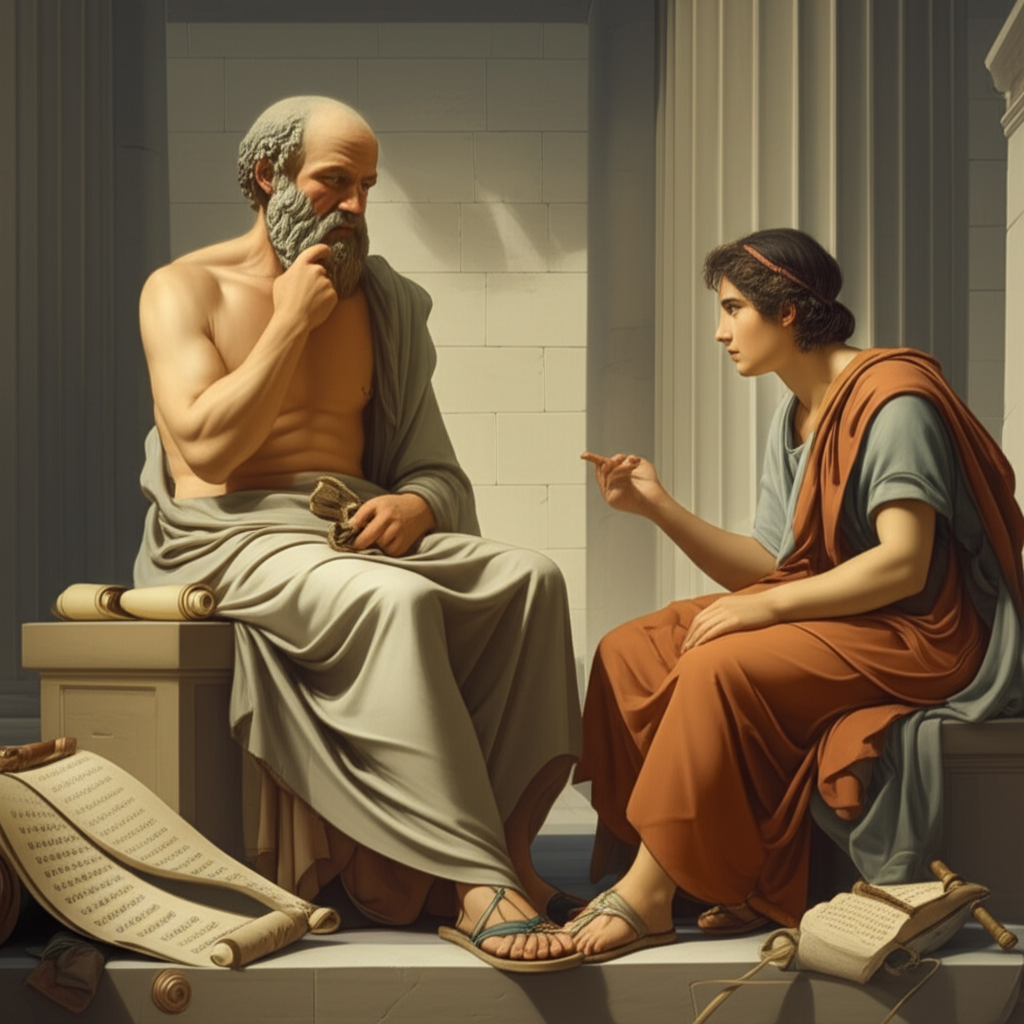
The Historical Roots: From Ancient Greece to Modern Thought
The pursuit of wisdom has been the animating spirit of philosophy since its very inception. The Great Books of the Western World provide an unparalleled chronicle of this enduring quest.
The Socratic Legacy: Knowing What You Don't Know
Socrates, as depicted in Plato’s dialogues, famously declared his own wisdom lay in knowing that he knew nothing. This profound humility wasn't an admission of ignorance, but a recognition of the vastness of what remains unknown, urging continuous inquiry. His method – the Socratic method – was designed to expose false knowledge and guide individuals toward genuine insight, preparing the ground for true wisdom. For Socrates, the unexamined life was not worth living, implying that the pursuit of wisdom is intrinsically linked to self-reflection and moral clarity.
Plato's Forms and the Pursuit of Truth
Plato, building on his mentor's ideas, posited a realm of perfect, unchanging Forms accessible through reason, not sensory experience. True wisdom, for Plato, involved ascending from the shadows of the material world to grasp these eternal Forms, particularly the Form of the Good. This journey, beautifully illustrated in the Allegory of the Cave, is the philosopher’s arduous ascent towards ultimate reality and Being.
Aristotle's Practical and Theoretical Wisdom
Aristotle distinguished between different kinds of wisdom. Phronesis, or practical wisdom, concerns moral action and how to live well in the world – making the right choices in specific situations. Sophia, or theoretical wisdom, is the highest form, involving contemplation of eternal truths and first principles, leading to an understanding of the ultimate nature of Being. Both forms are essential for a complete philosophical life.
Beyond Antiquity: Diverse Paths to Wisdom
The quest for wisdom continued to evolve through the ages:
- Medieval Philosophers: Figures like St. Thomas Aquinas integrated faith and reason in their pursuit of divine wisdom, understanding God as the ultimate source of truth and Being.
- Enlightenment Thinkers: Philosophers like Kant sought to establish universal moral laws and rational foundations for knowledge and human autonomy, seeing reason itself as a path to enlightened wisdom.
- Modern Existentialists: While questioning traditional certainties, thinkers like Sartre and Camus grappled with the meaning of Being in an absurd world, seeking a form of wisdom in facing human freedom and responsibility.
The Interplay of Philosophy, Knowledge, and Being
The journey to wisdom is a complex interplay of several fundamental concepts:
- Philosophy as the Method: It provides the framework, the critical tools, and the persistent questioning necessary to move beyond superficial understanding. It trains the mind to analyze, synthesize, and evaluate.
- Knowledge as the Foundation: While not wisdom itself, robust knowledge is indispensable. One cannot discern truth without understanding facts, theories, and various perspectives. Philosophy interrogates the very nature of knowledge – its limits, its sources, and its validity (epistemology).
- Being as the Subject: The ultimate aim of wisdom often revolves around understanding Being – existence, reality, the fundamental nature of things (ontology and metaphysics). What does it mean to exist? What is the nature of consciousness? What is real? These are questions that underpin the search for profound wisdom. A sage understands the interconnectedness of all Being.
YouTube: Socrates Plato Aristotle Philosophy Wisdom
YouTube: What is Wisdom Philosophy
Cultivating Wisdom in the Modern Age
While the pursuit of wisdom might seem like an ancient endeavor, its relevance is perhaps greater than ever in an age saturated with information but often starved of true insight.
Practical Steps for a Philosophical Life:
- Embrace Critical Thinking: Question assumptions, analyze arguments, and seek evidence, rather than passively accepting information.
- Engage with Diverse Perspectives: Read widely from the Great Books and contemporary thought, listen actively, and challenge your own biases. This broadens your understanding of Being and human experience.
- Practice Self-Reflection: Regularly contemplate your values, motivations, and actions. Journaling, meditation, and quiet thought are powerful tools.
- Seek Depth over Breadth: While knowledge is vast, true wisdom often comes from deeply understanding a few fundamental principles rather than superficially knowing many facts.
- Live Ethically: Wisdom is not just theoretical; it's embodied. Strive to act with integrity, compassion, and justice in your daily life.
- Learn from Experience: Reflect on successes and failures, extracting lessons that contribute to your evolving understanding of life and Being.
Challenges and Nuances in the Pursuit
The path to wisdom is not without its difficulties:
- Subjectivity vs. Objectivity: Is wisdom universal, or is it deeply personal? Philosophers grapple with how to find objective truths while acknowledging individual perspectives.
- The Elusiveness of Definition: As discussed, wisdom is hard to pin down, making its pursuit a continuous process rather than a fixed destination.
- The Danger of Dogma: True philosophical wisdom eschews rigid adherence to unchallenged beliefs, always remaining open to revision and deeper insight.
- The Paradox of Knowledge: The more we learn, the more we realize how much we don't know, echoing Socrates' initial insight. This can be humbling but also liberating.
Conclusion: The Enduring Value of the Philosophical Quest
Philosophy as the pursuit of wisdom remains one of humanity's most noble and essential endeavors. It is a journey that transcends the accumulation of knowledge, delving into the profound questions of Being, ethics, and meaning. In an increasingly complex world, the philosophical quest offers not just answers, but the very tools to ask better questions, to live more thoughtfully, and to cultivate a deeper, more resilient understanding of ourselves and the cosmos. To engage with philosophy is to embark on a lifelong commitment to growth, insight, and the profound love of wisdom.
📹 Related Video: What is Philosophy?
Video by: The School of Life
💡 Want different videos? Search YouTube for: "Philosophy as the Pursuit of Wisdom philosophy"