

Oligarchy and the Suppression of Liberty
A Concise Overview
Oligarchy, a form of government where power is concentrated in the hands of a small, privileged group—often defined by wealth, family lineage, or military control—stands as a perpetual adversary to the principle of Liberty. This article explores how oligarchic structures inherently lead to the suppression of individual freedoms and the distortion of Law, ultimately undermining the very foundations of a just society. Drawing insights from the philosophical traditions enshrined in the Great Books of the Western World, we will examine the mechanisms by which oligarchs maintain their dominance and the profound consequences for the populace.
The Corrosive Nature of Oligarchy
At its core, an oligarchy is characterized by rule by the few. Unlike an aristocracy, which theoretically bases its rule on merit or virtue, an oligarchy typically arises from and perpetuates itself through wealth. As Aristotle eloquently noted in Politics, "When the rulers owe their power to their wealth, whether they be few or many, that is an oligarchy." This distinction is crucial: the pursuit and preservation of economic advantage become the primary drivers of policy and governance.
The inherent conflict between oligarchy and Liberty stems from this self-serving foundation. While liberty champions individual rights, equal opportunity, and freedom from arbitrary power, oligarchy thrives on inequality, limited access, and the concentration of power.
Key Characteristics of an Oligarchic State:
- Wealth as the Basis of Power: Political influence is directly correlated with economic standing.
- Limited Political Participation: Suffrage or political office is restricted to a select few.
- Self-Perpetuation: Power tends to remain within a narrow elite, often passed down through generations.
- Suppression of Dissent: Any challenge to the established order is swiftly neutralized.
- Distortion of Law: Legal frameworks are crafted to protect the interests of the ruling class.
Mechanisms of Liberty Suppression
Oligarchic regimes employ various tactics to consolidate their power and curtail the freedoms of the many. These methods often involve subtle manipulation rather than overt tyranny, making them particularly insidious.
1. The Weaponization of Law
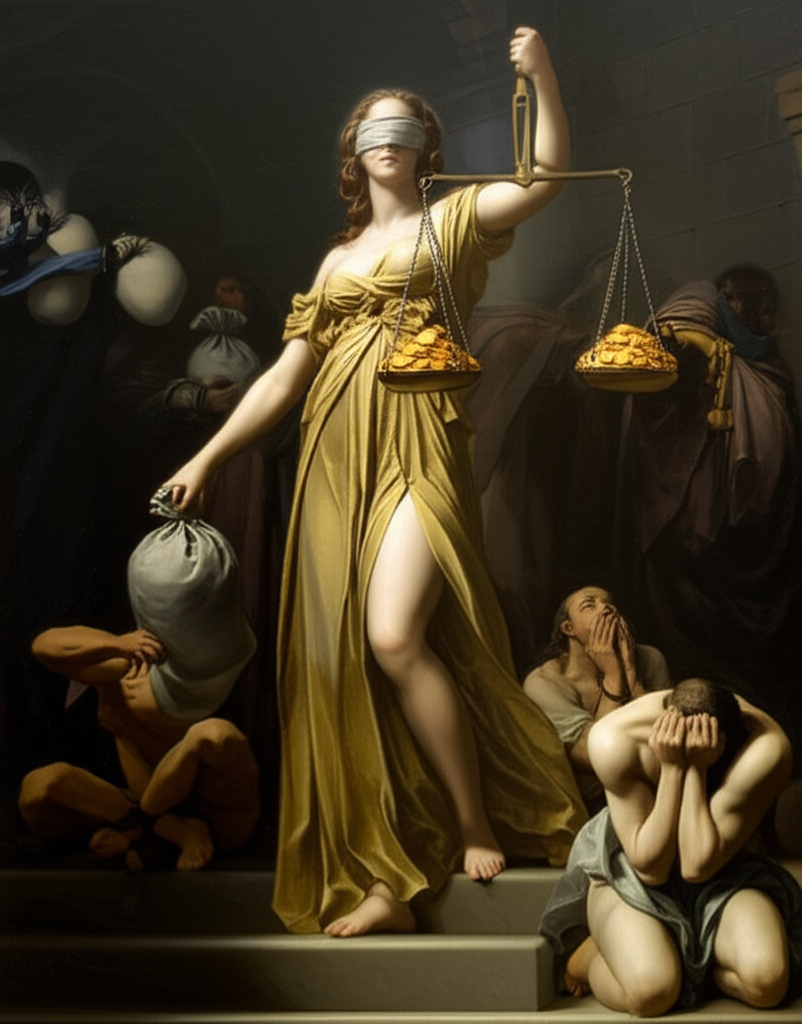
One of the most potent tools in an oligarch's arsenal is the manipulation of Law. Instead of serving as an impartial arbiter of justice or a protector of universal rights, the legal system becomes a instrument to solidify the elite's position.
- Discriminatory Legislation: Laws are passed that favor the wealthy, such as tax policies that benefit capital over labor, or regulations that create monopolies for allied businesses.
- Unequal Application of Justice: The poor and politically marginalized face harsher penalties and less access to legal recourse, while the powerful often operate with impunity.
- Control over Judiciary: Judges and legal officials may be appointed based on loyalty or shared interests rather than merit, ensuring judicial decisions align with oligarchic objectives.
2. Control Over Government Institutions
Oligarchs ensure that key government institutions are either directly controlled or heavily influenced by their interests. This extends beyond the legislative and judicial branches.
| Government Branch | Oligarchic Control Mechanism | Impact on Liberty |
|---|---|---|
| Legislative | Lobbying, campaign finance, direct representation by allies | Laws passed favor elite; public interest neglected |
| Executive | Appointments to key ministries, regulatory bodies | Policies enacted benefit specific industries/families |
| Judicial | Appointment of sympathetic judges, manipulation of legal processes | Justice system serves the powerful; rule of law undermined |
| Bureaucracy | Strategic placement of loyalists in civil service | Implementation of policies skewed towards elite interests |
3. Economic Coercion and Limited Opportunity
Economic control is intrinsically linked to political power in an oligarchy. By limiting economic opportunities for the majority, oligarchs create a dependent populace, less likely to challenge their authority.
- Monopolies and Cartels: Key industries are dominated by a few powerful entities, stifling competition and limiting upward mobility.
- Wage Suppression: Policies that keep wages low ensure a compliant workforce and prevent the accumulation of wealth outside the oligarchic circle.
- Restricted Access to Resources: Land, education, healthcare, and credit may be disproportionately available to the elite, creating systemic disadvantages.
4. Suppression of Dissent and Information Control
To maintain their grip, oligarchs often restrict freedoms of speech, assembly, and the press.
- Censorship and Propaganda: Media outlets may be owned or influenced by oligarchs, shaping public narrative and demonizing opposition.
- Surveillance: Technologies might be deployed to monitor citizens, discouraging organizing or protest.
- Intimidation and Repression: Critics and activists face legal harassment, economic repercussions, or even physical threats.
The Philosophical Stance on Liberty
Philosophers throughout history, from Plato and Aristotle to Locke and Rousseau, have grappled with the ideal forms of government and the essential nature of Liberty. The consensus among many of these thinkers, whose works comprise the Great Books, is that a just society must prioritize the common good and protect individual freedoms.
John Locke, for instance, argued for natural rights, including life, liberty, and property, which no government could legitimately infringe upon. When power is concentrated in an oligarchy, these rights are systematically eroded, turning citizens into subjects. The very social contract, which posits that government derives its legitimacy from the consent of the governed to protect their rights, is shattered.
Consequences for Society
The long-term effects of oligarchic rule are devastating for a society:
- Deepening Inequality: The gap between the rich and the poor widens, leading to social stratification and resentment.
- Political Instability: Suppressed populations eventually seek change, often through disruptive means.
- Erosion of Trust: Public faith in institutions, Law, and the concept of justice dwindles.
- Stifled Innovation and Progress: When opportunities are limited to a few, the collective potential of society is never fully realized.
- Moral Decay: The pursuit of self-interest above all else corrupts the ethical fabric of the nation.
Conclusion
Oligarchy, in its various guises, presents a profound and persistent threat to Liberty. By concentrating power and wealth in the hands of a select few, it distorts the purpose of Law, corrupts the integrity of government, and systematically suppresses the freedoms of the many. Understanding its mechanisms, as illuminated by centuries of philosophical inquiry, is the first step toward safeguarding the principles of justice, equality, and true liberty for all. Vigilance and active participation in the democratic process remain our strongest defenses against this ancient adversary.
📹 Related Video: PLATO ON: The Allegory of the Cave
Video by: The School of Life
💡 Want different videos? Search YouTube for: ""Plato's Republic: Oligarchy Explained""
📹 Related Video: ARISTOTLE ON: The Nicomachean Ethics
Video by: The School of Life
💡 Want different videos? Search YouTube for: ""Aristotle Politics: Forms of Government - Oligarchy vs Aristocracy""