

Oligarchy and the Suppression of Liberty: A Philosophical Inquiry
Summary: The concept of oligarchy, rule by a wealthy few, stands as a perennial philosophical challenge to the ideal of liberty. This article explores how this form of Government, as articulated by classical thinkers within the Great Books of the Western World, inherently undermines individual and collective freedoms. We will delve into the mechanisms by which concentrated power and wealth erode the protections offered by just Law, leading to the suppression of the broader populace's liberty.
The Shifting Sands of Power: An Introduction to Oligarchy
From the earliest philosophical inquiries into political structures, the question of who governs, and to what end, has been paramount. Among the various forms of Government debated by ancient minds, oligarchy emerges as a particularly insidious threat to the flourishing of human liberty. Not merely the rule of a select few, but specifically the dominion of the wealthy few, oligarchy distorts the very purpose of political association, bending the common good to serve private interests. This fundamental imbalance, as we shall see, is where the suppression of liberty truly begins.
Ancient Insights: Plato, Aristotle, and the Degeneration of Government
The philosophers of ancient Greece, whose works form the bedrock of the Great Books tradition, provided profound analyses of oligarchy. Both Plato and Aristotle, in their respective masterpieces, The Republic and Politics, meticulously cataloged the forms of Government and their inherent tendencies towards corruption.
- Plato's Perspective: In The Republic, Plato describes the transition from timocracy (rule by honor) to oligarchy as a society's focus shifts from virtue to wealth. He posits that an oligarchic Government is fundamentally divided, with "two states, one of the rich, the other of the poor, dwelling together." This division, he argues, leads to internal strife and an inevitable decline in justice and liberty. The rulers, driven by avarice, become increasingly detached from the needs of the citizens, prioritizing their own accumulation of wealth above all else.
- Aristotle's Classification: Aristotle, in Politics, offers a more empirical and systematic classification. He defines oligarchy as a deviation from aristocracy, where the few rule not for the common good, but for their own benefit, typically the wealthy. He distinguishes it from a true aristocracy, where the best citizens rule for the entire community. For Aristotle, the defining characteristic of oligarchy is the criterion for office: wealth. This focus on wealth inevitably means that the Law will be shaped to protect and expand the interests of the rich, thereby limiting the opportunities and liberty of the less affluent.
Both thinkers understood that the concentration of power in the hands of the wealthy few inevitably leads to the erosion of the liberty of the many, as the fundamental purpose of Government shifts from justice and the common good to self-preservation and self-enrichment.
The Nexus of Wealth and Power: How Oligarchy Suppresses Liberty
The suppression of liberty under an oligarchy is not always a dramatic, overt act of tyranny, but often a gradual, systemic erosion. This process manifests through several key mechanisms:
- Economic Disenfranchisement: The wealthy elite control vital resources, industries, and capital, limiting economic opportunities for the majority. This can lead to a state of dependency, where citizens' liberty to choose their path, pursue prosperity, or even maintain basic livelihoods is constrained by the powerful few.
- Manipulation of Law and Justice: In an oligarchy, the Law often ceases to be an impartial arbiter of justice and becomes a tool for maintaining the status quo. Legislation might favor the wealthy through tax breaks, deregulation, or preferential treatment in business dealings. Furthermore, access to justice itself can become a commodity, effectively denying the poor their rightful recourse.
- Control of Information and Education: To maintain their power, oligarchs may seek to control narratives, influence public discourse, and limit access to comprehensive education. This restricts intellectual liberty, preventing citizens from forming independent opinions or challenging the ruling elite.
- Exclusion from Political Participation: While an oligarchy might retain the forms of democratic Government (e.g., elections), the reality is that political participation is often circumscribed. High campaign costs, limited media access for challengers, and gerrymandering can effectively ensure that only candidates approved by the wealthy elite can gain power, thereby stifling political liberty.
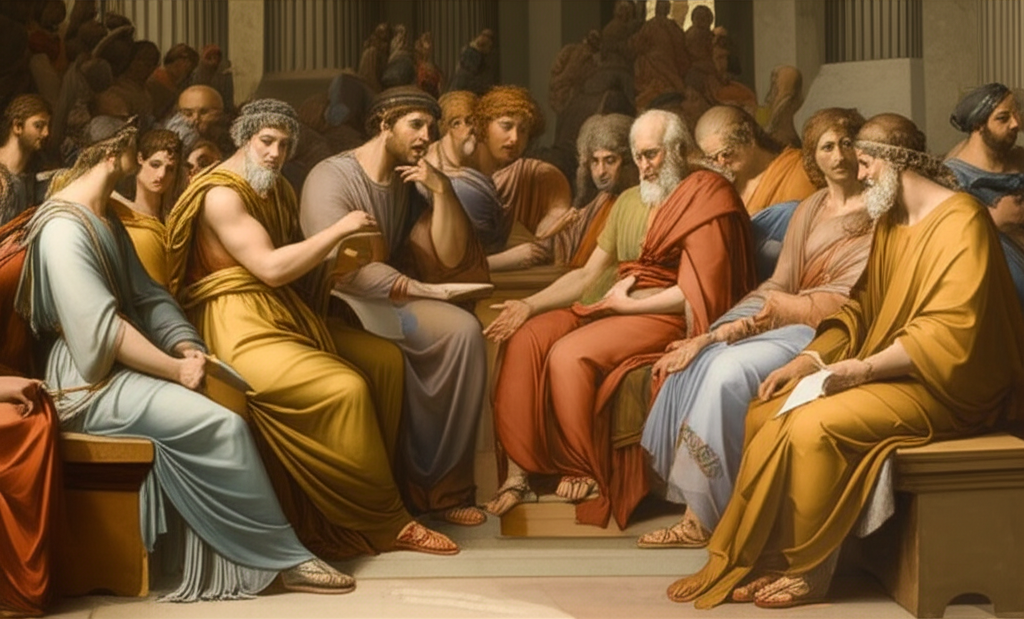
Law as a Tool or a Shield?
The role of Law is critical in understanding the relationship between oligarchy and liberty. Ideally, Law serves as a shield, protecting the rights and freedoms of all citizens impartially. Thinkers like John Locke, whose work is foundational in the Great Books canon, argued for a Government under Law that protects natural rights, including liberty and property, for everyone.
However, under an oligarchy, Law can become a tool—a weapon even—wielded by the powerful. When the legislative process is dominated by those with concentrated wealth, Law can be crafted to:
- Legitimize Inequality: Enacting policies that widen the gap between rich and poor, rather than narrowing it.
- Suppress Dissent: Creating legal frameworks that restrict freedom of assembly, speech, or protest when these actions threaten the oligarchic order.
- Protect Vested Interests: Granting monopolies, subsidies, or exemptions that benefit the ruling class at the expense of fair competition and public welfare.
The philosophical challenge lies in ensuring that the Law remains a universal protector of liberty rather than a partisan instrument of power.
The Enduring Struggle for Liberty
The philosophical exploration of oligarchy serves as a timeless warning against complacency in the pursuit of liberty. The Great Books of the Western World consistently remind us that the struggle against the concentration of power and wealth is an ongoing one. The health of any Government system, and its ability to safeguard liberty, depends on a vigilant citizenry and a commitment to justice that transcends narrow self-interest. The insights of Plato, Aristotle, and later political philosophers continue to illuminate the subtle ways in which oligarchy can take root, slowly but surely stifling the very freedoms we hold dear.
Conclusion: A Timeless Warning
In conclusion, the philosophical tradition, from ancient Greece to modern thought, consistently highlights oligarchy as a direct and potent threat to liberty. By concentrating wealth and power in the hands of a few, an oligarchic Government systematically undermines the foundational principles of justice and freedom. The manipulation of Law, the control of economic opportunity, and the suppression of political participation are all hallmarks of a system where the liberty of the many is sacrificed for the benefit of the few. Understanding these dynamics is crucial for any society striving to protect and expand the freedoms of its citizens.
📹 Related Video: PLATO ON: The Allegory of the Cave
Video by: The School of Life
💡 Want different videos? Search YouTube for: ""Plato's Republic political philosophy oligarchy""
📹 Related Video: ARISTOTLE ON: The Nicomachean Ethics
Video by: The School of Life
💡 Want different videos? Search YouTube for: ""Aristotle Politics forms of government liberty""