

Monarchy vs. Democracy: A Study of Governance
This article delves into the enduring philosophical debate surrounding two foundational forms of Government: Monarchy and Democracy. Drawing upon the rich tapestry of thought from the Great Books of the Western World, we explore the historical foundations, inherent strengths, and critical weaknesses of each system, examining their claims to legitimacy and their impact on the State and its citizens. From the singular authority of a monarch to the collective will of the people, we dissect the core tenets that have shaped political thought for millennia, seeking to understand the perpetual quest for optimal Government.
The Eternal Question: Who Should Rule?
Since the dawn of organized societies, humanity has grappled with the fundamental question: Who should rule? This query, seemingly simple, unlocks a labyrinth of philosophical inquiry into justice, power, and the very nature of the State. Among the myriad answers proposed, two forms of Government have persistently stood as monumental contenders: Monarchy and Democracy. Each, with its distinct vision of authority and citizen participation, offers a compelling, yet often contradictory, path to societal order and prosperity. To truly understand the complexities of modern governance, one must first journey through the philosophical landscapes that gave rise to these enduring political systems.
Monarchy: The Rule of One
The concept of Monarchy, derived from the Greek monos (one) and arkhein (to rule), posits that ultimate authority resides in a single individual. This form of Government is arguably the oldest and most widespread throughout history, often justified by divine right, inherited lineage, or exceptional personal virtue.
Philosophical Underpinnings of Monarchy
Philosophers throughout history have considered the merits and perils of rule by a single person, often with nuanced perspectives:
- Plato's Philosopher-King: In The Republic, Plato, while critical of pure democracy, posited an ideal State ruled by a wise and just philosopher-king. This benevolent monarch, whose intellect and virtue would guide the populace towards the good, represented a form of enlightened autocracy, not based on birthright but on rigorous training and merit.
- Aristotle's Kingship: Aristotle, in Politics, identified kingship as one of the "pure" forms of Government – rule by one for the common good. However, he cautioned against its corruption into tyranny, where the ruler serves only self-interest, becoming the worst form of Government.
- Machiavelli's Prince: Niccolò Machiavelli's The Prince offers a starkly pragmatic, often ruthless, manual for a monarch to acquire and maintain power, emphasizing realpolitik over moral idealism. For Machiavelli, the stability and strength of the State often necessitated a singular, decisive leader capable of swift action.
- Hobbes' Leviathan: Thomas Hobbes, in Leviathan, argued for an absolute sovereign, ideally a monarch, to escape the "state of nature" – a life that is "solitary, poor, nasty, brutish, and short." For Hobbes, the absolute power of the Government was essential to maintain order and prevent chaos.
Characteristics and Consequences of Monarchical Rule
- Strengths:
- Efficiency and Decisiveness: A monarch can act swiftly and decisively, unburdened by the need for broad consensus, which can be crucial in times of crisis or for implementing long-term visions.
- Stability and Continuity: Hereditary Monarchy offers a clear line of succession, theoretically reducing internal strife and ensuring long-term continuity of policy and national identity.
- Symbolic Unity: The monarch often serves as a unifying symbol for the nation, embodying its history and traditions, transcending partisan divisions.
- Weaknesses:
- Potential for Tyranny: The concentration of absolute power in one individual carries the inherent risk of despotism, where the ruler's whims can become law, leading to oppression, injustice, and the suppression of individual liberties.
- Lack of Accountability: Without mechanisms for popular accountability, a monarch may rule without regard for the welfare of their subjects, leading to resentment and instability.
- Succession Issues: While intended to provide stability, hereditary succession can lead to unqualified or unfit rulers, or to violent disputes over the throne.
Democracy: The Rule of Many
In stark contrast to the singular authority of Monarchy, Democracy, meaning "rule by the people" (demos and kratos), vests sovereign power in the citizenry. Its conceptual roots trace back to ancient Athens, though its modern forms are vastly different and more complex.
Philosophical Underpinnings of Democracy
The evolution of democratic thought has been a journey of expanding rights and refining the mechanisms of popular rule:
- Athenian Direct Democracy: The ancient Athenian model allowed male citizens direct participation in decision-making in the assembly, celebrated by figures like Pericles for fostering civic engagement and liberty. This direct engagement formed the earliest practical model of democratic Government.
- Locke's Social Contract: John Locke, in his Two Treatises of Government, argued that legitimate Government derives its authority from the consent of the governed. Individuals surrender some rights to the State to protect their natural rights to life, liberty, and property, forming the bedrock of modern democratic thought and constitutionalism.
- Rousseau's General Will: Jean-Jacques Rousseau, in The Social Contract, championed the concept of the "general will," where collective decisions reflect the common good rather than individual or factional interests. This powerful, albeit complex, ideal for democratic Government emphasizes civic virtue and collective sovereignty.
- Mill's Liberty: John Stuart Mill's On Liberty advocates for individual freedoms and protections against the "tyranny of the majority," recognizing a key challenge within democratic systems: how to safeguard minority rights and individual expression against the potential excesses of popular will.
Characteristics and Consequences of Democratic Rule
- Strengths:
- Liberty and Equality: Democracy inherently promotes the idea of equal rights and freedoms for all citizens, theoretically ensuring a more just and equitable society where individuals have a say in their own governance.
- Accountability and Representation: Elected officials are accountable to the electorate, providing a mechanism for redress and ensuring that the Government reflects, to a degree, the people's will.
- Adaptability and Responsiveness: Democratic systems, through elections and public discourse, can be more responsive to changing societal needs and public opinion, leading to greater stability in the long run.
- Weaknesses:
- Potential for Inefficiency and Factionalism: Decision-making can be slow due to the need for deliberation, debate, and consensus. Furthermore, the fragmentation of political power can lead to partisan gridlock or the "tyranny of the majority."
- Vulnerability to Demagoguery: Democratic systems can be susceptible to populist leaders who exploit public emotions and prejudices, potentially undermining rational discourse and sound policy.
- Complexity of Governance: In large, diverse States, achieving true representation and managing the myriad interests of the populace can be an immense challenge.
A Philosophical Conundrum: The Ideal State
The perennial debate between Monarchy and Democracy is not merely academic; it is a profound search for the optimal Government structure that can balance order with freedom, efficiency with justice.
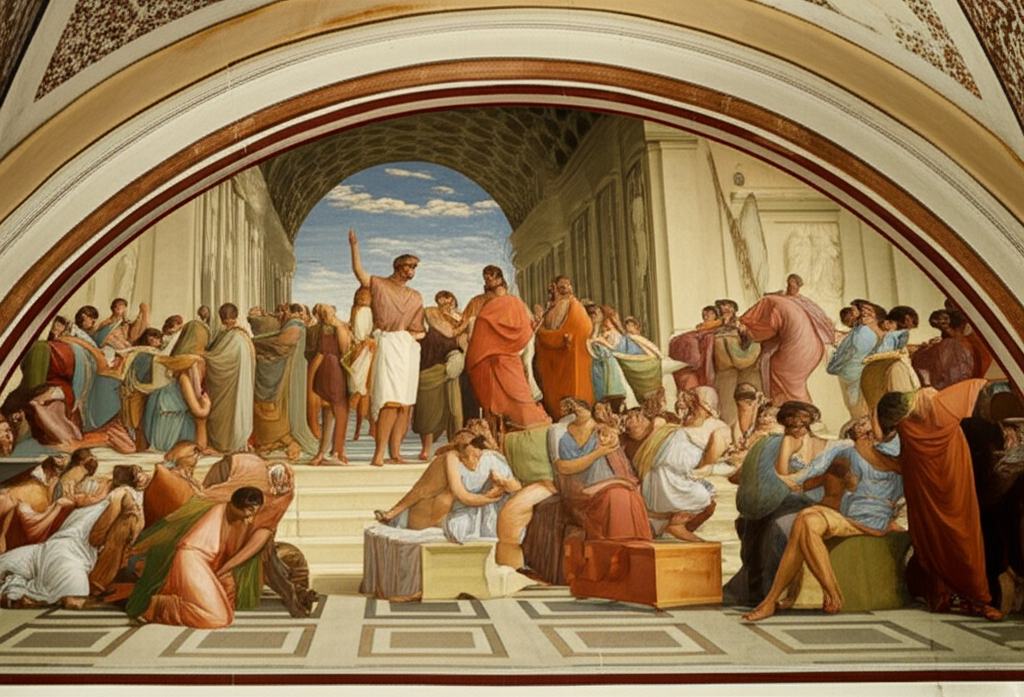
Philosophers throughout history have wrestled with this choice, often concluding that both systems, in their purest forms, carry significant risks. Aristotle, ever the pragmatist, suggested that the "best" Government might be a mixed constitution, blending elements of Monarchy (in the form of a strong executive), aristocracy (rule by the virtuous few), and Democracy (popular participation) to mitigate the excesses of each. The founders of the American republic, for instance, consciously designed a system with checks and balances, drawing from various philosophical traditions to guard against both monarchical tyranny and democratic mob rule. The ideal State, therefore, often appears to be a delicate synthesis, rather than a singular, unadulterated form.
The Modern State: Hybrid Forms and Evolving Ideals
Today, pure Monarchy is rare, often existing as a constitutional Monarchy where the monarch serves as a symbolic head of State with limited political power, while democratic institutions govern. Similarly, pure direct Democracy is largely impractical in large, complex nations, leading to representative democracies (republics) where citizens elect representatives to make decisions on their behalf.
This evolution reflects a continuous philosophical adaptation, an ongoing attempt to refine the mechanisms of Government to better serve the populace while maintaining stability. The tension between the need for decisive leadership and the imperative for popular participation remains a central challenge for any State seeking to balance efficiency with equity. Modern Governments often embody a blend of these historical forms, a testament to the enduring wisdom found in the Great Books of the Western World and the continuous human endeavor to perfect the art of governance.
Conclusion: The Enduring Quest for Good Governance
The study of Monarchy and Democracy offers more than a historical survey; it is a living philosophical inquiry into the very heart of human organization. While the specific forms of Government have evolved, the underlying questions posed by Plato, Aristotle, Locke, and Rousseau remain profoundly relevant. No system is perfect, and each carries its own set of inherent trade-offs. The quest for good Government is not about finding a static ideal, but rather about a continuous process of critical examination, adaptation, and the unwavering commitment to justice, liberty, and the well-being of the State and its citizens. The debate between the rule of one and the rule of many continues to inform our understanding of political legitimacy and the perpetual search for a more perfect union.
YouTube Video Suggestions:
-
📹 Related Video: PLATO ON: The Allegory of the Cave
Video by: The School of Life
💡 Want different videos? Search YouTube for: "Plato's Republic and the Ideal State Explained"
-
📹 Related Video: KANT ON: What is Enlightenment?
Video by: The School of Life
💡 Want different videos? Search YouTube for: "The Origins of Democracy - Ancient Athens"