

Monarchy vs. Democracy: A Study of Governance
The fundamental question of how a society should be governed has preoccupied the greatest minds throughout history, shaping the very fabric of human civilization. From the ancient city-states of Greece to the sprawling empires and modern nations of today, the choice between Monarchy and Democracy represents more than just differing administrative structures; it embodies contrasting philosophies about human nature, power, and justice. This article delves into these two foundational forms of Government, exploring their historical trajectories, philosophical underpinnings, inherent strengths, and persistent challenges, ultimately seeking to understand their enduring impact on the modern State.
The Enduring Debate: Sovereignty and the Citizen
At its core, the debate between monarchy and democracy revolves around the locus of sovereignty and the nature of political participation. Is the ultimate authority vested in a single individual, often by birthright or divine decree, or does it reside with the collective citizenry? This question has fueled revolutions, inspired treatises, and continues to influence contemporary political discourse. Understanding these systems requires an appreciation of the arguments laid forth by thinkers in the Great Books of the Western World, who grappled with the implications of each for order, liberty, and the common good.
Monarchy: The Rule of One
Monarchy, derived from the Greek monos (single) and arkhein (to rule), is a form of Government where supreme authority is vested in an individual ruler, typically a king, queen, or emperor, who holds the position until death or abdication. Succession is often hereditary, passing within a royal family.
Philosophical Roots of Monarchical Thought
The philosophical defense of monarchy is ancient and multifaceted. Plato, in his Republic, envisioned a benevolent "philosopher king" whose wisdom and virtue would guide the State towards justice, though this ideal transcended mere hereditary rule. Aristotle, while categorizing monarchy as a "good" form of rule by one for the common good (contrasted with tyranny), also recognized its inherent instability and tendency to degenerate. Later, medieval thinkers often justified monarchy through the concept of Divine Right, asserting that a monarch's authority was bestowed directly by God, making resistance a sin. Thomas Hobbes, in his seminal work Leviathan, argued for an absolute sovereign (which could be a monarch) as the only means to escape the brutal "state of nature" and ensure peace and order, even at the cost of individual liberties. For Hobbes, the unity and decisive action of a single ruler were paramount to preventing chaos.
Varieties of Monarchical Governance
Monarchies are not monolithic; their power structures have varied significantly across time and geography:
- Absolute Monarchy: The monarch holds supreme, unchecked power, often claiming divine right. Historical examples include Louis XIV of France or the early Russian Tsars.
- Constitutional Monarchy: The monarch's power is limited by a constitution, and sovereignty ultimately resides with the people or an elected legislature. The monarch serves largely as a ceremonial head of State, symbolizing national unity. Modern examples include the United Kingdom, Japan, and Sweden.
- Elective Monarchy: The monarch is elected rather than inheriting the position. While rare, the Papacy (elected Pope) and the historical Polish-Lithuanian Commonwealth serve as examples.
The Strengths and Weaknesses of Monarchy
| Strengths | Weaknesses |
|---|---|
| Stability and Continuity: Hereditary succession can provide a clear line of authority, reducing power struggles and promoting long-term planning. | Lack of Accountability: Absolute monarchs are generally not accountable to the people, leading to potential tyranny and abuse of power. |
| National Unity and Symbolism: A monarch can serve as a unifying national figure, embodying tradition and identity, transcending political divisions. | Incompetence and Arbitrariness: The quality of leadership is dependent on birth rather than merit, potentially leading to rule by an unfit or unwise individual. |
| Decisive Leadership: A single ruler can make quick decisions, which can be advantageous in times of crisis. | Suppression of Dissent: Absolute monarchies often restrict freedoms of speech and assembly to maintain power. |
| Experience and Tradition: Long-reigning monarchs can accumulate significant experience and embody historical wisdom. | Resistance to Change: Monarchical systems can be rigid, struggling to adapt to societal evolution and popular demands. |
Democracy: The Rule of the Many
Democracy, from the Greek demos (people) and kratos (power), is a system of Government where supreme power is vested in the people and exercised directly by them or by their elected agents under a free electoral system.
The Democratic Ideal: From Athens to Modernity
The concept of democracy traces its roots to ancient Athens, where citizens (though a limited definition) directly participated in decision-making through assemblies. However, the modern understanding of democracy, particularly its representative form, owes much to Enlightenment thinkers. John Locke, in his Two Treatises of Government, argued for popular sovereignty and the protection of natural rights (life, liberty, property), asserting that legitimate Government derives its power from the consent of the governed. Jean-Jacques Rousseau, in The Social Contract, championed the idea of the "general will," where citizens collectively determine the laws that govern them, emphasizing direct participation. The American and French Revolutions were pivotal in translating these philosophical ideals into practical Government structures, emphasizing individual rights, equality before the law, and the right to choose one's representatives.
Forms of Democratic Government
Democracy, like monarchy, manifests in various forms:
- Direct Democracy: Citizens directly participate in decision-making, voting on laws and policies themselves. Ancient Athens is the most famous example, and elements exist today in referendums and initiatives in some modern states (e.g., Switzerland).
- Representative Democracy (Republic): Citizens elect representatives to make decisions on their behalf. This is the most common form in modern large-scale States, encompassing parliamentary republics (e.g., Germany, India) and presidential republics (e.g., United States, Brazil).
- Deliberative Democracy: Emphasizes public deliberation and reasoned argument among citizens to arrive at decisions, aiming for consensus rather than mere majority rule.
The Strengths and Weaknesses of Democracy
| Strengths | Weaknesses |
|---|---|
| Accountability: Elected officials are accountable to the electorate and can be removed through regular elections. | "Tyranny of the Majority": The rights of minority groups can be overridden by the will of the majority, as warned by Alexis de Tocqueville. |
| Protection of Rights and Freedoms: Democracies typically safeguard individual liberties, freedom of speech, and assembly. | Slow Decision-Making: Deliberation, debate, and consensus-building can be time-consuming, hindering swift action in crises. |
| Legitimacy through Consent: Government derives its authority from the will of the people, fostering greater public buy-in and stability. | Voter Apathy and Ignorance: Citizens may be disengaged or uninformed, leading to poor electoral choices or low participation. |
| Adaptability and Responsiveness: Democracies can adapt to changing societal needs and public opinion through legislative processes and elections. | Risk of Demagoguery: Populist leaders can exploit public emotions and prejudices, undermining rational discourse and democratic institutions. |
A Comparative Lens: Structure, Power, and the Citizen
To truly understand the differences, it's crucial to compare Monarchy and Democracy across several key dimensions.
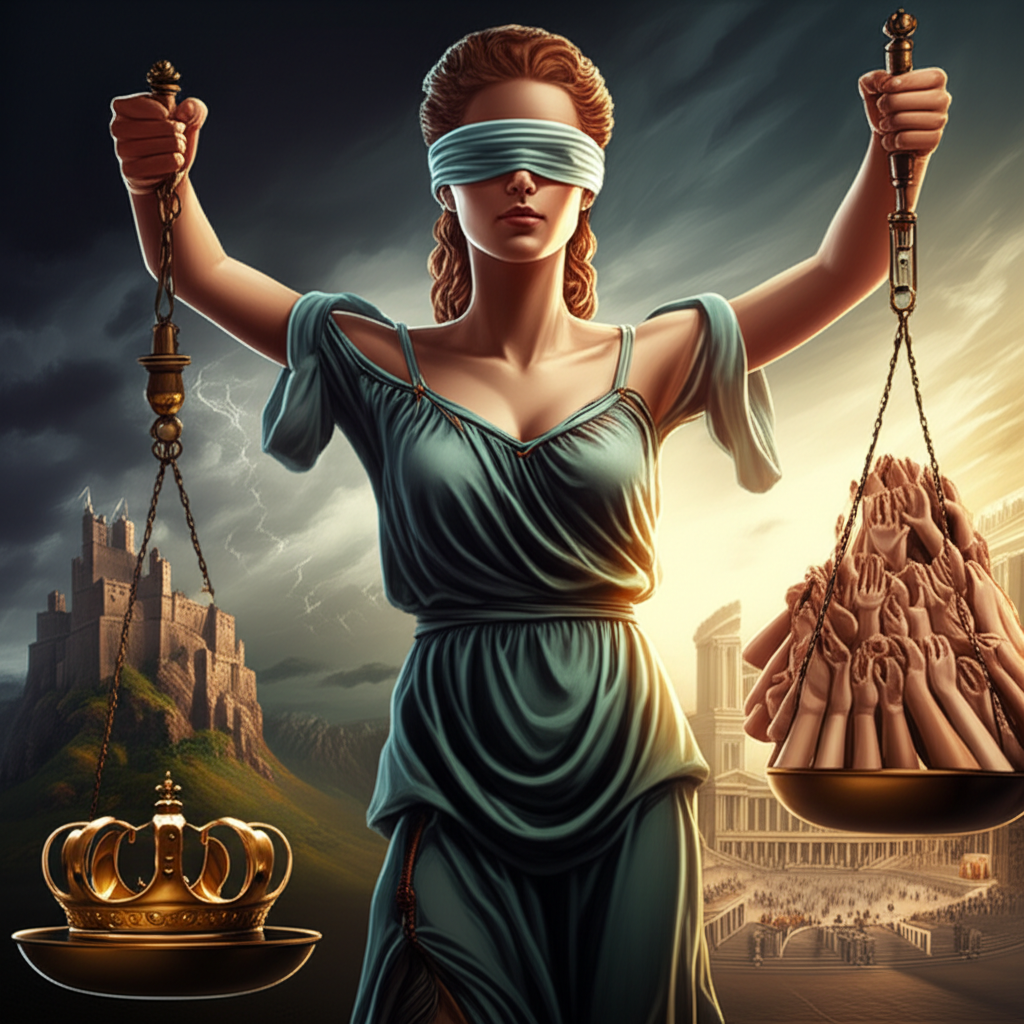
Monarchy vs. Democracy – Key Distinctions
| Feature | Monarchy | Democracy |
|---|---|---|
| Source of Authority | Heredity, divine right, tradition | Consent of the governed, popular sovereignty |
| Locus of Power | Single individual (monarch) | The people (directly or through representatives) |
| Decision-Making | Centralized, often swift (by the monarch) | Decentralized, deliberative, often slower |
| Accountability | Generally limited or non-existent (absolute); to constitution (constitutional) | High (to the electorate) |
| Citizen Role | Subjects; limited political participation | Citizens; active political participation and rights |
| Succession | Hereditary, fixed | Electoral, variable |
| Stability | Can be very stable (long reigns) or unstable (succession crises) | Can be stable (institutionalized processes) or unstable (electoral volatility) |
| Justice | Dependent on the monarch's will or interpretation of law | Based on rule of law, equality, and human rights |
Beyond the Pure Forms: The Blurring Lines
The modern political landscape rarely presents pure forms of either Monarchy or Democracy. Many States have evolved hybrid systems. Constitutional monarchies, for instance, blend the symbolic stability of a monarch with the democratic accountability of an elected parliament. Republics, while democratic in principle, often face challenges of oligarchic tendencies or the concentration of power, blurring the lines with aristocratic or even monarchical patterns of influence. The ongoing experiment of Government is one of constant adaptation and re-evaluation, seeking to balance the need for order with the demand for liberty and justice.
Conclusion: The Perpetual Quest for Just Governance
The study of Monarchy and Democracy reveals a timeless human endeavor: the quest for the most effective and just form of Government. While monarchy offers the allure of stability and decisive leadership, its inherent risks of tyranny and unrepresentative rule have largely led to its decline in absolute forms. Democracy, with its promise of popular sovereignty and individual rights, carries the burden of collective responsibility and the potential for inefficiency or the "tyranny of the majority." As we navigate the complexities of the 21st century, understanding the philosophical foundations and practical implications of these two seminal forms of Government remains crucial. The debate is not merely historical; it continues to inform our understanding of the ideal State and the ongoing struggle to achieve it.
YouTube: "Plato's Republic - Philosopher Kings"
YouTube: "John Locke and the Social Contract Theory"
📹 Related Video: What is Philosophy?
Video by: The School of Life
💡 Want different videos? Search YouTube for: "Monarchy vs. Democracy: A Study of Governance philosophy"