

Monarchy vs. Democracy: A Study of Governance
Summary: The timeless debate between monarchy and democracy stands as a cornerstone of political philosophy, probing the very essence of human Government and the ideal State. This article delves into the historical foundations and philosophical underpinnings of these two dominant forms of rule, exploring their advantages, inherent flaws, and the enduring questions they pose regarding legitimacy, justice, and the common good. Drawing insights from the Great Books of the Western World, we examine how thinkers from antiquity to the Enlightenment grappled with the fundamental challenge of organizing power and ensuring societal flourishing.
The Enduring Question of Rule: An Introduction
From the earliest city-states to modern nations, humanity has wrestled with a singular, profound question: Who should govern, and by what right? The answers have shaped civilizations, ignited revolutions, and formed the bedrock of our understanding of the State. Among the most prominent and historically significant responses are monarchy—the rule of one—and democracy—the rule of the many. These aren't merely historical artifacts; their theoretical arguments continue to inform contemporary debates about political legitimacy, individual liberty, and the pursuit of a just society.
Ancient philosophers, particularly Plato and Aristotle, meticulously categorized and critiqued various forms of Government. Plato, in his Republic, explored the ideal State ruled by philosopher-kings, an aristocracy of intellect, while lamenting the potential decline into timocracy, oligarchy, democracy, and ultimately, tyranny. Aristotle, in Politics, offered a more empirical classification, distinguishing between "correct" forms of Government (monarchy, aristocracy, polity) that aim for the common good, and "deviant" forms (tyranny, oligarchy, democracy) that serve the rulers' self-interest. Even in his time, the seeds of the monarchy vs. democracy debate were deeply sown, illustrating their foundational importance to Western thought.
Monarchy: The Sovereign's Command
Monarchy represents a system of Government where supreme authority is vested in a single individual, typically a king, queen, or emperor, whose position is often hereditary and for life. Historically, this form of rule has been justified by various means, from divine right to the necessity of a strong central authority to maintain order.
Philosophical Foundations of Monarchical Rule
- Divine Right and Tradition: For centuries, particularly in medieval Europe, monarchs claimed their authority directly from God. This theological justification rendered the monarch's rule unquestionable, as challenging the king was tantamount to challenging divine will.
- Hobbes' Leviathan and the Need for Order: Thomas Hobbes, in his seminal work Leviathan, posited that in a "state of nature," human life is "solitary, poor, nasty, brutish, and short." To escape this perpetual war, individuals enter a social contract, surrendering their absolute freedom to an absolute sovereign—a monarch—whose singular, unquestionable power is essential to prevent chaos and ensure peace. For Hobbes, the stability provided by a powerful State under one ruler far outweighed the risks of tyranny.
- The Philosopher-King Ideal (Plato's Influence): While not strictly advocating for hereditary monarchy, Plato's concept of the philosopher-king, a wise and just ruler guided by reason and knowledge of the Good, provided an ideal against which actual monarchies could be measured. The hope for a benevolent, enlightened despot has periodically surfaced in philosophical discourse.
Advantages and Disadvantages of Monarchy
| Aspect | Advantages | Disadvantages |
|---|---|---|
| Stability | Clear succession (hereditary), long-term vision | Succession crises (lack of clear heir), rigidity |
| Decision-Making | Swift, unified action, no legislative gridlock | Risk of arbitrary rule, poor decisions by one |
| National Unity | Embodies the State, a clear symbol of identity | Fosters cult of personality, suppresses dissent |
| Accountability | Potentially to God or conscience, but not to people | Lack of accountability to the governed, tyranny |
| Competence | Can be highly effective with a good ruler | Dependent entirely on the ruler's character/skill |
Historically, the transition from absolute monarchies to constitutional monarchies (where the monarch's power is limited by a constitution and often shared with an elected parliament) reflects an attempt to mitigate the inherent risks of unchecked power while retaining certain symbolic or traditional benefits.
Democracy: The People's Voice
Democracy, derived from the Greek demos (people) and kratos (power), is a system of Government where supreme power is vested in the people and exercised directly by them or by their elected agents under a free electoral system. It stands in stark contrast to monarchy, shifting the locus of authority from a single individual to the collective citizenry.
Philosophical Foundations of Democratic Rule
- Ancient Athenian Democracy: Though limited (excluding women, slaves, and foreigners), ancient Athens provided the earliest significant model of direct democracy, where citizens actively participated in assemblies and legal proceedings. Aristotle, while wary of its "deviant" form, still recognized its existence as a Government of the many.
- Locke and the Consent of the Governed: John Locke, in his Two Treatises of Government, argued that individuals possess inherent natural rights (life, liberty, property) that no Government can legitimately infringe upon. The legitimacy of any State derives solely from the consent of the governed, meaning the people grant power to their rulers and retain the right to withdraw that consent if the Government acts tyrannically. This concept is foundational to modern democratic thought.
- Rousseau and the General Will: Jean-Jacques Rousseau, in The Social Contract, championed the idea of popular sovereignty and the "general will." He argued that true freedom lies in individuals collectively obeying laws they have prescribed for themselves, aiming for the common good. This emphasized direct citizen participation and a deep connection between the individual and the State.
- Mill and Representative Government: John Stuart Mill, particularly in On Liberty and Considerations on Representative Government, advocated for representative democracy as the best system for fostering individual development, protecting minorities from the "tyranny of the majority," and promoting rational deliberation. He stressed the importance of education, free speech, and active political participation for a healthy democratic State.
Advantages and Disadvantages of Democracy
| Aspect | Advantages | Disadvantages |
|---|---|---|
| Legitimacy | Derived from popular consent, perceived fairness | Can be slow, indecisive, prone to gridlock |
| Accountability | Rulers are accountable to the electorate | Risk of short-term focus (election cycles) |
| Individual Rights | Strong emphasis on protecting liberties and freedoms | Potential for "tyranny of the majority" |
| Adaptability | Can evolve and respond to changing societal needs | Susceptible to demagoguery and populism |
| Citizen Participation | Fosters civic engagement and responsibility | Requires informed citizenry, can be inefficient |
A Comparative Analysis: Monarchy vs. Democracy
The distinction between these two forms of Government is profound, touching upon the very nature of power, authority, and the individual's place within the State.
| Feature | Monarchy | Democracy |
|---|---|---|
| Source of Power | Heredity, Divine Right, Conquest, Tradition | Consent of the Governed, Popular Sovereignty |
| Legitimacy | Tradition, divine mandate, inherent right | Electoral mandate, rule of law, constitutionalism |
| Accountability | To God, conscience, or none (absolute); limited | To the electorate, constitution, independent judiciary |
| Decision-Making | Centralized, swift, singular will | Deliberative, often slower, pluralistic |
| Stability | Potentially high (if succession is smooth); rigid | Can be volatile (elections), but adaptable |
| Individual Rights | Granted by sovereign, or limited by tradition | Inherent, protected by law/constitution |
| Risk | Tyranny, incompetence, stagnation, succession crises | Mob rule, demagoguery, inefficiency, factionalism |
| Role of Citizen | Subject | Citizen, participant |
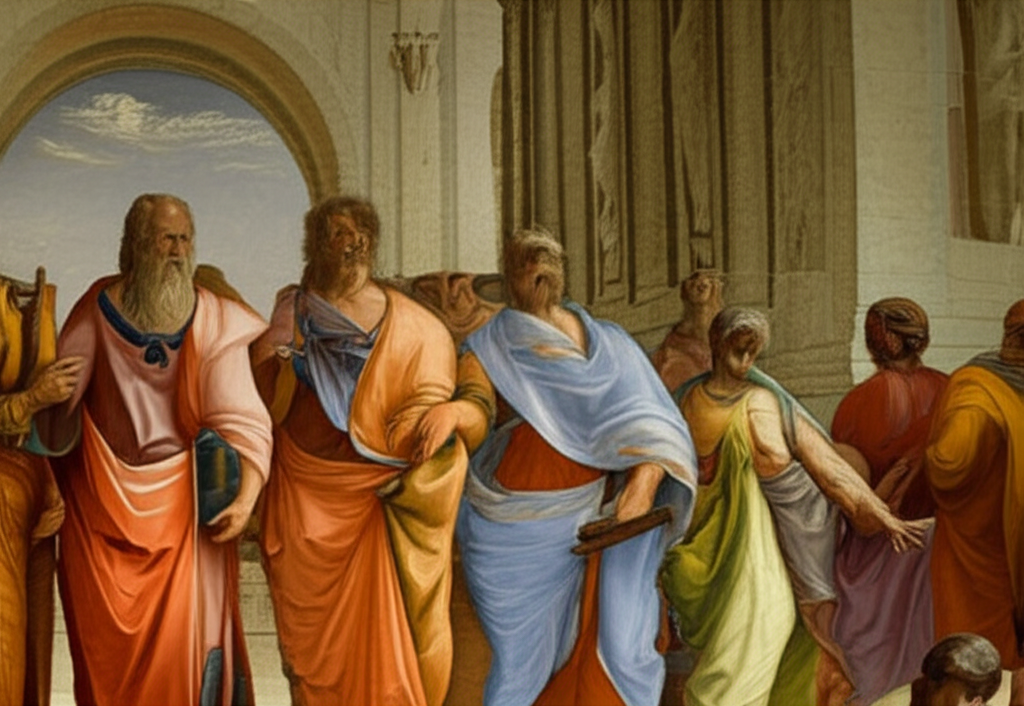
The Evolution of the State and Modern Governance
Few modern states exist as pure monarchies or pure democracies. The historical trajectory, particularly since the Enlightenment, has seen a strong shift towards democratic principles. However, the influence of monarchical ideas—such as the need for strong leadership, national unity, and a sense of enduring tradition—can still be observed. Many nations operate as constitutional monarchies, where a monarch serves as a ceremonial head of State while democratic institutions exercise political power. This blending reflects a pragmatic attempt to harness the symbolic power of monarchy with the accountability and participatory nature of democracy.
The ongoing philosophical challenge lies in striking the right balance: how to ensure effective Government and stability without sacrificing liberty, and how to empower the people without succumbing to the pitfalls of populism or the tyranny of the majority.
Conclusion: An Enduring Quest for the Just State
The study of monarchy and democracy is not merely an academic exercise; it is an active engagement with the core questions of human existence within a political community. From the ancient critiques of Plato and Aristotle to the Enlightenment's reimagining of the social contract by Locke and Rousseau, and the nuanced arguments for representative Government by Mill, the Great Books of the Western World provide an invaluable framework for understanding these fundamental forms of the State.
Neither monarchy nor democracy offers a perfect solution to the complexities of governance. Each carries inherent strengths and weaknesses, reflecting humanity's continuous quest for a just and stable Government that serves the common good while respecting individual dignity. The debate continues, evolving with each generation, but the foundational principles laid down by these great thinkers remain indispensable guides for navigating the intricate landscape of political philosophy.
📹 Related Video: PLATO ON: The Allegory of the Cave
Video by: The School of Life
💡 Want different videos? Search YouTube for: ""Plato Aristotle Political Philosophy Comparison""
📹 Related Video: KANT ON: What is Enlightenment?
Video by: The School of Life
💡 Want different videos? Search YouTube for: ""Hobbes Locke Rousseau Social Contract Theory Explained""