

Monarchy vs. Democracy: A Study of Governance
In the perennial quest for the ideal political State, humanity has grappled with myriad forms of government. This article delves into two of the most enduring and diametrically opposed systems: monarchy and democracy. From the singular, inherited authority of a monarch to the collective will of the people, these models present distinct philosophies regarding legitimacy, power distribution, and the very purpose of the State. We will explore their historical roots, philosophical underpinnings, and the strengths and weaknesses that have shaped civilizations, drawing insights from the foundational texts of Western thought.
The Enduring Question of Governance: Rule by One or Rule by Many?
The debate between monarchy and democracy is not merely an academic exercise; it is a profound inquiry into the nature of power, justice, and human flourishing. Throughout history, societies have oscillated between concentrating authority in a single sovereign and distributing it among the populace. This fundamental choice defines the character of a government and the lives of its citizens.
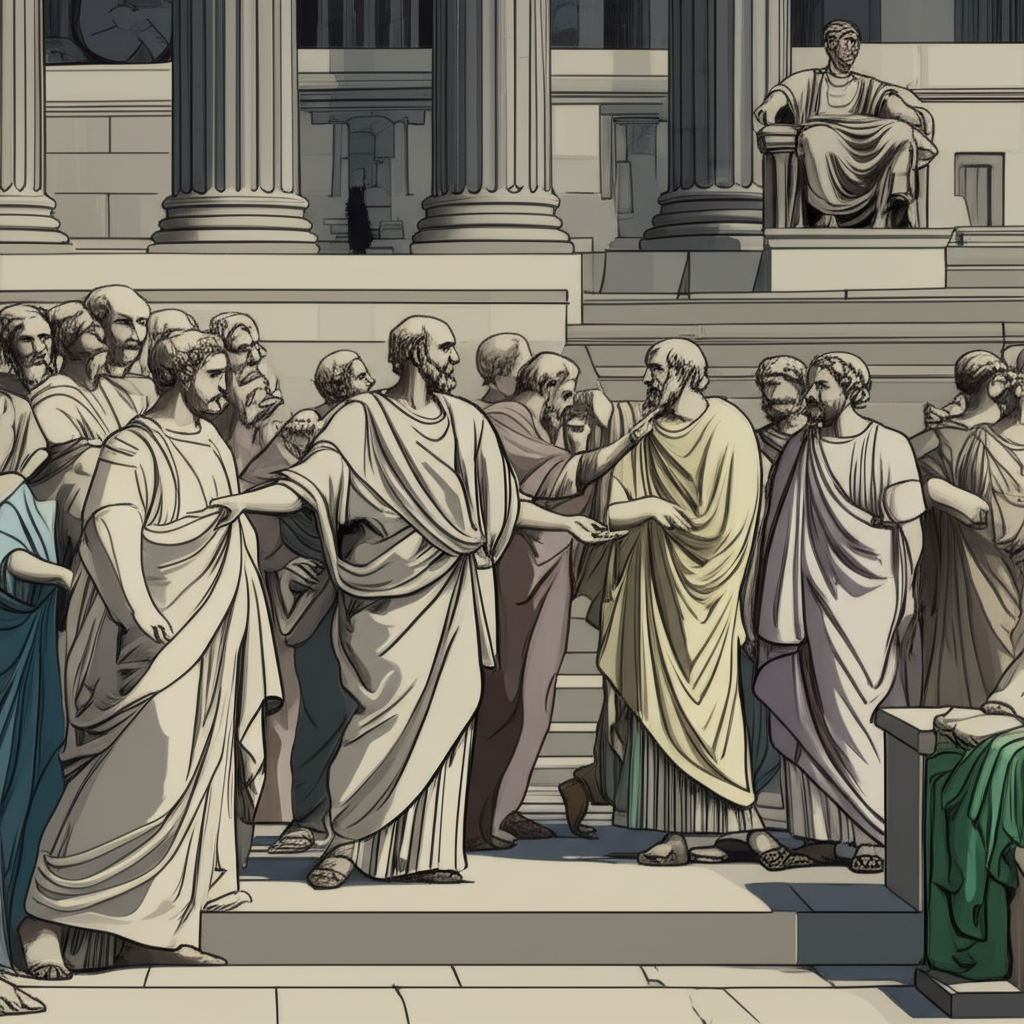
Monarchy: The Crown of Singular Authority
Monarchy, at its core, represents government by a single individual, typically a king, queen, or emperor, whose authority is often hereditary and sometimes considered divinely ordained. This system prioritizes unity, stability, and a clear chain of command.
Philosophical Foundations of Monarchical Rule
From antiquity, thinkers have explored the rationale for rule by one. Plato, in his Republic, envisioned the ideal State led by a philosopher-king, an individual whose wisdom and virtue would guide society toward justice. While not strictly hereditary, this concept champions the idea of a singular, enlightened ruler. Much later, Thomas Hobbes, in Leviathan, argued for an absolute sovereign – a monarch – as the only means to escape the chaotic "state of nature" and ensure peace and order. For Hobbes, the absolute power of the monarch was a necessary evil, preventing the war of "all against all."
Strengths and Perils of the Monarchical State
-
Strengths:
- Stability and Continuity: A monarchical government often offers a high degree of political stability, as succession is typically clear, avoiding contentious elections.
- Decisive Leadership: Decisions can be made swiftly and efficiently, unburdened by parliamentary debate or public consensus.
- National Unity: The monarch can serve as a unifying symbol for the nation, transcending political factions.
- Long-Term Vision: Rulers with a secure, lifelong tenure may be more inclined to pursue long-term projects rather than short-term electoral gains.
-
Perils:
- Risk of Tyranny: Unchecked power can easily devolve into despotism, as seen in numerous historical examples.
- Succession Crises: Despite hereditary principles, succession can be a source of instability, leading to civil wars or power struggles.
- Lack of Accountability: Monarchs are often not directly accountable to the populace, leading to potential abuses of power.
- Incompetence: The quality of leadership is entirely dependent on the individual monarch, who may lack the necessary skills or temperament.
Democracy: The Power of the People
Democracy, derived from the Greek demos (people) and kratos (power), posits that ultimate authority resides with the citizenry. It emphasizes principles of equality, liberty, and the rule of law, with government deriving its legitimacy from the consent of the governed.
Philosophical Underpinnings of Democratic Governance
The roots of democracy can be traced to ancient Athens, where direct participation in government was practiced by male citizens. Philosophically, John Locke's Two Treatises of Government laid crucial groundwork, arguing for natural rights and the idea that government legitimacy stems from a social contract, where power is delegated by the people. Jean-Jacques Rousseau, in The Social Contract, further developed the concept of the "general will," suggesting that true liberty is found in obedience to laws that the people themselves have collectively enacted.
Advantages and Challenges of the Democratic State
-
Advantages:
- Representation and Participation: Citizens have a voice in their government, fostering a sense of ownership and civic engagement.
- Protection of Rights: Democratic systems often enshrine individual liberties and rights through constitutions and independent judiciaries.
- Accountability: Leaders are typically elected for fixed terms and are accountable to the electorate, reducing the risk of unchecked power.
- Adaptability and Self-Correction: Democracies can adapt to changing societal needs through peaceful reforms and elections.
-
Challenges:
- Inefficiency: Decision-making can be slow and cumbersome due to the need for consensus, debate, and compromise.
- Tyranny of the Majority: The will of the majority can sometimes override the rights and interests of minority groups, as highlighted by Alexis de Tocqueville in Democracy in America.
- Demagoguery: Public opinion can be swayed by charismatic but irresponsible leaders who appeal to emotions rather than reason.
- Voter Apathy: Low participation rates can undermine the legitimacy and effectiveness of democratic processes.
A Philosophical Crossroads: Great Thinkers on Government
The Great Books of the Western World offer a rich tapestry of perspectives on the ideal government and the nature of the State. Here's a glimpse at how some key figures viewed monarchy and democracy:
| Philosopher | Key Work(s) | Stance on Monarchy
📹 Related Video: What is Philosophy?
Video by: The School of Life
💡 Want different videos? Search YouTube for: "Monarchy vs. Democracy: A Study of Governance philosophy"