

Monarchy vs. Democracy: A Study of Governance
Summary: The timeless debate between monarchy and democracy represents a fundamental divergence in the philosophy of governance. While monarchy champions centralized authority, often rooted in tradition or divine right, prioritizing stability and efficiency, democracy advocates for distributed power, emphasizing popular sovereignty, individual liberty, and accountability. This article delves into the philosophical underpinnings, historical manifestations, inherent strengths, and critical weaknesses of both forms of government, exploring how each seeks to establish a just and effective State.
The Perennial Question of Who Should Rule
Since the dawn of organized societies, humanity has grappled with the fundamental question of how best to govern itself. From the city-states of ancient Greece to the sprawling empires of the modern age, the structure of the State has been a crucible for philosophical inquiry and political experimentation. At the heart of this inquiry lie two dominant paradigms: monarchy and democracy. These are not merely systems of administration but embody distinct worldviews concerning legitimacy, power, and the very nature of human flourishing within a collective.
Our journey through the Great Books reveals a persistent tension between the rule of the singular, often deemed wise or divinely appointed, and the collective will of the many. Understanding this tension is crucial for anyone seeking to comprehend the evolution of political thought and the challenges facing contemporary governance.
Monarchy: The Concentrated Power of One
Monarchy, derived from the Greek monos (one) and arkhein (to rule), designates a form of government where ultimate authority is vested in a single individual, the monarch. This position is typically hereditary and held for life.
Philosophical Underpinnings and Historical Context
Historically, monarchy has been the most prevalent form of government. Its philosophical justifications are varied and often profound. Plato, in The Republic, envisioned a benevolent "philosopher-king" whose wisdom and virtue would guide the State towards justice, a concept that, while not strictly monarchical in its succession, nevertheless champions the rule of an enlightened individual. Later, during the European Middle Ages, the concept of the Divine Right of Kings posited that a monarch's authority was divinely ordained, making them accountable only to God. Thinkers like Jean Bodin and, to a degree, Thomas Hobbes, in his seminal work Leviathan, argued for a powerful, centralized sovereign as the only means to escape the chaos of the "state of nature" and ensure social order. For Hobbes, the absolute power of the monarch was a necessary evil, a bulwark against anarchy.
Strengths of Monarchical Governance
- Stability and Continuity: With a clear line of succession, often hereditary, monarchies can offer remarkable political stability, reducing power struggles and providing a consistent direction for the State.
- Efficiency in Decision-Making: A single executive authority can make swift decisions, unburdened by the need for extensive deliberation or consensus-building among many factions.
- Symbolic Unity: A monarch can serve as a powerful national symbol, embodying the history, traditions, and identity of a nation, transcending partisan divisions.
- Long-Term Vision: Unconstrained by electoral cycles, a monarch might pursue long-term projects and policies beneficial to the State without immediate political pressure.
Weaknesses and Perils of Absolute Rule
- Risk of Tyranny and Abuse of Power: The most significant danger of monarchy is the concentration of unchecked power, which can easily devolve into despotism and oppression. The monarch's personal whims can become law, leading to arbitrary rule.
- Lack of Accountability: Without mechanisms for popular oversight or removal, a monarch is largely unaccountable to the people, making redress for grievances difficult or impossible.
- Dependence on Individual Competence: The fate of the State rests heavily on the wisdom, virtue, and competence of a single individual. An incompetent or malevolent monarch can inflict immense damage.
- Resistance to Change: Hereditary rule can entrench conservative forces, making the government resistant to necessary social, economic, or political reforms.
Democracy: The Collective Voice of the People
Democracy, from the Greek demos (people) and kratos (power), refers to a system of government where power is vested in the people, who either rule directly or through elected representatives.
Philosophical Underpinnings and Historical Context
The roots of democracy trace back to ancient Athens, where direct citizen participation in government flourished. However, modern democratic theory truly gained traction during the Enlightenment. John Locke, in his Two Treatises of Government, argued that legitimate government derives its authority from the consent of the governed and that individuals possess inherent natural rights that the State must protect. Jean-Jacques Rousseau, in The Social Contract, championed the concept of the "general will," where the collective good is pursued through direct participation. Later, John Stuart Mill, in On Liberty, articulated the importance of individual freedoms and the dangers of the "tyranny of the majority," advocating for representative democracy with safeguards for minority rights. The American and French Revolutions were pivotal events that translated these philosophical ideals into practical efforts to establish democratic states.
Strengths of Democratic Governance
- Popular Sovereignty and Legitimacy: Democracy derives its legitimacy from the consent of the governed, fostering a sense of ownership and participation among citizens.
- Accountability and Responsiveness: Elected officials are accountable to the electorate and must periodically seek their mandate, making the government more responsive to public needs and desires.
- Protection of Rights and Liberties: Modern democracies typically enshrine individual rights and freedoms, providing legal and constitutional safeguards against state overreach.
- Adaptability and Innovation: The capacity for peaceful political change through elections allows democracies to adapt to evolving societal needs and embrace new ideas.
- Prevention of Tyranny: The distribution of power, checks and balances, and the rule of law inherent in democratic systems act as crucial safeguards against the concentration of absolute power.
Weaknesses and Challenges of Democratic Rule
- Inefficiency and Slow Decision-Making: The need for debate, compromise, and consensus can make democratic processes slow and cumbersome, especially in times of crisis.
- Tyranny of the Majority: As warned by Mill and Alexis de Tocqueville (Democracy in America), the majority can sometimes suppress the rights and interests of minority groups.
- Factionalism and Polarization: The freedom of association and expression can lead to the proliferation of political parties and interest groups, sometimes resulting in deep societal divisions and legislative gridlock.
- Voter Apathy and Ignorance: The effectiveness of democracy relies on an informed and engaged citizenry, which can be challenging to maintain in complex modern societies.
- Susceptibility to Demagoguery: The reliance on popular appeal can make democracies vulnerable to charismatic leaders who exploit emotions and prejudices rather than rational discourse.
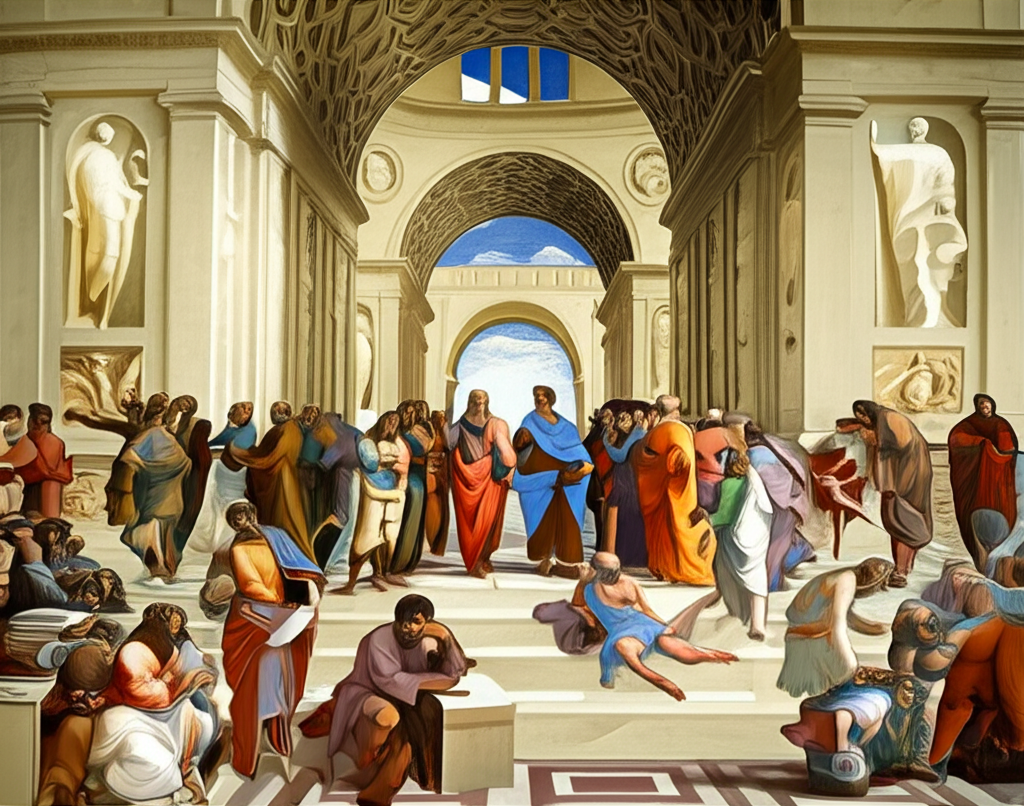
A Comparative Analysis: Core Philosophical Tensions
The choice between monarchy and democracy is not merely a preference for one administrative style over another; it reflects deeply held philosophical beliefs about human nature, the purpose of the State, and the ideal distribution of power.
| Feature | Monarchy (Classical Ideal) | Democracy (Modern Ideal) |
|---|---|---|
| Source of Legitimacy | Divine right, tradition, inherent wisdom of the ruler | Consent of the governed, popular sovereignty |
| Primary Value | Order, stability, unity, efficiency | Liberty, equality, justice, accountability |
| Decision-Making | Centralized, often swift, by the monarch | Decentralized, deliberative, through representatives/people |
| Role of Citizen | Subject, obedient to the ruler | Citizen, participant in governance |
| Accountability | To God (in divine right), to conscience (in enlightened monarchy) | To the electorate, through regular elections and rule of law |
| Risk | Tyranny of the individual, incompetence | Tyranny of the majority, inefficiency, factionalism |
The enduring tension lies in balancing the need for decisive leadership with the demand for popular representation. Can a government be both strong and free? Can it be efficient and accountable? These are the questions that continue to animate political philosophy.
Hybrid Models and Modern Interpretations
It is crucial to note that pure forms of monarchy or democracy are rare in the contemporary world. Many nations have adopted hybrid models. Constitutional monarchies, for instance, retain a monarch as a ceremonial head of State while real political power rests with an elected parliament and prime minister (a democratic structure). Similarly, most modern democracies are representative democracies or republics, where citizens elect representatives to make decisions on their behalf, rather than engaging in direct rule. These hybrid forms attempt to harness the symbolic stability of monarchy while ensuring democratic accountability.
The Enduring Question of the Ideal State
From Aristotle's classifications in Politics to Machiavelli's pragmatic advice in The Prince, the search for the "best" form of government has been a central theme in the Great Books. There is no simple answer, as the suitability of a State structure often depends on historical context, cultural values, and the specific challenges a society faces.
The debate between monarchy and democracy ultimately forces us to confront fundamental questions: What is the purpose of government? Is it to ensure order at all costs, or to maximize individual freedom? Is human nature inherently capable of self-governance, or does it require a guiding hand? These questions, pondered by the greatest minds, remain as relevant today as they were millennia ago.
📹 Related Video: PLATO ON: The Allegory of the Cave
Video by: The School of Life
💡 Want different videos? Search YouTube for: ""Plato's Republic - Philosopher Kings Explained" or "John Locke's Social Contract Theory - Political Philosophy""
Conclusion
The study of monarchy and democracy offers a profound insight into the human endeavor to create a just and stable State. While monarchy, in its ideal form, promises enlightened leadership and unwavering stability, its inherent risk of arbitrary power has often led societies to seek alternatives. Democracy, with its emphasis on popular sovereignty and individual rights, offers a powerful antidote to tyranny but grapples with its own challenges of efficiency and potential majoritarian oppression. As we navigate the complexities of the 21st century, understanding these foundational forms of government and their philosophical underpinnings remains essential for critically evaluating our own political systems and striving towards a more perfect union. The journey of governance is an ongoing dialogue, a continuous balancing act between the many and the one, seeking the elusive sweet spot where power serves the people, rather than dominating them.