

Monarchy vs. Democracy: A Study of Governance
The enduring question of how best to organize human society, to establish a just and effective Government, has vexed philosophers and citizens alike for millennia. At the heart of this inquiry lie two fundamental political structures: Monarchy and Democracy. This article delves into their core tenets, historical justifications, and inherent challenges, examining how these distinct approaches to the State have shaped human civilization and continue to inform our understanding of political legitimacy and power.
The Enduring Question of the Best State
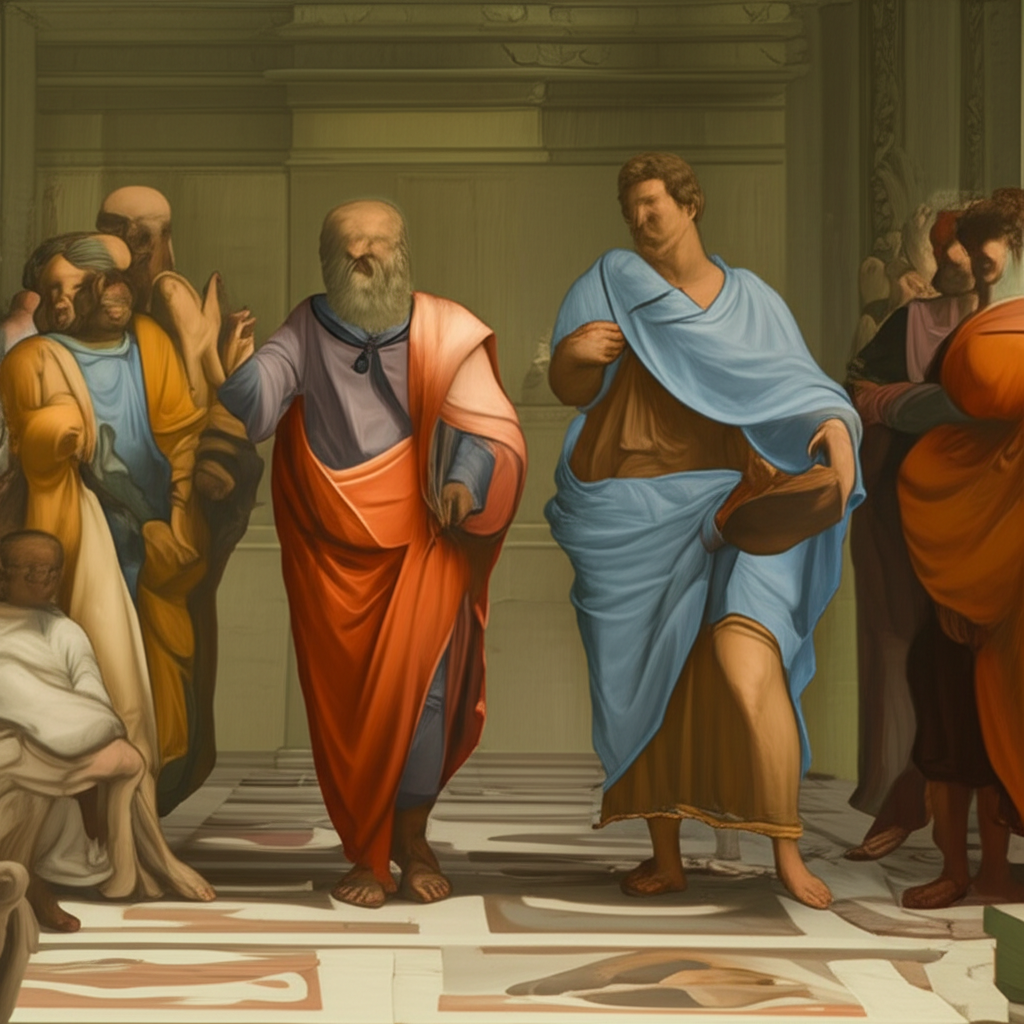
From the ancient Greek city-states to the sprawling empires and modern nations, the nature of political authority has been a constant subject of debate. Philosophers such as Plato and Aristotle, whose works form cornerstones of the Great Books of the Western World, meticulously analyzed various forms of rule, seeking to identify the ideal politeia. Their inquiries laid the groundwork for understanding the inherent strengths and weaknesses of governance by one, by the few, or by the many. The choice between Monarchy and Democracy is not merely a matter of administrative preference; it reflects profoundly different philosophical commitments regarding human nature, justice, and the source of legitimate power.
Monarchy: The Rule of One
Monarchy, in its purest form, designates a system of Government where supreme authority is vested in a single individual, the monarch. This position is typically hereditary and held for life. Historically, monarchical rule has been justified by various doctrines, most notably the "divine right of kings," which posits that the monarch's authority is granted by God, rendering them accountable only to the divine.
-
Core Principles and Perceived Strengths:
- Stability and Continuity: A clear line of succession often provides a sense of order and predictability, reducing internal strife over leadership.
- Decisive Leadership: Decisions can be made swiftly and efficiently, unburdened by the need for broad consensus.
- Unity of the State: The monarch often serves as a unifying symbol for the nation, embodying its history and identity.
- Long-term Vision: Without the pressures of re-election, a monarch might theoretically pursue long-term projects for the
State's benefit.
-
Philosophical Underpinnings and Challenges:
While thinkers like Thomas Hobbes, in Leviathan, argued for a powerful sovereign to prevent the chaos of the state of nature, the concentration of power in a single individual carries significant risks. The potential for tyranny is ever-present, where the monarch's personal whims supersede the welfare of the governed. Without mechanisms for accountability, theGovernmentcan become oppressive, leading to abuses of power and the suppression of individual liberties. The quality of governance is entirely dependent on the character and wisdom of the ruler, a precarious foundation upon which to build aState.
Democracy: The Rule of Many
Democracy, conversely, is a system of Government where supreme power is vested in the people and exercised by them directly or indirectly through a system of representation, usually involving periodically held free elections. Originating in ancient Athens, the concept has evolved significantly, emphasizing popular sovereignty, equality, and individual rights.
-
Core Principles and Perceived Strengths:
- Popular Sovereignty: The ultimate authority resides with the citizenry, ensuring that the
Governmentis, theoretically, "of the people, by the people, for the people." - Accountability: Elected officials are accountable to the electorate, fostering responsiveness and preventing the unchecked abuse of power.
- Protection of Rights: Democracies often enshrine individual liberties and rights through constitutions and legal frameworks.
- Legitimacy: Decisions made through democratic processes tend to have greater public acceptance and legitimacy.
- Popular Sovereignty: The ultimate authority resides with the citizenry, ensuring that the
-
Philosophical Underpinnings and Challenges:
Philosophers like John Locke articulated the concept of a social contract, whereGovernmentderives its legitimacy from the consent of the governed, a cornerstone of democratic thought. Jean-Jacques Rousseau, in The Social Contract, explored the idea of the "general will," where collective decisions reflect the common good. However,Democracyis not without its perils. Aristotle warned ofDemocracydegenerating into ochlocracy or mob rule, where the passions of the majority can override justice and minority rights, a phenomenon often termed the "tyranny of the majority." Decision-making can be slow and cumbersome, and the pursuit of short-term electoral gains can sometimes overshadow long-term strategic planning for theState.
Contrasting Philosophies of Governance
The fundamental differences between Monarchy and Democracy can be distilled into several key areas, reflecting their divergent views on power, legitimacy, and the role of the individual within the State.
| Feature | Monarchy | Democracy |
|---|---|---|
| Source of Authority | Divine right, heredity, tradition | Consent of the governed, popular sovereignty |
| Decision-Making | Centralized, individual monarch | Decentralized, collective, representative |
| Accountability | Primarily to God or conscience (historical) | To the electorate, through elections |
| Stability | High (if succession is clear) | Variable (depends on political culture) |
| Individual Liberty | Limited by monarch's will | Guaranteed by law, protected by constitution |
| Succession | Hereditary | Electoral |
The Evolving State: Beyond Simple Dichotomies
In practice, pure forms of Monarchy or Democracy are rare. Many modern nations exhibit hybrid systems. Constitutional monarchies, for instance, blend the symbolic continuity of a monarch with the democratic accountability of an elected parliament. Similarly, republics, while fundamentally democratic, often incorporate checks and balances designed to mitigate the risks of direct Democracy, such as representative bodies and judicial review. The evolution of the State has shown a consistent movement towards greater inclusion and accountability, reflecting a broad, if often turbulent, philosophical progression towards governance that prioritizes the welfare and participation of its citizens.
Conclusion: The Perpetual Pursuit of the Just State
The debate between Monarchy and Democracy is more than a historical curiosity; it represents a fundamental tension in political philosophy regarding the optimal balance between order and freedom, efficiency and representation. While Monarchy offers the promise of decisive, unified leadership, it risks tyranny and unaccountability. Democracy, conversely, champions popular sovereignty and individual rights but can grapple with inefficiency and the potential for majoritarian oppression. As we continue to navigate the complexities of modern governance, the insights gleaned from centuries of philosophical inquiry, from the Great Books of the Western World to contemporary political discourse, remain indispensable. The perpetual pursuit of the just State continues, demanding thoughtful consideration of how best to structure our Government to serve the common good.
📹 Related Video: PLATO ON: The Allegory of the Cave
Video by: The School of Life
💡 Want different videos? Search YouTube for: ""Plato's Republic Political Philosophy" or "Aristotle's Politics Explained""