

Memory as the Basis of Experience
Our perception of reality, our very sense of self, and the continuum of our existence are inextricably linked to memory. This article explores how memory is not merely a passive archive of the past but an active, dynamic force that fundamentally constitutes and shapes all experience. Without the intricate workings of the mind's ability to recall, recognize, and relate, our present moments would be fleeting, meaningless fragments, incapable of forming coherent knowledge or a stable sense of who we are. Memory provides the essential context, the narrative thread, through which we interpret the world and navigate our lives.
The Fabric of Our Present: Memory's Ubiquitous Role
Every sensation, every thought, every emotion we encounter in the present moment is filtered through the lens of our accumulated memories. Imagine trying to understand a conversation without remembering the meanings of words, or appreciating a piece of music without recalling previous notes and melodies. Such an existence would be a constant state of novelty, yet utterly devoid of understanding. It is memory that allows us to recognize patterns, predict outcomes, and ascribe meaning to the chaos of sensory input.
This is not a new insight. Philosophers throughout history, from the ancient Greeks to Enlightenment thinkers, have grappled with the profound importance of memory. Aristotle, in his On the Soul and On Memory and Recollection, viewed memory as a faculty of the soul, deeply intertwined with sensation and imagination, essential for learning and prudence. He understood that our capacity to learn from experience is directly proportional to our ability to retain and recall.
Beyond Simple Recall: Memory and Imagination
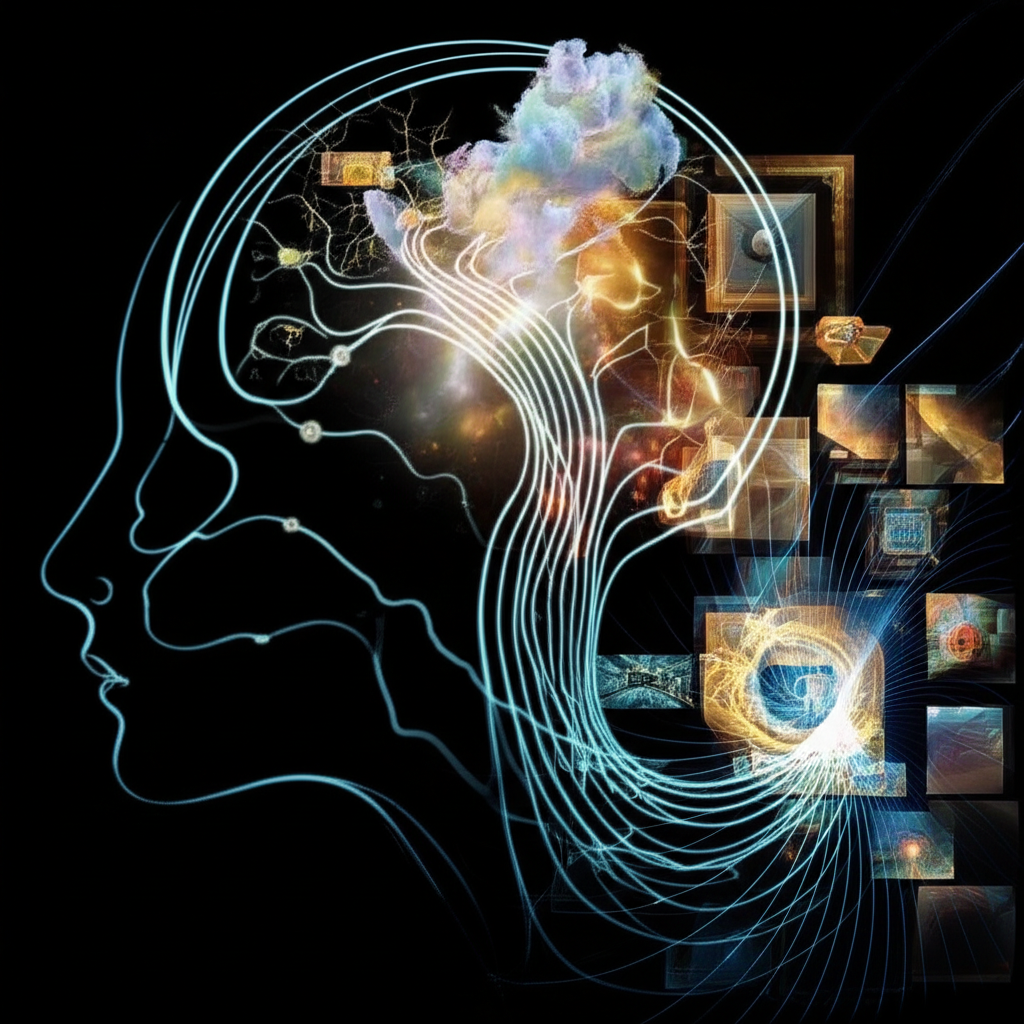
The popular conception of memory often reduces it to a perfect recording device, playing back events exactly as they happened. However, modern philosophy and psychology, along with earlier philosophical musings on the nature of recollection, suggest a far more complex picture. Memory is not a static repository; it is an active, often reconstructive process. Our memories are not merely retrieved; they are often re-imagined or re-interpreted each time we access them, influenced by our current mood, beliefs, and subsequent experiences.
This interplay between memory and imagination is crucial. When we remember, we often fill in gaps, embellish details, or even alter the narrative to fit a coherent story. This isn't necessarily a flaw; it's how the mind actively constructs a usable past, allowing us to learn, adapt, and project into the future. It blurs the lines between what was and what could have been, or what we believe was, thus shaping our present and future expectations.
Memory, Knowledge, and Identity: Building the Self
Our personal identity, the very essence of who we are, is fundamentally a product of our memories. John Locke, a prominent figure whose works are foundational to the Great Books of the Western World, famously argued in his An Essay Concerning Human Understanding that personal identity consists not in the substance of the body or soul, but in consciousness, which extends backward to past actions and thoughts through memory. Without memory, our sense of self would dissolve into a series of disconnected present moments.
From Sensation to Understanding: The Role of Memory in Learning
Knowledge itself is built upon the foundation of memory. We learn by accumulating experiences, storing them, and then drawing connections between them. From the simplest recognition of a familiar face to the most complex scientific theories, memory is the underlying mechanism that allows for understanding and growth.
Consider how we acquire any skill: it requires remembering previous attempts, adjusting our approach, and retaining the successful methods. This process, often unconscious, is a continuous loop of experience, memory, and refinement, leading to mastery and expertise. Without the ability to recall what we've learned, all learning would be impossible, and humanity would be condemned to perpetually rediscover the most basic truths.
Philosophical Perspectives on Memory's Significance
Different philosophical traditions have highlighted various facets of memory's importance:
- Ancient Greek Philosophy (e.g., Plato, Aristotle): Viewed memory as a divine gift, essential for knowledge (Plato's anamnesis or recollection of Forms) and practical wisdom (Aristotle's role of experience in developing phronesis).
- Empiricism (e.g., Locke, Hume): Emphasized memory as the storehouse of sensory experience, forming the basis of all our ideas and understanding of the world. For Locke, it's crucial for personal identity; for Hume, memories are "ideas" derived from "impressions."
- Rationalism (e.g., Descartes, Spinoza): While emphasizing reason, they acknowledged memory's role in retaining truths and propositions, allowing the mind to build complex systems of knowledge.
- Existentialism (e.g., Heidegger): Explored how memory shapes our temporal existence, our being-in-the-world, and our understanding of our past choices and future possibilities.
Conclusion: The Enduring Power of Memory
Memory is far more than a simple record-keeping device. It is the active loom upon which the tapestry of our experience is woven, thread by intricate thread. It provides the context for our present, the foundation for our knowledge, and the continuity of our personal identity. The dynamic interplay between memory and imagination allows our mind to construct a coherent, meaningful world, enabling us to learn, adapt, and truly live. To understand memory is, in essence, to understand the very nature of human consciousness and our place within the flow of time.
YouTube Video Suggestions:
-
📹 Related Video: What is Philosophy?
Video by: The School of Life
💡 Want different videos? Search YouTube for: ""Philosophy of Memory: Personal Identity and Experience""
-
📹 Related Video: ARISTOTLE ON: The Nicomachean Ethics
Video by: The School of Life
💡 Want different videos? Search YouTube for: ""Great Books Western World Memory Aristotle Locke""