

Honor, Courage, and the Military: A Philosophical Inquiry
The Enduring Virtues of the Warrior Spirit
In the annals of human history, few concepts have commanded as much reverence and scrutiny as honor and courage, particularly when intertwined with the formidable institution of the military. This article delves into the profound philosophical underpinnings of these virtues, exploring their historical evolution, their inextricable link to duty, and the complex paradoxes they present within the context of war and peace. Drawing insights from the Great Books of the Western World, we seek to understand not just what these terms mean, but why they remain central to our understanding of human excellence and the unique demands placed upon those who serve.
Defining the Indefinable: Honor and Courage Through the Ages
To speak of honor and courage in the military is to speak of the very essence of the warrior ethos. These are not mere abstract ideals but lived experiences, forged in the crucible of conflict and upheld by generations.
The Multifaceted Nature of Honor
Honor is a concept layered with individual integrity, social reputation, and moral obligation. From the Homeric heroes of ancient Greece to the knights of the medieval era, honor has driven actions and dictated codes of conduct.
- Homeric Honor (Timē): As seen in Homer's Iliad, honor for figures like Achilles and Hector was deeply tied to public recognition, martial prowess, and the spoils of victory. It was a tangible measure of one's worth in society, fiercely defended and mourned when lost.
- Platonic Honor: In Plato's Republic, honor is linked to the spirited part of the soul (thymos), driving individuals towards noble deeds and self-sacrifice for the city-state. It's a virtue that, when properly guided by reason, contributes to justice.
- Aristotelian Honor: For Aristotle, in Nicomachean Ethics, honor is often a consequence of virtuous action, a recognition bestowed by others. While not the ultimate good, it is a significant external good that accrues to those who live excellently.
For the soldier, honor often translates into loyalty to comrades, adherence to a code of conduct, and the upholding of one's word—even unto death.
Courage: The Foundation of Military Virtue
Courage, or andreia in Greek, is perhaps the most universally lauded military virtue. It is not merely the absence of fear, but the ability to act rightly in the face of it.
- Plato's Laches: This dialogue explores the nature of courage, questioning whether it is simply endurance or a form of wise knowledge about what is truly to be feared and what is not.
- Aristotle's Nicomachean Ethics: Aristotle defines true courage as a mean between rashness and cowardice. It is a deliberate choice, made for the sake of the noble, and is often most evident in the face of death in battle. He distinguishes it from mere experience, spirit, or ignorance of danger.
- Stoic Courage: For Stoics like Epictetus and Marcus Aurelius, courage is an intellectual virtue, the fortitude to endure hardship and maintain one's rational faculty in the face of external pressures, including the horrors of war.
The military demands not only physical courage—the bravery to face direct threats—but also moral courage: the conviction to do what is right, even when unpopular or personally costly, within the rigid structures of command.
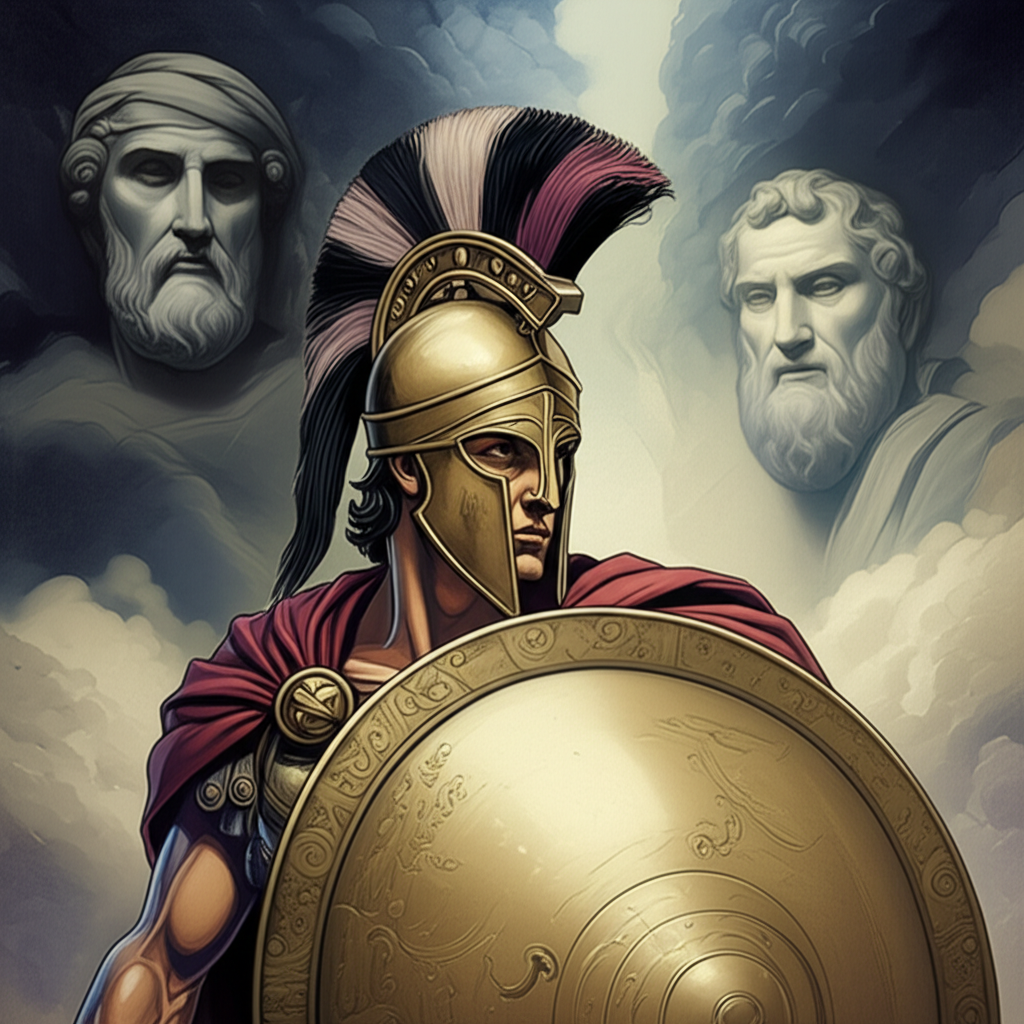
The Weight of Duty: War and Peace in Philosophical Thought
The concepts of honor and courage are inextricably bound to duty, particularly in the military context. Soldiers are bound by an oath, a commitment to serve a greater purpose, which often entails the ultimate sacrifice. This duty exists within the profound paradox of war and peace.
Duty: The Moral Imperative
Duty compels individuals to act in accordance with moral or legal obligations. In the military, it is the bedrock upon which trust, discipline, and collective action are built.
- Kantian Duty: Immanuel Kant's categorical imperative emphasizes duty as an action performed from respect for the moral law itself, regardless of consequences or personal inclinations. For a soldier, this could mean following orders that align with a higher moral principle, even in the face of personal peril.
- Civic Duty: Beyond individual morality, military duty is often framed as a civic obligation to protect one's nation, its values, and its people. This concept has roots in classical republicanism, where citizenship implied a willingness to defend the polis.
War and Peace: A Constant Dialogue
The military exists to wage war, yet its ultimate aim is often to secure peace. This tension has fueled philosophical debate for millennia.
| Philosophical Stance | Key Thinkers & Texts (Great Books) | Perspective on War & Peace |
|---|---|---|
| Just War Theory | St. Augustine (City of God), Thomas Aquinas (Summa Theologica) | War can be justified under specific moral conditions (e.g., self-defense, last resort, proper authority) to restore peace. |
| Realism | Thucydides (History of the Peloponnesian War), Machiavelli (The Prince) | War is an inevitable aspect of human nature and statecraft; peace is merely an interlude. Focus on power, security, and national interest. |
| Pacifism | Leo Tolstoy (War and Peace), certain interpretations of religious texts | All war is inherently immoral; peace is the only ethical state, achieved through non-violence and moral transformation. |
| Liberalism | Immanuel Kant (Perpetual Peace) | Peace is achievable through international cooperation, democracy, and adherence to international law. |
The courage of a soldier is not only tested on the battlefield but also in the difficult decisions that lead to war or the arduous negotiations that strive for peace. The duty to fight is often paralleled by the duty to seek a just and lasting peace.
The Modern Resonance: Honor, Courage, and the Contemporary Military
While the battlefields have changed dramatically since the time of Achilles, the fundamental human questions surrounding honor, courage, and duty in the military remain acutely relevant.
- Cyber Warfare and Moral Courage: In an age of asymmetric warfare and cyber threats, courage extends beyond physical bravery. It encompasses the moral fortitude to report misconduct, to question unethical orders, and to uphold ethical standards in complex, often anonymous, digital spaces.
- The Global Soldier and Universal Honor: As military operations become increasingly multinational, the concept of honor must navigate diverse cultural interpretations while adhering to universal principles of human rights and justice.
- The Burden of Peacekeeping: Soldiers engaged in peacekeeping missions require a unique blend of courage—the bravery to intervene in volatile situations, and the patience and wisdom to build bridges towards sustainable peace. Their duty extends beyond combat to diplomacy and humanitarian aid.
The virtues explored in the Great Books offer a timeless framework for understanding the profound responsibilities and ethical dilemmas faced by military personnel today. They remind us that the warrior's path, at its best, is not merely about destruction, but about the preservation of values, the defense of the vulnerable, and the ultimate pursuit of a just world.
Conclusion: The Unfolding Tapestry of Virtue
The military, throughout history, has served as a crucible for the virtues of honor and courage. These are not static ideals but dynamic forces, shaped by societal values, philosophical inquiry, and the grim realities of war and peace. Bound by an unwavering sense of duty, soldiers embody a unique commitment that challenges us to consider the depths of human resolve and sacrifice. From the epic narratives of ancient Greece to the nuanced ethical debates of today, the philosophical exploration of these concepts illuminates not just the warrior's path, but the enduring human quest for meaning, purpose, and moral excellence.
Suggested Further Exploration:
-
📹 Related Video: PLATO ON: The Allegory of the Cave
Video by: The School of Life
💡 Want different videos? Search YouTube for: ""Plato Laches Summary" for an overview of courage in ancient Greek philosophy"
-
📹 Related Video: ARISTOTLE ON: The Nicomachean Ethics
Video by: The School of Life
💡 Want different videos? Search YouTube for: ""Just War Theory Explained" for a contemporary look at the ethics of conflict"