

"God is Dead!", said Oedipus
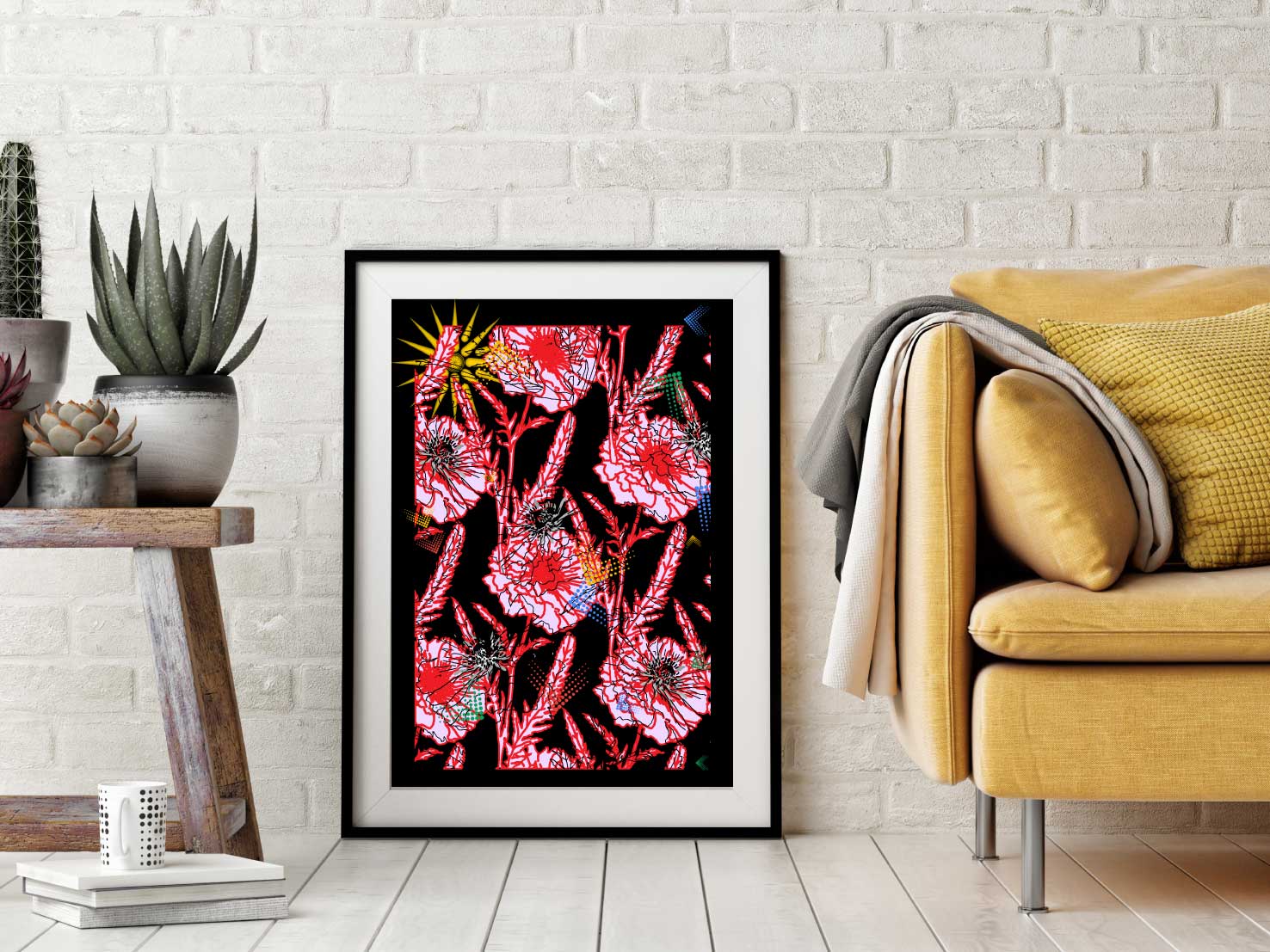
Chaos at House and Home
In the colorful chaos of the living room, with every surface strewn with the evidence of a day rich in play, Alexander stood as a beacon of calm. His daughter, Emma, a whirling dervish of energy and unfiltered joy, paused in her tracks and gazed up at him with the kind of reverence only a four-year-old could muster. Her hands, still sticky from an afternoon art project that had ambitiously combined glue, glitter, and the cat, reached for him. "Father!" she exclaimed, imbuing the word with a weight that felt divine.
Father! - to God himself we cannot give a holier name.
— William Wordsworth (1770-1850)
To Alexander, fatherhood had not been a destination but a journey. He had navigated through sleepless nights and feverish foreheads, through terrible twos and threenager years, and now, amidst the scattered toys and drawings that littered their home, he found his sanctuary. Emma's boundless affection was his affirmation, her innocent proclamation, a Wordsworthian echo that filled the room, making every scattered piece of chaos seem like a part of a holy text.
Sophia watched from the doorway, a smile playing on her lips. She knew the gravity of the title 'Father' in their household. It wasn't just a biological testament but a role Alexander had embraced with the fervor of a man on a sacred mission. He was the storyteller, the boogeyman banisher, the boo-boo kisser, and the architect of their daughter's dreams.
The moments were fleeting, often as messy as the handprints on the wall or the cereal crunching underfoot, but for Alexander, they were the threads of a tapestry depicting the holy name of 'Father.' In Emma's eyes, he found the reflection of the man he aspired to be, not just a parent or a provider, but a guiding star in the chaos that was their blissful, beautiful home life.
The laughter, the cries, the random acts of toddlerhood, all resonated within him as a symphony of purpose. In his mind, there was no holier name, no grander title, no greater honor than that bestowed upon him by the tiny, trusting hands of his child. With every "Father," whispered or shouted, he was reminded of his place in the cosmos, not as a God, but as a guardian of innocence, a shepherd of potential.
It was in this living room turned playroom turned universe, that Alexander understood the depth of Wordsworth's sentiment. The chaos around him was not just a house out of order; it was the order itself, the order of love, life, and legacy, the order that came with the holiest of names, 'Father.'
Ah! There is nothing like staying at home, for real comfort.
— Jane Austen (1775-1817)
Sophia lounged in the embrace of the mustard yellow chair, a tome of Austen's finest perched open in her lap. It was her sanctuary amidst the creative hurricane that was their home. Her gaze often wandered from the page to the loving chaos that Alexander and Emma conspired to create. Toys became treasures, and the living room was a tapestry woven with laughter and the occasional cries of an architectural crisis involving blocks.
As she read Austen's proclamation on the joy of staying at home, she couldn't help but chuckle, thinking how Jane would have marveled at their modern-day Pemberley, a place where comfort was king, even if that meant a crown made of doodles and mismatched socks. Sophia had long agreed with the sentiment; their home was an alcove of comfort, a place where the outside world's hustle was reduced to a muffled backdrop.
Alexander's transition to working from home had transformed him into an adoring witness to the daily dance of their daughter's imagination. The glee in his eyes as he watched Emma declare herself queen of the living room castle was a sight that would warm even the coldest of hearts. Sophia treasured these moments—their home's heart beating in the rhythm of footsteps pattering across wooden floors, in the sighs of contentment as they collapsed onto the couch after a long day of living and loving.
It wasn't the quiet or the cleanliness that made their house a home. No, it was the 'comfort' of knowing that every room held memories of laughter, every corner was a potential hiding spot during a game of hide and seek, and every inch of space was a testament to a life well-lived. Sophia often mused that comfort wasn't just a physical feeling but an emotional state, found in the warmth of Alexander's smile and the sparkle of Emma's mischief-filled eyes.
Their home was an open book of their lives, with pages filled not with ink, but with moments—spilled milk like spilled secrets, pillow forts as historical monuments, and bath time splashes that spoke of nautical adventures. Sophia felt a real comfort that couldn't be replicated by any hotel's sterile suite or vacation's temporary abode.
In the evenings, when the sun dipped below the horizon and painted their walls with the soft gold of dusk, Sophia, Alexander, and Emma would gather on the couch. They would share stories of dragons and daring escapes, of princesses with power tools, and of a world where imagination was the only currency that mattered.
As the night settled in and the house whispered with the sigh of a day coming to a close, Sophia would reflect on how their home was their compass, their anchor, their port in the storm of life. And in her heart, she echoed Jane Austen's sentiment—there truly was nothing like staying at home for real comfort.
Invention, it must be humbly admitted, does not consist in creating out of void, but out of chaos.
— Mary Shelley (1797-1851)
Alexander found himself in the eye of the storm one Saturday morning, as Emma embarked on what could only be described as a creative odyssey. Her vision was grand—a castle constructed not from mere blocks or playsets, but from every conceivable household item that her tiny hands could repurpose. The living room was her canvas, and chaos her muse.
Watching his daughter in her element, Alexander recalled Mary Shelley’s words. Invention did indeed rise from chaos. It was an insight that became clear as he observed Emma navigate her self-made labyrinth of cushions, kitchen utensils, and the ever-patient family dog serving as a makeshift dragon at the gates of her fortress.
Sophia entered the scene with a mixture of amusement and mild apprehension, her eyes widening at the sight of her misplaced cookware. But as she caught Alexander’s eye, they shared an unspoken understanding. This was the essence of invention—their daughter was not making a mess; she was creating a world from the entropy of their home life.
It was then that Sophia, inspired by her daughter’s uninhibited creativity, proposed an invention of her own—a family game night where each would create something from the items in the room. Laughter erupted as Alexander fashioned a helmet from a colander and Sophia draped a tablecloth cape around her shoulders. Their living room was transformed into an inventor’s paradise, a workshop of wonder where each laugh was a cog in the wheel of familial joy.
As the day unfolded, with the sun casting a kaleidoscope of light through the colored glass of the window, the family found that their inventions were more than just the sum of their parts. They were the manifestations of imagination, of love, and of the vibrant energy that pulsed through their household.
Alexander and Sophia watched as Emma proudly explained the mechanics of her castle's defense system, a series of intricate traps and snares that would protect her stuffed animal subjects from the prowling plush predators. It was a marvel of engineering, born from the entropy that filled their lives.
The room was a living testament to Shelley’s insight—out of the chaos of their home, innovation and creativity blossomed like flowers in a wild garden. And as the clock hands swept past the hours, the castle grew taller, the stories wilder, and the laughter louder.
By the end of the day, when the final pillow was placed upon the highest tower, the three of them stood back to admire their handiwork. They had invented more than just games and stories; they had invented memories, the kind that would stick to their hearts long after the chaos had been tidied away.
Alexander knew then that invention was indeed the child of chaos, and in the heart of their home, it had found a playground where it could run wild and free.
In all chaos, there is a cosmos, in all disorder a secret order.
— Carl Jung (1875-1961)
Amidst the scattered remnants of game night, Alexander found himself contemplating the peculiar order within their domestic universe. The living room had survived Emma’s architectural endeavors and their inventive escapades, emerging as a gallery of abstract art, a tangible representation of Jung's musings on chaos and cosmos.
Sophia, with her knack for seeing the silver lining in every scattered cushion, viewed their home as a living organism, each toy and trinket a cell within its vibrant body. The so-called ‘mess’ was not merely a random assortment of objects but a map of memories, each with its rightful place in the story of their family.
Alexander began to perceive the patterns in their life's tapestry, understanding that the chaos was not without its order—a bedtime ritual here, a Saturday pancake breakfast there, and the ever-present serenade of Emma's infectious giggles. Their days were not a series of haphazard events but rather the ebb and flow of a cosmic dance, choreographed by the day-to-day moments that defined their existence.
The cosmos of their home was held together by the gravity of their love, a force that turned the disorder of scattered life into the secret order of cherished memories. Alexander would often catch Sophia in a moment of silent observation, a soft smile gracing her lips as she watched Emma bring order to her kingdom of toys, categorizing them with an innate sense of structure that belied her tender age.
It was during these times that Alexander truly appreciated the depth of Jung's words. The ‘chaos’ of their home was the same force that united them—a beautiful, ever-changing constellation of life’s moments. It was in the laughter that rang out during a tickle attack, in the concentration on Emma’s face as she matched shapes and colors, and in the silent exchanges of love and understanding between him and Sophia.
He began to embrace the disorder, to seek the patterns and rhythms within it, and to understand that in every moment of confusion there was an opportunity to find clarity. Alexander learned to navigate the entropy, not with trepidation, but with the excitement of a voyager discovering new lands.
And so, their lives continued, a beautiful ballet of chaos and cosmos. Sophia, the ever-graceful presence, found beauty in the asymmetry, teaching Emma that in every dropped spoonful of porridge there was a story, and in every unmade bed, there was a dream still warm from the night's embrace.
Their home became a sanctuary not despite the chaos, but because of it. It was a place where every misplaced item had a narrative, and every seemingly random act was a part of something greater, something infinite—a cosmos of their very own.
As the day wound down and the stars began their nightly vigil, Alexander, Sophia, and Emma would sit amidst their orderly disorder, a family united by the invisible threads of a cosmic quilt, woven with the laughter, tears, and love that made their house a home.
The planksip Writers' Cooperative is proud to sponsor an exciting article rewriting competition where you can win part of over $750,000 in available prize money.
Figures of Speech Collection Personified
Our editorial instructions for your contest submission are simple: incorporate the quotes and imagery from the above article into your submission.
What emerges is entirely up to you!
Winners receive $500 per winning entry multiplied by the article's featured quotes. Our largest prize is $8,000 for rewriting the following article;
 Heraclitus
At planksip, we believe in changing the way people engage—at least, that's the Idea (ἰδέα). By becoming a member of our thought-provoking community, you'll have the chance to win incredible prizes and access our extensive network of media outlets, which will amplify your voice as a thought leader. Your membership truly matters!