

Fate vs. Free Will: Navigating Necessity and Contingency
The Enduring Riddle of Our Existence
From the ancient Greek tragedies to the intricate debates of modern philosophy, the tension between Fate and Free Will has captivated thinkers for millennia. At its heart lies a profound question: are our lives predetermined, unfolding along a path of Necessity, or are we truly the authors of our destinies, capable of genuine choice and Contingency? This isn't merely an academic exercise; it touches upon our understanding of responsibility, morality, purpose, and the very nature of reality itself.
This article delves into the intricate dance between these concepts, exploring how Cause plays a pivotal role in shaping our perspectives and how the Western intellectual tradition, as chronicled in the Great Books, has grappled with this fundamental dilemma.
Unpacking the Core Concepts
To truly appreciate the depth of this philosophical challenge, we must first define our terms. These aren't just words; they are lenses through which we perceive our agency and the fabric of the cosmos.
Fate: The Unseen Hand
Fate refers to a predetermined course of events, an inescapable destiny. It suggests that our lives are woven into a grand tapestry, with every thread laid out in advance, often by a higher power, cosmic forces, or an inexorable chain of Cause and effect. In this view, individual Will might be an illusion, or at best, a minor player in a script already written.
Free Will: The Power of Choice
Free Will, conversely, posits that individuals possess the genuine capacity to make choices, to decide their actions, and to initiate new chains of Cause and effect. It implies an authentic ability to choose otherwise, even in identical circumstances, making us morally responsible for our deeds.
Necessity: That Which Must Be
Necessity describes anything that cannot be otherwise; it is inevitable, unavoidable, and determined. In a philosophical context, a necessary event or truth is one whose negation is impossible. Often, this is tied to strong causal determinism – if every event is the necessary effect of prior causes, then the future is as fixed as the past.
Contingency: The Realm of Possibility
Contingency refers to that which may or may not be. A contingent event is one that depends on circumstances, choices, or random occurrences. Its opposite is perfectly possible. The existence of true Free Will inherently relies on the reality of contingency, allowing for genuine alternative futures.
Cause: The Connecting Thread
The concept of Cause is central to both sides of the debate.
- Determinists argue that every event has a Cause, and these causes necessitate their effects, leading to a chain of necessity that leaves no room for true contingency or free will.
- Proponents of Free Will might argue for different types of causation, perhaps that agents themselves can be uncaused causes of their actions, or that mental events (choices) can cause physical actions without being fully determined by prior physical causes.
A Historical Panorama: Voices from the Great Books
The tension between fate and free will has been a constant refrain in Western thought, evolving with each intellectual epoch.
-
Ancient Greece:
- Homer & Sophocles: The tragedies of Oedipus Rex vividly portray characters caught in the grip of prophecy and fate, their individual will seemingly powerless against divine decrees. Yet, even here, characters often make choices that contribute to their downfall, blurring the lines.
- The Stoics: Advocated for a rigorous form of determinism, where the universe operates according to a rational, necessary order. Freedom, for them, lay not in altering fate, but in accepting it and aligning one's will with the cosmic necessity.
- Aristotle: In works like the Nicomachean Ethics, Aristotle explored human action and moral responsibility, emphasizing deliberation and choice (prohairesis) as essential for virtue. He distinguished between voluntary and involuntary actions, laying groundwork for understanding will and contingency in human affairs.
-
Medieval Period:
- St. Augustine: Grappled intensely with God's omnipotence and foreknowledge versus human free will. How could God know the future without predetermining it, thereby negating human choice and moral responsibility? Augustine's solution involved divine grace and the idea that God's knowledge doesn't cause events, but merely observes them across time.
- Thomas Aquinas: Building on Aristotle, Aquinas explored divine providence and human liberty. He argued that God's primary causality doesn't negate secondary causes (including human will), allowing for both divine order and genuine human contingency.
-
Early Modern Philosophy:
- Baruch Spinoza: A staunch determinist, Spinoza argued that everything in the universe, including human thoughts and actions, follows necessarily from the nature of God (or Nature). Freedom, for Spinoza, is not about having free will in the conventional sense, but about understanding the necessity of all things and acting in accordance with reason, thereby escaping the bondage of passions.
- Immanuel Kant: Attempted a profound reconciliation. In the phenomenal world (the world of our experience), everything is subject to the laws of cause and effect, implying necessity. However, in the noumenal world (the world as it is in itself), Kant argued for a realm of freedom where the moral agent can initiate actions independently of empirical causes, thus preserving moral responsibility and the possibility of contingency.
The Modern Lens: Cause and Complexity
Today, the debate continues, informed by advances in science and philosophy. Neuroscience explores the brain mechanisms underlying decision-making, while physics grapples with determinism at the quantum level. The concept of Cause remains the linchpin.
Key Questions in the Modern Context:
- Are all causes deterministic? Quantum mechanics introduces elements of randomness or contingency at the subatomic level. Does this translate to macroscopic human choice?
- Is human consciousness merely an emergent property of physical processes? If so, is our will merely an epiphenomenon, an illusion arising from complex brain activity that is ultimately determined by physical causes?
- Can we be morally responsible if our actions are necessary outcomes of prior causes? This is the enduring ethical challenge posed by strong determinism.
The interplay of necessity and contingency is not just theoretical. It impacts our legal systems, our understanding of blame and praise, and our personal sense of purpose. If everything is necessary, why strive? If everything is contingent, are we truly free from any inherent order?
The Enduring Tension
The debate between Fate and Free Will, mediated by the concepts of Necessity and Contingency and underscored by the nature of Cause, is far from settled. Perhaps it is a tension inherent to the human condition – a simultaneous awareness of our limitations and our aspirations to self-determination. The Great Books of the Western World don't offer a single, definitive answer, but rather a rich tapestry of thought that encourages us to engage with these profound questions ourselves, shaping our own understanding of what it means to be an agent in a vast and complex universe.
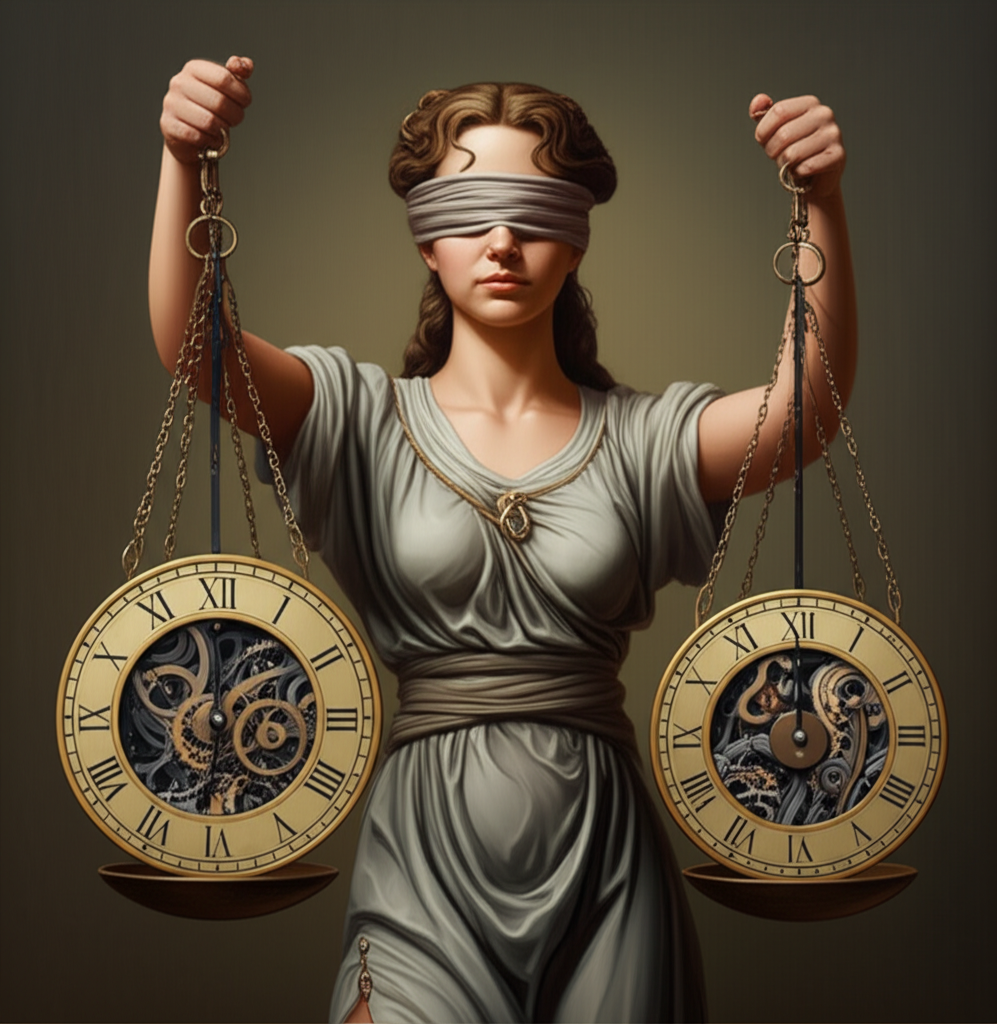 . On the other, a feather or a single, glowing seed (symbolizing free will/contingency/choice). The background is a swirling, cosmic scene, hinting at both order and chaos.)
📹 Related Video: What is Philosophy?
Video by: The School of Life
💡 Want different videos? Search YouTube for: ""Free Will vs Determinism Philosophy Explained""
📹 Related Video: What is Philosophy?
Video by: The School of Life
💡 Want different videos? Search YouTube for: ""Necessity and Contingency in Philosophy""