

The Enduring Nexus: Family Structure, Social Custom, and the Foundations of the State
The intricate dance between family structure and the prevailing social customs of a community forms the very bedrock upon which civilizations are built. From the intimate confines of the household, individuals acquire the foundational values, ethics, and behaviors that shape them into responsible citizens, ultimately influencing the very fabric and governance of the State. This article explores how these deep-seated customs and conventions dictate the form and function of the family, and conversely, how the family unit perpetuates and transforms the traditions that define a society, drawing insights from the timeless wisdom preserved within the Great Books of the Western World.
The Family: Society's Primal Crucible
Long before the formal establishment of laws or the grand designs of political philosophy, the family stood as humanity's first and most enduring social institution. Aristotle, in his Politics, posits the household (oikos) as the primary and most natural association, preceding the village and the State. It is within this fundamental unit that basic needs are met, and, crucially, the initial seeds of virtue and civic responsibility are sown.
- Formation of Character: The family is the initial school of life, where children learn language, morality, and the fundamental distinctions between right and wrong. It is here that the concept of duty, loyalty, and reciprocity first takes root.
- Transmission of Values: Beyond mere survival, the family serves as the chief conduit for transmitting cultural heritage, religious beliefs, and practical skills from one generation to the next. This unbroken chain ensures the continuity of a society's core identity.
Custom and Convention: The Unwritten Architect of Life
While the family provides the structure, it is custom and convention that imbues it with specific meaning and function. These are the unwritten rules, the inherited ways of thinking and behaving that dictate everything from marriage rituals to child-rearing practices, and from inheritance patterns to the allocation of gender roles within the household.
The power of custom lies in its pervasive, often unconscious, influence. It shapes expectations, provides social cohesion, and grants legitimacy to particular family forms. Homer's epics, for instance, vividly portray the intricate web of honor, hospitality, and familial duty that governed ancient Greek society, where deviations from established conventions could lead to tragic consequences.
Manifestations of Custom within Family Structures:
- Marriage Rites: Customs dictate who may marry whom, the ceremonies involved, and the social expectations placed upon spouses.
- Parental Authority: The extent of parental power, the roles of mothers and fathers, and the methods of discipline are all culturally defined.
- Inheritance Laws: Traditions determine how property, titles, and lineage are passed down, often reflecting broader societal values regarding wealth and status.
- Kinship Obligations: Beyond the nuclear family, customs define the responsibilities and relationships within extended family networks.
From Hearth to Polis: The Citizen's Genesis
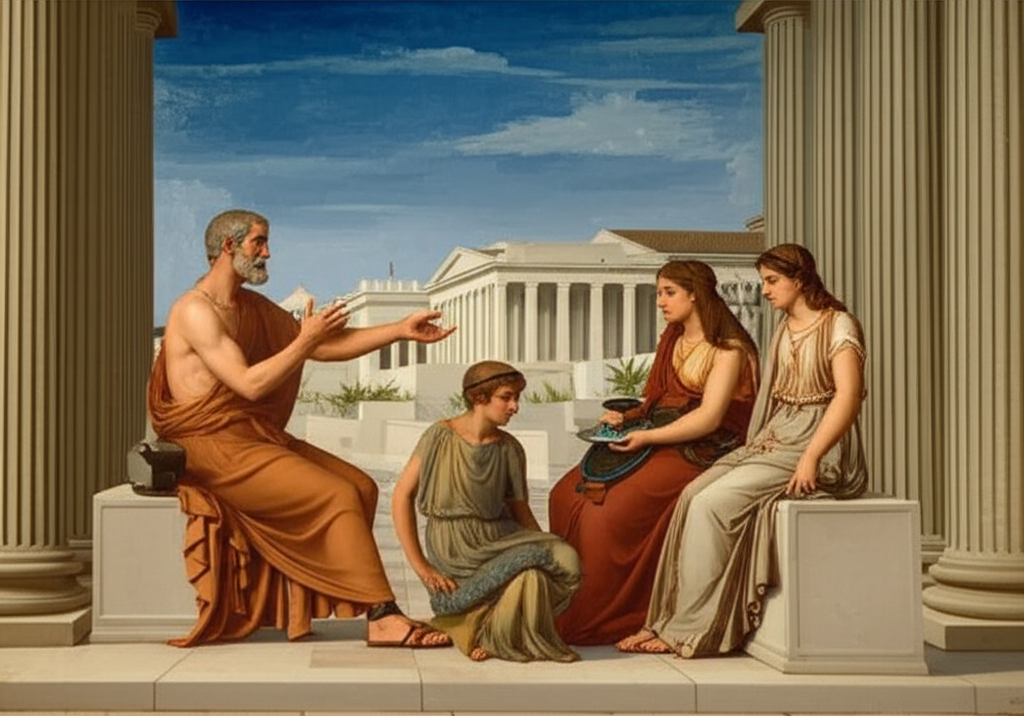
The journey from a child within a family to a fully integrated citizen within the State is profoundly shaped by the customs observed and taught at home. For Aristotle, the purpose of the polis (State) is to enable its citizens to live "the good life," and this pursuit of virtue begins in the household. The lessons of cooperation, responsibility, and justice learned in the family are directly transferable to the wider civic sphere.
Plato, in his Republic, while proposing radical alterations to traditional family structures for his guardian class, nonetheless underscores the profound impact of early upbringing on the character of future citizens. His ideal State explicitly takes an active role in education and even communal child-rearing, precisely because the proper formation of individuals is paramount to the health and stability of the polis. The family, whether traditional or state-managed, remains the foundational site for cultivating the virtues necessary for civic life.
The State's Hand in Family and Custom
The relationship between the State and the family is dynamic and often fraught with tension. While the family is a natural community, the State often seeks to regulate or influence its structure and customs for the perceived greater good of society.
- Regulation and Protection: States establish laws governing marriage, divorce, child custody, and inheritance, thereby formalizing and enforcing certain customs and conventions.
- Social Engineering: Historically, some states have attempted to reshape family structures to align with political ideologies or demographic goals, as seen in various historical attempts to control population growth or enforce particular moral codes.
- Balancing Autonomy and Collective Good: A perennial philosophical question revolves around the extent to which the State should interfere with the private sphere of the family. Thinkers like John Locke grappled with the rights of individuals and families versus the authority of the government, emphasizing the protection of individual liberties within the broader social contract.
Ultimately, the strength and character of a State are inextricably linked to the vitality and moral fiber of its constituent families. When customs and conventions within families align with the broader goals of justice, virtue, and civic responsibility, the State flourishes.
Enduring Relevance and Evolution
The interplay of family structure and social custom is not static. Throughout history, these elements have evolved in response to economic shifts, technological advancements, and changing philosophical perspectives. Yet, the fundamental principle remains: the family, guided by its inherited and evolving customs, continues to be the primary incubator of the citizen and the enduring building block of the State. Understanding this profound relationship is crucial for comprehending the past, navigating the present, and shaping the future of human society.
YouTube Video Suggestions:
-
📹 Related Video: ARISTOTLE ON: The Nicomachean Ethics
Video by: The School of Life
💡 Want different videos? Search YouTube for: "Aristotle Politics family state citizen"
-
📹 Related Video: PLATO ON: The Allegory of the Cave
Video by: The School of Life
💡 Want different videos? Search YouTube for: "Plato Republic family guardians education"