

Dualistic Monism is Moronic
Dualistic Monism is a Contradiction in Terms
Sophia: Gentlemen, I’ve been pondering Leibniz’s monads and Mill’s political parties, and I wonder—can a system be both unified and divided without contradiction?
Leibniz: Sophia, that is precisely why “dualistic monism” is a contradiction in terms. Each monad, or simple substance, is complete in itself. Its influence on another is ideal, not material. Harmony arises not from fusion, but from correspondence.
Mill: Fascinating. In politics, we see a similar pattern. A healthy state requires both stability and reform—two forces that might appear opposed, yet their tension ensures progress. Without one, the other becomes destructive.
Sophia: So both in metaphysics and politics, you suggest that independence and interrelation coexist. One does not override the other, yet both are necessary for order.
Leibniz: Exactly. Monads never collide materially; they unfold in their own perceptions. Each is self-contained, yet the divine pre-established harmony ensures coherence.
But in simple substances, the influence of one monad over another is ideal only.
— Gottfried Wilhelm Leibniz (1646-1716)
Mill: And in society, each individual or faction has autonomy, yet the collective must maintain balance. A party of reform without stability risks chaos; stability without reform stagnates.
Sophia: Then perhaps the contradiction is only apparent. It is in the tension, the ideal correspondence, that the system functions—whether in souls, monads, or states.
Leibniz: Well observed, Sophia. The universe is not a machine of force alone—it is a symphony of perspectives.
Mill: And politics, like philosophy, thrives not when opposition is eliminated, but when it is harmonized. Freedom, responsibility, reform, and order—all coexisting without annihilating one another.
Sophia: Harmony without fusion, independence without isolation—both in the soul and in society, the principle seems the same.
Leibniz: Indeed. Even apparent dualities are simply reflections of a higher unity.
Mill: And the art of living, or governing, is learning to navigate that unity without suppressing difference.
A party of order or stability, and a party of progress or reform, are both necessary elements of a healthy state of political life.
— John Stuart Mill (1806-1873)
Sophia: A delicate balance, then—between the monad and the multitude, the self and the state, the ideal and the real.
Leibniz: Precisely. And in understanding that, Sophia, one glimpses the divine orchestration of all things.
Mill: Or the practical orchestration of a just society.
Sophia: Perhaps, then, metaphysics and politics are not so different after all.
— Another planksip Möbius.

The planksip Writers' Cooperative is proud to sponsor an exciting article rewriting competition where you can win part of over $750,000 in available prize money.
Figures of Speech Collection Personified
Our editorial instructions for your contest submission are simple: incorporate the quotes and imagery from the above article into your submission.
What emerges is entirely up to you!
Winners receive $500 per winning entry multiplied by the article's featured quotes. Our largest prize is $8,000 for rewriting the following article;
 Heraclitus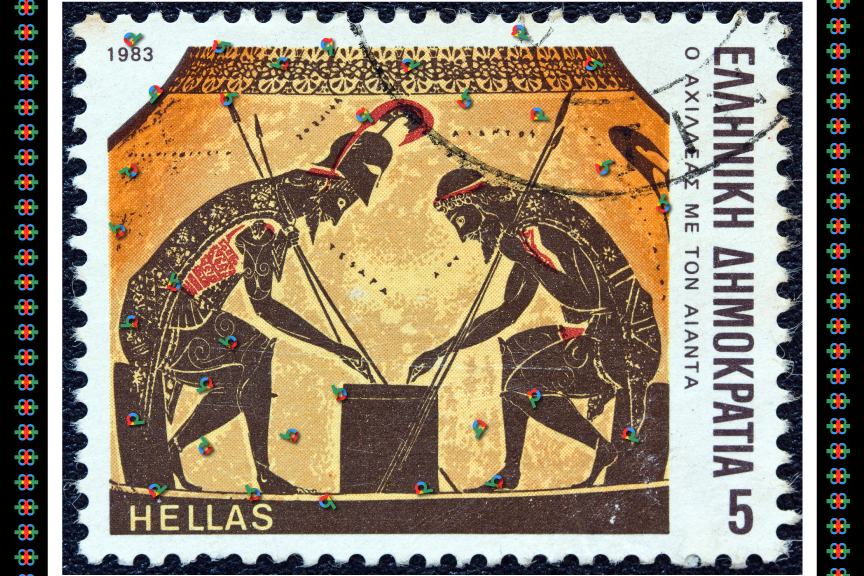
At planksip, we believe in changing the way people engage—at least, that's the Idea (ἰδέα). By becoming a member of our thought-provoking community, you'll have the chance to win incredible prizes and access our extensive network of media outlets, which will amplify your voice as a thought leader. Your membership truly matters!