

The Enduring Tapestry: Custom and Convention in Family Life
Family life, in its myriad forms across cultures and centuries, is far more than a mere biological imperative; it is a profound testament to the intricate interplay of custom and convention. From the ancient hearth to the modern digital household, the ways we organize our intimate relationships, raise our children, and define our roles are shaped by both the unwritten laws of tradition and the deliberate agreements, explicit or implicit, that bind us. This exploration delves into the philosophical underpinnings of these forces, examining how they mold the individual citizen and influence the very structure of the State, drawing insights from the enduring wisdom of the Great Books of the Western World.
Understanding the Foundations: Custom, Convention, and the Family Unit
To truly grasp the dynamics of family life, we must first distinguish between two fundamental concepts that, while often intertwined, possess distinct philosophical weight: custom and convention.
Custom: The Unwritten Laws of Kin
Custom refers to the long-established practices, traditions, and inherited ways of doing things that are passed down through generations, often without conscious articulation or formal decree. These are the ingrained habits of a family or community, the silent codes that dictate everything from mealtime rituals to rites of passage, from how respect is shown to elders to the very language of affection. Customs are often felt rather than thought, embodying the accumulated wisdom and experience of ancestors. They provide a sense of continuity, identity, and belonging, shaping our earliest understanding of the world and our place within it.
Convention: The Agreed-Upon Structures of Domesticity
Convention, by contrast, denotes the explicit or implicit agreements, rules, and structures that society, or a particular family unit, adopts for the sake of order, efficiency, or shared understanding. These are the conscious choices made about how to organize family life: who performs which duties, the agreed-upon norms for decision-making, the legal framework of marriage, or the shared values that a family explicitly commits to upholding. While some conventions might evolve into customs over time, they originate from a more deliberate, often rational, process of agreement, even if unspoken.
The Interplay: Where Tradition Meets Agreement
The family unit exists at the fascinating intersection of custom and convention. A family might inherit the custom of Sunday dinners, but the convention of who cooks, who cleans, and who brings the dessert might be explicitly negotiated or implicitly understood. This dynamic interplay creates the unique texture of each family, balancing the comfort of tradition with the necessary adaptability to modern life.
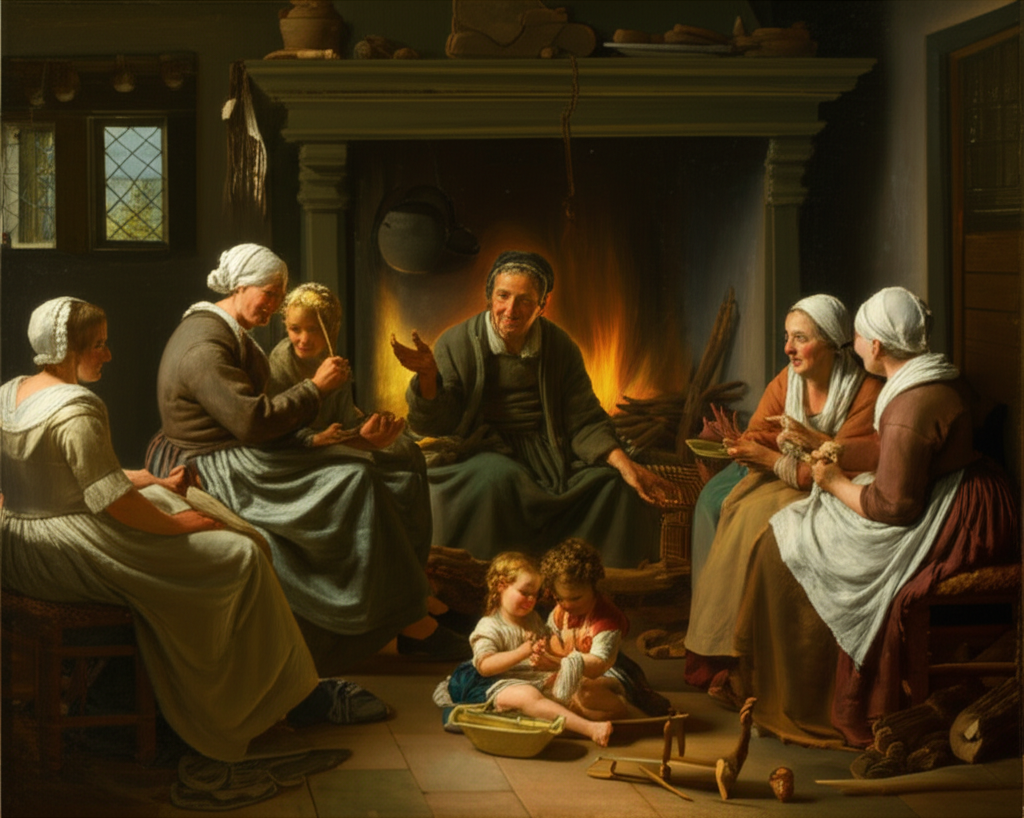
The Domestic Sphere: A Crucible for the Citizen
Before an individual steps into the public square, they are formed within the private confines of the family. Here, the raw material of human potential is shaped by custom and convention into a nascent citizen.
From Hearth to Polis: Early Lessons in Social Order
Aristotle, in his Politics, famously posited that the household (oikos) is the primary and most natural association, preceding the village and the State (polis). For Aristotle, the household, with its inherent hierarchy and division of labor (even if we challenge some of his specific prescriptions today), is where individuals learn the fundamental lessons of governance, obedience, and reciprocal duty. It is where the citizen first encounters the concepts of authority, responsibility, and the common good, albeit on a micro-scale. The customs of sharing, resolving conflict, and contributing to the family's well-being are direct precursors to civic virtues.
The Role of Parents: Transmitting Values and Norms
Parents, as the primary educators, are the chief conduits through which customs are transmitted and conventions are established. They are the initial interpreters of the world, imparting not just knowledge but also moral frameworks, social etiquette, and the accepted ways of interacting within their specific cultural context. Whether consciously or unconsciously, they instill the values that will guide their children's interactions within the larger State. This transmission is not always smooth; it is often fraught with the challenges of generational shifts and evolving societal norms.
Challenges to Traditional Family Structures
The very definition of "family" has expanded and diversified, challenging many long-held customs and conventions. Single-parent households, blended families, same-sex partnerships, and chosen families all necessitate new conventions and adaptations of old customs. These evolving structures highlight the dynamic nature of family life, demonstrating that while the need for connection and belonging remains constant, the forms it takes are fluid and responsive to societal change and individual choice.
Echoes Through the Ages: Philosophical Insights on Family Norms
Philosophers throughout history have grappled with the role of the family, its customs, and its conventions, often reflecting the societal concerns of their time while also offering timeless insights.
Plato's Ideal: Rethinking Family for the State
In Plato's Republic, we encounter a radical proposition regarding family life, particularly for the guardian class. Plato, in his pursuit of the ideal State, suggests that for the most dedicated citizens, traditional family bonds – and the customs and conventions that sustain them – might need to be dissolved. Children would be raised communally, and parents would not know their offspring, nor offspring their parents. The aim was to eliminate private loyalties that could detract from absolute devotion to the State, thereby ensuring that conventions served the greater good of the polis rather than individual households. This controversial idea underscores the tension between the private sphere of the family and the public demands of the State.
Aristotle's Pragmatism: The Natural Household
In stark contrast to Plato, Aristotle, as noted, viewed the household as a natural and necessary institution. For him, the family's customs and conventions were not obstacles to the State but its very foundation. It is within the family that humans, by nature, fulfill their needs for procreation, sustenance, and the development of moral character. The conventions of marriage, parenthood, and household management, while differing across cultures, were seen as essential for the flourishing of individuals and, by extension, the State. Aristotle's emphasis on the family as a natural institution highlights the deep-seated human need for such structures.
Enlightenment Views: Contract, Rights, and the Domestic Sphere
The Enlightenment era brought a new lens to the discussion of family. Philosophers like John Locke, while not extensively detailing family customs, certainly influenced the conventions surrounding it by emphasizing individual rights and the concept of social contract. The family, in this view, could be seen as a smaller, more intimate contract, where individuals agree to certain terms for mutual benefit. This perspective paved the way for future discussions on the rights of individuals within the family, rather than solely seeing the family as a monolithic unit serving the State. The customs of patriarchal authority, for instance, began to be questioned through the lens of individual liberty.
The Dialectic of Domesticity: Stability, Adaptation, and Evolution
Family life is a constant negotiation between the pull of the past and the demands of the present. Custom offers stability, while convention allows for adaptation.
The Comfort of Custom: Preserving Identity and Continuity
Customs are the anchors of family identity. They provide a sense of belonging, a shared history, and a predictable rhythm to life. Whether it's a specific holiday tradition, a particular way of celebrating milestones, or even the customary phrases used within a family, these practices connect generations and reinforce a collective identity. They offer psychological comfort, acting as a bulwark against the uncertainties of the outside world.
The Imperative of Convention: Adapting to New Realities
Yet, families must also be adaptable. Societal changes, economic pressures, migration, and evolving moral standards necessitate new conventions. A family moving to a new country might adopt new dietary conventions while retaining the custom of storytelling. A modern family where both parents work might establish new conventions for childcare and household duties that depart from older customs. The ability to consciously or unconsciously adjust these conventions is crucial for a family's resilience and continued flourishing.
When Customs Clash: Intergenerational and Intercultural Dynamics
The tension between custom and convention often becomes most apparent in intergenerational disagreements or intercultural marriages. What one generation considers a sacred custom, another might see as an outdated convention. Similarly, individuals from different cultural backgrounds bring their own ingrained customs and must negotiate new conventions to forge a shared family life. This dynamic process underscores the ongoing work required to maintain harmony and understanding within the family unit.
| Aspect | Rooted in Custom | Shaped by Convention |
|---|---|---|
| Origin | Inherited, unconscious, evolutionary | Agreed upon, conscious, often pragmatic |
| Function | Provides identity, continuity, emotional comfort | Enables adaptation, order, addresses specific needs |
| Example (Meals) | Sunday roast, specific holiday dishes | Who cooks, who cleans, designated meal times, dietary rules |
| Example (Child-Rearing) | Respect for elders, specific lullabies, bedtime stories | Discipline methods, screen time rules, allowance system |
| Relationship to State | Underlying cultural fabric, informs social norms | Influenced by laws (marriage, divorce), legal rights/duties |
📹 Related Video: PLATO ON: The Allegory of the Cave
Video by: The School of Life
💡 Want different videos? Search YouTube for: ""Plato Aristotle Family State Philosophy""
📹 Related Video: ARISTOTLE ON: The Nicomachean Ethics
Video by: The School of Life
💡 Want different videos? Search YouTube for: ""Social Contract Theory Family Life""
The Unfolding Narrative of Family Life
The philosophical journey through custom and convention reveals that family life is a dynamic, ever-unfolding narrative. It is a space where the weight of tradition meets the necessity of adaptation, where individual needs are balanced against collective well-being, and where the intimate details of daily existence prepare us for our roles as citizens within the larger State. From the ancient philosophers who debated its very structure to our contemporary struggles with evolving definitions, the family remains a central arena for understanding what it means to be human, shaped by both the silent whispers of the past and the deliberate choices we make in the present. As Daniel Sanderson, I believe that by understanding these deep currents, we can better navigate the complexities of our own family lives, fostering institutions that are both rooted in enduring values and adaptable to the future.