

Navigating the Labyrinth: The Enduring Concepts of Good and Evil in Moral Systems
The concepts of Good and Evil lie at the very heart of human moral systems, shaping our understanding of right and wrong, Duty, and the pursuit of a meaningful life. From the Virtue and Vice of ancient Greek ethics to the theological implications of Sin and the categorical imperatives of modern philosophy, this article explores the diverse ways thinkers from the Great Books of the Western World have grappled with these fundamental distinctions, revealing their enduring complexity and profound impact on our moral landscapes. Understanding these frameworks isn't just an academic exercise; it's about discerning the very fabric of our ethical existence.
The Ancient Foundations: Virtue, Vice, and the Pursuit of the Good
When we delve into the origins of Western moral thought, particularly through the lens of the Great Books, we invariably encounter the profound inquiries of ancient Greek philosophers. For them, the question wasn't merely about individual actions, but about the very nature of a flourishing life.
- Plato's Forms: In his Republic, Plato posits the Form of the Good as the ultimate reality, the source of all being and intelligibility. For Plato, to act good is to align oneself with this transcendent ideal, moving beyond the shadows of the cave towards true knowledge. Evil, in this sense, is often understood as a privation of the Good, a turning away from true reality.
- Aristotle's Virtue Ethics: Aristotle, in his Nicomachean Ethics, offers a more practical, character-based approach. He argues that Good is found in eudaimonia, often translated as "human flourishing" or "living well." This flourishing is achieved through the cultivation of virtues – character traits like courage, temperance, and justice – which represent a "golden mean" between two extremes of vice. For instance, courage is the mean between the vices of cowardice and recklessness. Vice, then, is any excess or deficiency in these character traits that hinders one's ability to live a fulfilling, rational life.
These early thinkers laid the groundwork for understanding Good and Evil not just as abstract principles, but as integral to human character and the pursuit of a well-lived life.
The Abrahamic Perspective: Sin, Duty, and Divine Command
With the advent of Abrahamic religions, the concepts of Good and Evil took on a new, divinely ordained dimension. Here, morality is often understood as adherence to God's will, with profound implications for human Duty and the concept of Sin.
- Divine Command Theory: For thinkers like Augustine of Hippo, whose works are foundational in the Great Books, Good is what God commands, and Evil is disobedience to that command. The concept of Sin becomes central, representing a transgression against divine law, leading to separation from God. This view introduces an external, ultimate authority for moral precepts.
- The Problem of Evil: Augustine grappled extensively with the Problem of Evil – how an omnipotent, omniscient, and benevolent God could permit evil to exist. His solutions, often involving free will and the idea of evil as a privation of good (echoing Plato), shaped centuries of theological and philosophical discourse.
- Duty to God: In this framework, moral Duty is primarily a Duty to God, expressed through obedience to commandments and striving for righteousness. The internal struggle between good and evil is often depicted as a spiritual battle within the individual soul.
Enlightenment Ethics: Duty, Reason, and the Categorical Imperative
The Enlightenment brought a significant shift, emphasizing human reason as the foundation of morality, moving away from purely divine commands. Immanuel Kant, a towering figure in the Great Books, revolutionized the understanding of Duty and moral law.
- Kant's Deontology: In his Groundwork of the Metaphysics of Morals, Kant argues that moral actions are not good because of their consequences, but because they are performed out of Duty to a moral law. For Kant, the Good Will is the only thing good without qualification.
- The Categorical Imperative: This moral law is expressed through the Categorical Imperative, which has several formulations. One key formulation states: "Act only according to that maxim whereby you can at the same time will that it should become a universal law." This means an action is good if it can be universally applied without contradiction, and evil if it cannot. For Kant, moral Duty is a rational imperative, binding on all rational beings, irrespective of personal desires or outcomes.
- Respect for Persons: Another formulation emphasizes treating humanity, whether in oneself or others, always as an end and never merely as a means. This grounds the inherent Good of human dignity and autonomy, making actions that instrumentalize others inherently evil.
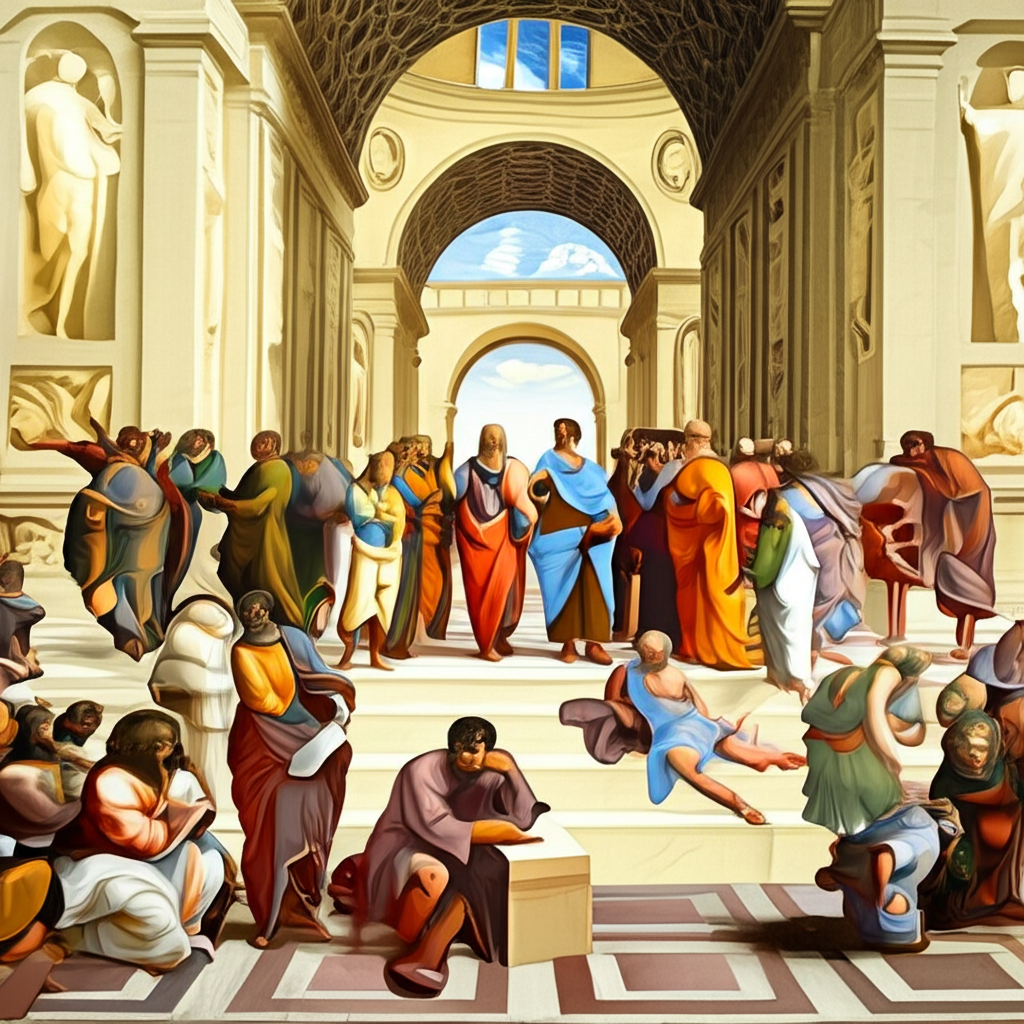
Modern Interpretations and the Enduring Debate
While these foundational ideas from the Great Books continue to resonate, modern philosophy has further complicated the landscape of Good and Evil.
- Consequentialism (Utilitarianism): Philosophers like John Stuart Mill, in his Utilitarianism, propose that the Good is determined by the greatest happiness for the greatest number. An action is morally good if its consequences maximize overall well-being and minimize suffering. Evil actions, conversely, are those that lead to a net negative outcome. This contrasts sharply with Kant's emphasis on Duty and intrinsic goodness.
- Moral Relativism vs. Universalism: The question of whether Good and Evil are universal truths or culturally/individually relative continues to be debated. While many classical philosophers leaned towards universal principles, modern thought often grapples with the diversity of moral codes across societies.
- The Nuance of Virtue and Vice: Contemporary virtue ethics, while drawing from Aristotle, often expands beyond a strict list of virtues, considering how character traits are shaped by context and personal narrative, and how virtue can be expressed in diverse ways.
Key Concepts in Review
To appreciate the rich tapestry of moral systems, it's helpful to consider how these core concepts have evolved and interconnected:
| Concept | Primary Focus | Exemplar Philosophers/Traditions |
|---|---|---|
| Good and Evil | Fundamental moral distinction, ultimate aims | Plato, Aristotle, Augustine, Kant |
| Virtue and Vice | Character traits, habits, and their moral quality | Aristotle, Stoicism |
| Duty | Moral obligation, adherence to law or principle | Kant, Divine Command Theory |
| Sin | Transgression against divine law, moral failing | Augustine, Abrahamic religions |
Conclusion: The Unending Quest
The concept of Good and Evil remains one of philosophy's most enduring and challenging inquiries. From Plato's transcendent Forms to Aristotle's practical ethics of Virtue and Vice, from Augustine's theological grappling with Sin to Kant's rational framework of Duty, the Great Books of the Western World offer a continuous dialogue on what it means to live a moral life. There are no easy answers, but the very act of engaging with these profound questions enriches our understanding of ourselves, our societies, and the ethical landscape we navigate daily. The journey through these ideas is not just about understanding history; it's about equipping ourselves to confront the moral dilemmas of our own time with greater wisdom and clarity.
📹 Related Video: KANT ON: What is Enlightenment?
Video by: The School of Life
💡 Want different videos? Search YouTube for: "Immanuel Kant Categorical Imperative explained"
📹 Related Video: ARISTOTLE ON: The Nicomachean Ethics
Video by: The School of Life
💡 Want different videos? Search YouTube for: "Aristotle Virtue Ethics explained"