

Astronomy and the Concept of Eternity: A Cosmic Reflection
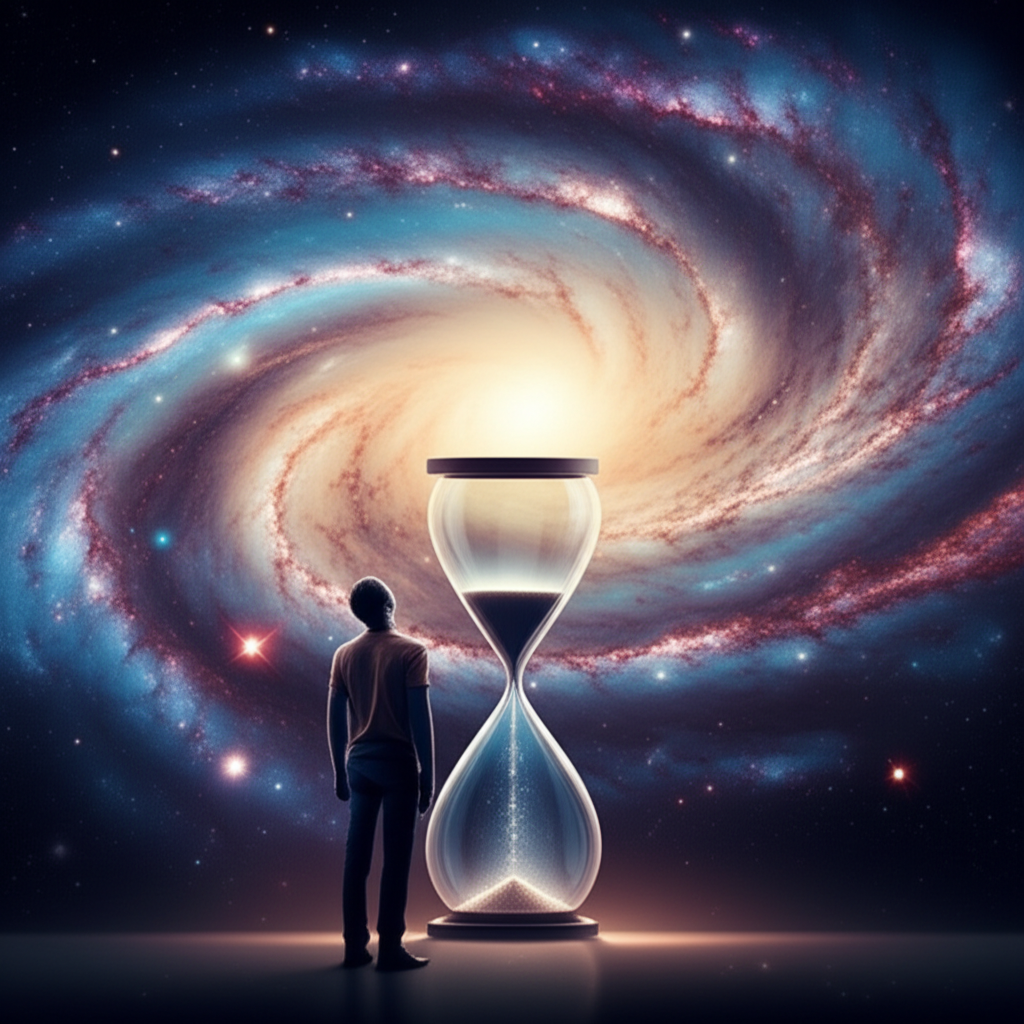
The human endeavor to comprehend the universe has always been intertwined with our deepest philosophical questions. From the earliest stargazers to modern cosmologists, Astronomy has consistently challenged our perceptions of Time, space, and our place within the grand tapestry of existence. This article explores how our observation of the cosmos inevitably leads us to grapple with the profound and often elusive concept of Eternity, forcing us to reconsider the transient nature of our World against the backdrop of the infinite.
The Unfolding Cosmos: A Window to the Infinite
Our journey begins not with abstract thought, but with the tangible, albeit distant, reality presented by astronomical observation. The sheer scale of the universe—galaxies stretching billions of light-years across, stars living and dying over eons, and phenomena like black holes that defy our everyday understanding of physics—compels us to confront magnitudes that dwarf human experience. This confrontation is not merely scientific; it is profoundly philosophical, as it forces us to re-evaluate the boundaries of our own existence and the very fabric of Time.
- Vastness as a Catalyst: The immense distances and cosmic timelines observed through Astronomy serve as a powerful catalyst for philosophical inquiry. Our immediate "world" shrinks to an infinitesimally small point, inviting contemplation on what lies beyond our sensory grasp.
- Beyond Human Scale: The birth of a star, the collapse of a galaxy, the expansion of the universe itself—these processes unfold over durations that make human history seem like a fleeting blink, prompting us to ask about what endures.
Defining Eternity: Beyond Endless Time
Before we can fully appreciate Astronomy's contribution to our understanding of Eternity, we must first clarify what Eternity truly signifies. Often conflated with infinite Time, philosophical traditions, particularly those found in the Great Books of the Western World, offer a more nuanced distinction.
| Concept | Description | Key Philosophical Implication |
|---|---|---|
| Infinite Time | Time without beginning or end, a linear progression extending indefinitely. | Still bound by temporality, succession of moments. |
| Eternity (Classical) | A timeless, changeless existence; a simultaneous possession of unending life. | Transcends temporality; no past, present, or future in the human sense. |
Philosophers like Boethius, drawing on earlier Greek thought, described Eternity not as endless duration, but as the simultaneous and perfect possession of interminable life. This concept suggests a realm entirely outside the flow of Time, where all moments exist concurrently. When we observe celestial objects whose light has traveled for billions of years, we are, in a sense, looking into the past, witnessing events that occurred when our own World was but a nascent idea. This observation, though still within the framework of Time, hints at a cosmic coherence that transcends our immediate temporal experience.
Astronomy's Challenge to Temporal Perception
The insights gleaned from Astronomy directly challenge our intuitive understanding of Time. For us, Time is a constant, linear progression, marked by seconds, minutes, and years. Yet, the cosmos reveals a far more complex reality.
- Cosmic Clocks: The lifecycles of stars, the orbital periods of planets, and the expansion rate of the universe all operate on scales vastly different from our own. A star might live for billions of years, while a human life is but a flicker. This disparity forces us to contextualize our transient existence within a much grander scheme.
- The Light-Year Paradox: When we observe a galaxy millions of light-years away, we are seeing it as it was millions of years ago. The present state of that galaxy is inaccessible to us, highlighting the relativistic nature of observation and the inherent limitations of our temporal perception. This phenomenon, while rooted in physics, carries profound implications for how we conceive of 'now' and the objective reality of Time.
The Great Books and the Cosmic Perspective
Throughout the Great Books of the Western World, thinkers have grappled with the relationship between the celestial spheres and ultimate reality.
- Plato's Cosmos: In Plato's Timaeus, the cosmos is presented as a living, rational being, a "sensible god" created by a divine craftsman. The regular motions of the heavens were seen as an imitation of Eternity, providing a model for order in the human World. The celestial bodies were not just physical entities but symbols of enduring truth and perfect forms.
- Aristotle's Unmoved Mover: Aristotle, in his Metaphysics, posited an "Unmoved Mover" as the ultimate cause of all motion in the universe. This Mover exists in a state of pure actuality, contemplating itself, and is therefore eternal and timeless, offering a philosophical anchor for the ceaseless, ordered motion observed in the heavens.
- Augustine's Divine Eternity: St. Augustine, in his Confessions, explores the nature of God's Eternity as utterly distinct from created Time. God exists outside of Time, in an eternal present, while the universe unfolds within Time. Astronomy, in this view, reveals the grandeur of God's creation, but the creator himself transcends all temporal bounds.
These perspectives, spanning classical antiquity to the early Christian era, illustrate a consistent human impulse to find permanence and meaning in the face of temporal flux, often looking to the heavens for clues.
The Human World in Cosmic Context
The profound implications of Astronomy for our understanding of Eternity ultimately bring us back to our own World. By looking outward, we gain a new perspective on inward existence. The fragility and fleeting nature of human life, societies, and even our planet become starkly apparent when juxtaposed with the cosmic scale.
This realization is not meant to diminish our existence but to elevate it. To understand that our brief flicker of consciousness occurs within a universe of such immense age and scale can foster a sense of both humility and profound wonder. It encourages us to seek meaning not just in the transient, but in the enduring questions that Astronomy continually places before us—questions about origin, destiny, and the possibility of a reality that transcends our temporal constraints.
Conclusion: A Timeless Inquiry
The dialogue between Astronomy and the concept of Eternity is an ongoing one, a testament to humanity's unceasing quest for understanding. From the observational data of distant galaxies to the philosophical treatises of the Great Books, the cosmos persistently invites us to look beyond the immediate and consider that which endures. It challenges our understanding of Time, expands our perception of the World, and ultimately nudges us towards the contemplation of Eternity—not merely as an endless duration, but as a potential state of being that transcends all temporal bounds. In the vastness of space, we find not only physical phenomena but also a mirror reflecting our deepest philosophical yearnings.
📹 Related Video: What is Philosophy?
Video by: The School of Life
💡 Want different videos? Search YouTube for: ""Great Books of the Western World Cosmology Philosophy""
📹 Related Video: What is Philosophy?
Video by: The School of Life
💡 Want different videos? Search YouTube for: ""Boethius Consolation of Philosophy Eternity Time""