

Analyzing Political Systems through Logic
By Emily Fletcher
Understanding the intricate workings of political systems can often feel like navigating a labyrinth. Yet, at the heart of this complex endeavor lies a fundamental tool: logic. This article delves into how applying systematic reasoning allows us to dissect, evaluate, and even envision better forms of government and the State. From the ancient philosophers of the Great Books of the Western World to contemporary political discourse, the principles of logic provide an indispensable framework for discerning truth, identifying flaws, and constructing coherent arguments about how we govern ourselves. By engaging with political ideas through a logical lens, we empower ourselves to move beyond rhetoric and emotion, fostering a more informed and effective citizenry.
The Foundational Role of Logic in Political Thought
At its core, logic is the systematic study of valid inference and correct reasoning. When applied to political systems, it becomes a powerful instrument for examining the premises, arguments, and conclusions that underpin laws, policies, and governmental structures. It allows us to ask: "Does this argument hold together?" or "What are the necessary consequences of this particular political arrangement?"
What is Logic in this Context?
In the realm of politics, logic helps us:
- Identify the underlying assumptions (premises) upon which a political system or policy is built.
- Evaluate the validity and soundness of arguments presented by leaders, parties, or ideologies.
- Trace the logical consequences of adopting certain policies or forms of government.
- Expose fallacies and inconsistencies in political discourse.
Historical Precedents from the Great Books
The application of logic to political thought is far from new; it is a tradition deeply embedded in the philosophical canon.
- Plato's Republic: Plato meticulously constructs an ideal State through a process of rigorous reasoning. He uses analogies (like the tripartite soul) and dialectic to logically deduce the most just form of government, advocating for rule by philosopher-kings whose decisions are guided by pure reason. His entire work is an exercise in building a political system on logical foundations.
- Aristotle's Politics: In contrast to Plato's deductive idealism, Aristotle employs an inductive and empirical form of logic. He systematically observes and classifies various existing forms of government from different city-states, using reasoning to identify their strengths, weaknesses, and potential for corruption. He logically categorizes governments based on who rules and for whose benefit (e.g., monarchy vs. tyranny, aristocracy vs. oligarchy).
Deconstructing Political Systems: A Logical Framework
To analyze political systems logically, we must break them down into their constituent parts and examine the relationships between them.
Identifying Core Premises
Every political system operates on fundamental assumptions about human nature, society, and the purpose of the State. These assumptions serve as the premises of its political arguments.
- Example 1: Democracy often premises that individuals are rational, capable of self-governance, and possess inherent equality.
- Example 2: Absolute Monarchy might premise that a single ruler possesses divine right or superior wisdom, and that hierarchy is natural.
Analyzing Arguments and Justifications
Once premises are identified, the next step is to analyze how a system justifies its existence, its laws, and its distribution of power. This involves evaluating the coherence and validity of these justifications using logical principles. We can ask:
- Are the arguments consistent with their stated premises?
- Do the conclusions logically follow from the evidence or principles presented?
- Deductive vs. Inductive Reasoning plays a crucial role here. Constitutional frameworks often rely on deductive reasoning (e.g., "All citizens have rights; therefore, this specific citizen has rights"), while policy evaluations often use inductive reasoning (e.g., "These specific policies led to economic growth; therefore, similar policies will likely lead to growth").
Tracing Logical Consequences
A powerful application of logic is to trace the inevitable outcomes or consequences of a political system's underlying premises and chosen structures. If premise X is true, and mechanism Y is in place, what are the logical outcomes for the government, its citizens, and society? This helps in predicting stability, justice, and efficiency.
Table: Logical Tools for Political Analysis
| Logical Tool | Description | Application in Political Systems |
|---|---|---|
| Deductive Logic | Moving from general principles to specific conclusions. | Analyzing constitutional frameworks, legal statutes, treaties; evaluating consistency of laws. |
| Inductive Logic | Moving from specific observations or data to general conclusions or theories. | Evaluating policy effectiveness, public opinion trends, historical political developments. |
| Fallacy Detection | Identifying errors in reasoning that undermine an argument's validity. | Unmasking propaganda, flawed policy arguments, rhetorical manipulation, political spin. |
| Thought Experiments | Hypothetical scenarios used to explore the logical consequences of ideas. | Exploring ethical implications of new laws, potential societal impacts of radical reforms. |
| Causal Reasoning | Identifying cause-and-effect relationships between political phenomena. | Analyzing the impact of economic policies on social stability, or electoral systems on representation. |
Case Studies from the Great Books: Logic in Action
The Great Books of the Western World offer numerous examples of philosophers employing logic to construct, critique, and understand political systems.
Plato's Ideal State (The Republic)
Plato's Republic is a towering example of deductive reasoning applied to politics. He begins with the premise that justice in the individual mirrors justice in the State. He then logically constructs a society where each class (producers, auxiliaries, guardians) fulfills its natural function, culminating in the rule of philosopher-kings who possess the highest form of reasoning. His critiques of other forms of government (timocracy, oligarchy, democracy, tyranny) are also logically derived, showing how each, by deviation from pure reason, leads to its own internal contradictions and eventual breakdown.
Aristotle's Classification of Governments (Politics)
Aristotle, a student of Plato, took a more empirical approach. He used inductive logic to analyze 158 constitutions, classifying forms of government based on the number of rulers and their ethical orientation (ruling for the common good vs. self-interest). His reasoning led him to identify "pure" forms (monarchy, aristocracy, polity) and their corrupt counterparts (tyranny, oligarchy, democracy). His logical analysis sought to find the most stable and just form, often concluding that a mixed government (polity) offered the best balance.
Machiavelli's The Prince
Niccolò Machiavelli presents a starkly different, yet equally logical, approach to politics. His reasoning is pragmatic and consequentialist, focusing on how a ruler can acquire and maintain power. The Prince is a manual of political strategy built on the premise that human nature is inherently self-interested. Machiavelli logically deduces the actions necessary for a prince to succeed, often detaching these from traditional moral precepts. His work demonstrates how logic can be used to achieve specific practical ends, regardless of their ethical purity.
Locke's Two Treatises of Government
John Locke's work provides the logical foundation for modern liberal democracy. He uses reasoning to argue for natural rights (life, liberty, property) and a social contract where individuals consent to be governed. His logic dictates that government must be limited in scope, its power derived from the consent of the governed, and that citizens retain the right to revolution if the government breaches its trust. His arguments are a methodical, step-by-step logical defense of individual freedom and limited state power.
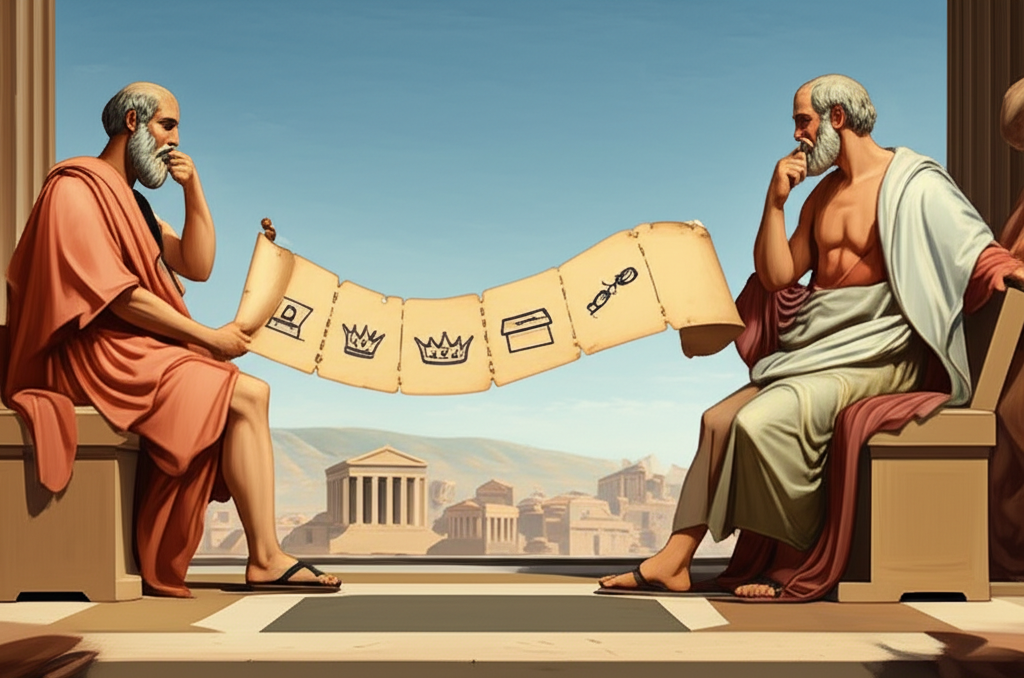
The Challenges and Limitations of Pure Logic in Politics
While indispensable, logic is not a panacea for all political challenges.
- Human Nature and Irrationality: Pure logic assumes rational actors. However, human behavior is often driven by emotions, biases, traditions, and self-interest, which can lead to decisions that defy strict logical analysis.
- Empirical Gaps: Logic requires sound premises. In politics, premises about human nature, societal needs, or economic impacts can be complex, incomplete, or based on flawed data, leading to logically valid but unsound conclusions.
- Ethical Considerations: Logic can tell us what follows from premises, but not necessarily what is good or just. Ethical philosophy often provides the moral premises upon which political reasoning builds, but logic itself is value-neutral.
Conclusion: A Call for Logical Engagement
Ultimately, analyzing political systems through logic is not merely an academic exercise; it is a vital practice for informed citizenship. By sharpening our skills in reasoning, we can better understand the structures of government, evaluate the arguments of political actors, and contribute more thoughtfully to the ongoing discourse about the State. While the complexities of human nature and society mean that pure logic alone cannot solve all political problems, it remains our most powerful and reliable tool for discerning truth, identifying inconsistencies, and building more coherent and just political futures. Let us embrace this philosophical legacy and apply logical rigor to the pressing questions of our time.
YouTube Video Suggestions:
-
📹 Related Video: PLATO ON: The Allegory of the Cave
Video by: The School of Life
💡 Want different videos? Search YouTube for: "Political Philosophy Plato Aristotle"
2. ## 📹 Related Video: ARISTOTLE ON: The Nicomachean Ethics
Video by: The School of Life
💡 Want different videos? Search YouTube for: "Critical Thinking Fallacies in Politics"