

The Enduring Enigma: Navigating the Philosophical Problem of Life and Death
The questions surrounding Life and Death stand as the most fundamental and enduring inquiries within Philosophy. From the earliest human civilizations to our complex modern age, thinkers have grappled with what it means to exist, the nature of Being, the essence of the Soul, and the ultimate cessation of all these. This pillar page delves into the multifaceted philosophical problem of life and death, exploring how various schools of thought, particularly those found within the Great Books of the Western World, have sought to understand our finite existence and the profound implications of our mortality. It is a journey into the heart of human consciousness, seeking not just answers, but a deeper appreciation for the questions themselves.
I. The Primordial Question: What is Life?
Before we can even begin to contemplate death, we must first confront the enigma of life itself. What distinguishes a living organism from an inanimate object? Is life merely a complex arrangement of matter, or is there an animating principle, a vital force, or an essence that defines it?
A. Ancient Greek Conceptions: The Soul as the Principle of Life
For many ancient philosophers, the concept of the Soul was inextricably linked to the definition of life.
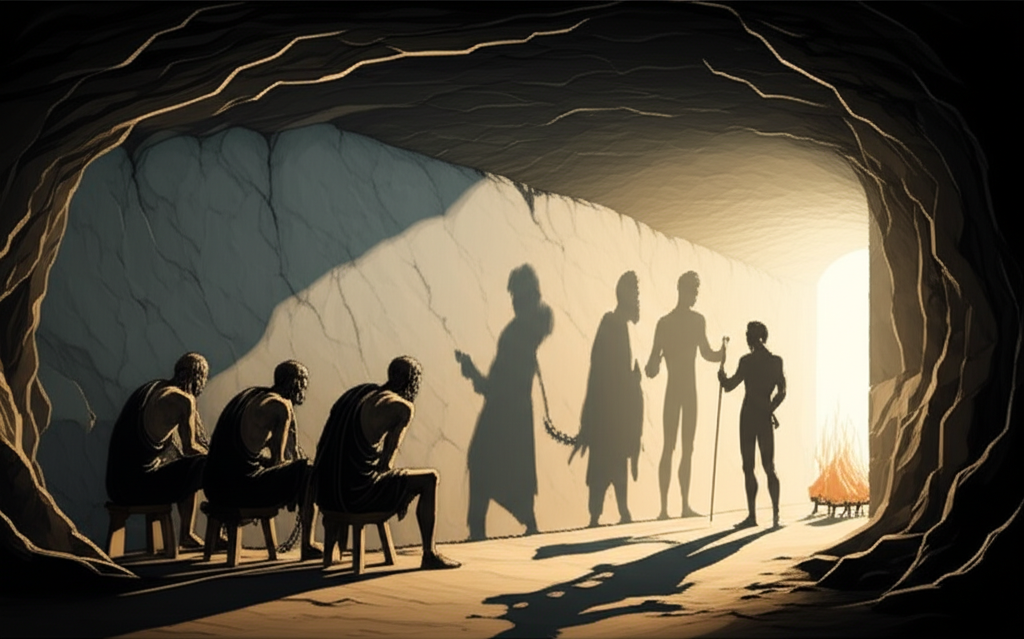
- Plato's Dualism and the Immortal Soul: Plato, heavily influenced by Pythagorean thought, posited a radical separation between the immaterial, eternal Soul and the perishable body. For Plato, the Soul is the true self, a divine and immortal entity temporarily imprisoned in the physical realm. Life, then, is the period of this embodiment, and death is the Soul's liberation, its return to the intelligible world of Forms. His dialogues, particularly Phaedo, vividly explore the arguments for the Soul's immortality, presenting death not as an end, but as a transition to a higher state of Being.
- Aristotle's Hylomorphism: The Soul as Form of the Body: In contrast to Plato, Aristotle viewed the Soul not as a separate entity but as the "form" of a natural body possessing the potential for life. The Soul (psuchē) is the animating principle, that which gives a living thing its characteristic activities – nutrition, sensation, locomotion, and thought. For Aristotle, life is the actualization of this potential. The Soul is to the body what the shape is to a statue; it cannot exist independently of the body it informs. Therefore, while Aristotle recognized different types of souls (nutritive, sentient, rational), the survival of the individual Soul after the dissolution of the body is not a central tenet in the same way it is for Plato.
B. Beyond Biology: Life as Consciousness and Experience
As philosophical thought evolved, the definition of life expanded beyond mere biological function to encompass consciousness, experience, and the subjective self. Modern philosophy often grapples with life as the sum of our perceptions, thoughts, and emotions, raising questions about what constitutes a "lived" life versus mere existence.
II. The Inevitable Horizon: Understanding Death
Death is the ultimate certainty, yet its true nature remains one of philosophy's most profound mysteries. Is it an end, a transformation, or merely an absence?
A. Death as the Cessation of Being: Epicurus and the Absence of Sensation
Epicurus, the ancient Greek philosopher, famously argued that death is nothing to us. His reasoning is elegantly simple: "When we are, death is not, and when death is, we are not." For Epicurus, all good and evil lie in sensation, and death is the privation of sensation. Therefore, there is no suffering in death itself, only in the fear of it. This perspective offers a powerful antidote to mortal dread, reframing death as a state beyond our experience.
B. Death as an Integral Part of Being: Heidegger's Being-towards-Death
In the 20th century, Martin Heidegger offered a radically different perspective in Being and Time. For Heidegger, death is not merely an event that happens at the end of life, but an essential structural feature of human Being (Dasein). Dasein is always "Being-towards-death" (Sein zum Tode). This awareness of our own finitude, our "ownmost possibility" which is non-relational and not to be outstripped, is what authenticates our existence. It forces us to confront our individual responsibility and the unique possibilities of our own lives.
C. The Existential Weight: Confronting Finitude
From Søren Kierkegaard's exploration of anxiety to Jean-Paul Sartre's concept of "nausea," existentialist thinkers have highlighted the profound psychological and philosophical impact of our awareness of death. The realization of our finite existence forces us to confront the question of meaning in a universe that may be inherently meaningless. This confrontation can lead to anguish, but also to a fierce determination to create meaning through our choices and actions.
III. The Afterlife, Meaning, and Legacy
The problem of Life and Death naturally leads to questions about what, if anything, follows death, and how our mortality shapes the meaning we ascribe to our lives.
A. The Hope for Immortality: Religious and Philosophical Perspectives
Across cultures and throughout history, the belief in an afterlife, the transmigration of souls, or some form of continued existence beyond bodily death has been a pervasive human phenomenon. This hope often stems from a deep-seated desire for justice, continuity, or the preservation of personal identity. Philosophers have debated the logical coherence and empirical evidence for such claims, often finding themselves at the intersection of metaphysics, theology, and ethics.
B. Creating Meaning in a Finite Existence
If death is indeed the absolute end, how do we find meaning in a life that will inevitably cease? This question has spurred diverse philosophical responses:
- The Pursuit of Virtue (Stoicism): For Stoics like Seneca and Marcus Aurelius, the awareness of death encourages us to live virtuously, to focus on what we can control (our actions and attitudes), and to accept what we cannot. Death is a natural part of the cosmic order, and wisdom lies in embracing it.
- The Creation of Values (Nietzsche): Friedrich Nietzsche challenged traditional morality, arguing that in a world without inherent meaning or divine guarantees, we are responsible for creating our own values. The brevity of life can be a catalyst for living passionately and authentically, becoming who we truly are.
- Legacy and Impact: Even without an individual afterlife, many find meaning in the legacy they leave behind—through their children, their work, their contributions to society, or the ideas they propagate. This form of "immortality" emphasizes our interconnectedness and the enduring impact of our actions.
C. A Comparative Glance at Death's Philosophical Interpretations
| Philosophical Tradition | View of Death | Implications for Life | Key Thinkers (Examples) |
|---|---|---|---|
| Platonism | Liberation of the immortal Soul from the body. | Live virtuously to purify the Soul for its return to the Forms. | Plato |
| Aristotelianism | Dissolution of the body's animating principle (Soul). | Focus on achieving eudaimonia (flourishing) through rational activity in this life. | Aristotle |
| Epicureanism | Cessation of sensation; "nothing to us." | Seek pleasure (absence of pain) and tranquility; do not fear death. | Epicurus |
| Stoicism | Natural and inevitable part of the cosmic order. | Live virtuously, accept fate, focus on what is controllable. | Seneca, Marcus Aurelius |
| Existentialism | The ultimate possibility of non-Being; authenticates existence. | Confront finitude, create meaning through choice, live authentically. | Heidegger, Sartre |
Conclusion: The Perpetual Dialogue
The philosophical problem of Life and Death is not one that offers simple, definitive answers. Instead, it is a perpetual dialogue, a profound inquiry that shapes our understanding of ourselves, our universe, and our place within it. From the ancient Greek reverence for the Soul to modern existential meditations on Being and finitude, Philosophy provides a rich tapestry of thought for navigating these ultimate questions.
By confronting the nature of life and the inevitability of death, we are compelled to examine our values, our fears, and our aspirations. This intellectual journey is not merely academic; it is an essential part of the human condition, inviting us to live more thoughtfully, more authentically, and with a deeper appreciation for the precious, fleeting gift of existence. The conversation continues, and so too does our quest for understanding the profound mystery that lies at the heart of Life and Death.
YouTube Suggestions:
- YouTube: "Plato Phaedo summary immortality of the soul"
- YouTube: "Heidegger Being and Time death analysis"
📹 Related Video: What is Philosophy?
Video by: The School of Life
💡 Want different videos? Search YouTube for: "The Philosophical Problem of Life and Death philosophy"