

Alone at Last
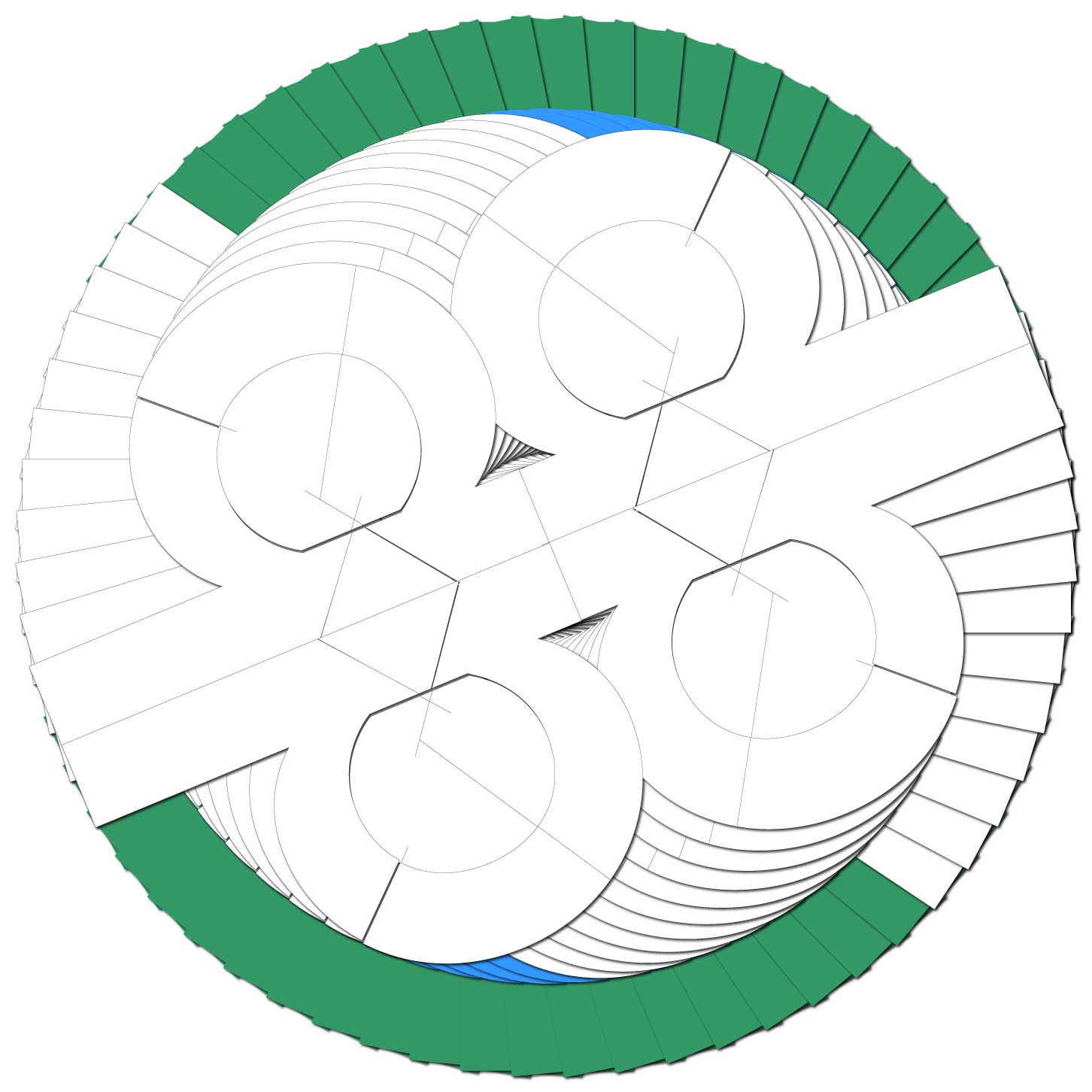
Pair-Bonded Bifurcation and the Möbius Methods that Bond
Sophia: Gentlemen, I have been reflecting on the interplay between connection and contradiction. Shelley, you wrote, “Nothing in the world is single; all things by a law divine in one another’s being mingle — Why not I with thine?” It evokes a vision of unity through duality.
Shelley: Indeed, Sophia. Our lives, like the cosmos, are intertwined. The self is never isolated; each thought, each feeling, each breath is mirrored in another. Pair-bonded bifurcation — the very concept of doubling and entwining — is the law that binds hearts and minds.
Dickens: (nodding) And yet, that bond exists amid contradictions. It was the best of times, it was the worst of times. Every connection bears joy and struggle, triumph and despair. To bond is to embrace the Möbius strip of human experience — where beginnings and endings twist into one continuous line.
Nothing in the world is single; All things by a law divine
In one another's being mingle: — Why not I with thine?"
— Percy Bysshe Shelley (1792-1822)
Dewey: Precisely. And it is in these twists, these tensions, that we learn. Failure is instructive. The person who really thinks learns quite as much from his failures as from his successes. The Möbius method of living — where success and failure loop together — teaches us how to bond more deeply, both with ideas and with one another.
Sophia: So the Möbius method is both metaphor and practice: a recognition that our dualities — joy and sorrow, connection and isolation, triumph and failure — are inseparable.
Shelley: Yes. To ask, “Why not I with thine?” is to acknowledge that our separate experiences are threads in a single tapestry. Even in conflict or divergence, the bond persists, folding upon itself in infinite reflection.
It was the best of times, it was the worst of times.
— Charles Dickens (1812-1870)
Dickens: And therein lies the human drama. Our bonds are forged in extremes, tested by the best and worst of times, yet enduring because of our willingness to persist — to twist along the Möbius strip without end.
Dewey: Exactly. Each misstep, each misjudgment, each moment of confusion is an opportunity to strengthen understanding, both of self and of the other. Knowledge and affection grow together, inseparably.
Sophia: Then the lesson is clear: connection is not linear. It is recursive, reflective, infinite. Pair-bonded bifurcation and the Möbius method teach us that to truly bond is to accept both unity and contradiction, both success and failure, as inseparable.
Failure is instructive. The person who really thinks learns quite as much from his failures as from his successes.
— John Dewey (1859-1952)
Shelley: And in that embrace, Sophia, we find the poetry of existence — the I entwined with the thine, endlessly, beautifully, and inevitably.
Dickens: The best and worst times alike become the loom on which our bonds are woven.
Dewey: And every failure, every challenge, becomes an instruction — guiding us along the twisted yet enduring path of mutual understanding.
Sophia: So let us move forward, each step a Möbius loop of experience, each bond a testament to the infinite reflection of our shared humanity.
In the quiet that follows, the three men and Sophia seem to fold into one another’s thought, a Möbius of reflection and connection — a living emblem of how love, learning, and experience intertwine.
The planksip Writers' Cooperative is proud to sponsor an exciting article rewriting competition where you can win part of over $750,000 in available prize money.
Figures of Speech Collection Personified
Our editorial instructions for your contest submission are simple: incorporate the quotes and imagery from the above article into your submission.
What emerges is entirely up to you!
Winners receive $500 per winning entry multiplied by the article's featured quotes. Our largest prize is $8,000 for rewriting the following article;
 Heraclitus
At planksip, we believe in changing the way people engage—at least, that's the Idea (ἰδέα). By becoming a member of our thought-provoking community, you'll have the chance to win incredible prizes and access our extensive network of media outlets, which will amplify your voice as a thought leader. Your membership truly matters!