

Wealth Distribution and Economic Justice: A Philosophical Inquiry
The perennial question of how wealth should be distributed within a society and what constitutes economic justice has occupied philosophers for millennia. From the ancient Greek city-states to modern globalized economies, thinkers have grappled with the ethical implications of economic inequality, the role of labor in generating value, and the responsibility of the State in ensuring a fair and equitable society. This article delves into the core philosophical arguments surrounding wealth distribution, drawing insights from the "Great Books of the Western World" to illuminate the enduring debates that shape our understanding of justice today.
The Foundations of Justice: Ancient Perspectives on Wealth
The earliest philosophical inquiries into wealth and justice often tied individual prosperity to the health of the community.
Plato's Ideal State and Communal Property
In Plato's Republic, the concept of justice is central to the ideal State. Plato argues for a hierarchical society where different classes perform specific functions. For the guardian class, he proposes a system of communal property, believing that private wealth would corrupt their selfless dedication to the State.
- Plato's view: Extreme wealth and poverty are detrimental to social harmony. Guardians should live simply, free from the distractions of personal accumulation, to ensure their impartiality and commitment to the common good. Their "wealth" is the well-being of the State itself.
Aristotle on Distributive Justice and Proportionality
Aristotle, in his Nicomachean Ethics and Politics, offers a more nuanced understanding of justice, distinguishing between commutative (corrective) and distributive justice. For Aristotle, distributive justice concerns the fair allocation of common assets and honors.
- Aristotle's principle: Distribution should be based on merit or contribution, not absolute equality. Different political systems (oligarchy, democracy) may define merit differently, leading to varying distributions of wealth and power. He also warned against the destabilizing effects of vast disparities in wealth, advocating for a strong middle class to ensure political stability.
The Rise of Property and the Role of the State
With the advent of modern political philosophy, the focus shifted to individual rights, the origins of property, and the legitimate functions of the State in regulating economic life.
Locke's Labor Theory of Property
John Locke, in his Two Treatises of Government, provides a foundational argument for individual property rights, deeply connecting them to labor.
- Locke's argument: Individuals acquire property by mixing their labor with unowned natural resources. This act of labor transforms the resource, making it one's own. The State is primarily established to protect these natural rights, including the right to property. While acknowledging limits (the "enough and as good" proviso), Locke's ideas laid the groundwork for capitalist thought, emphasizing individual entitlement to the fruits of their labor.
Rousseau on Inequality and the Social Contract
Jean-Jacques Rousseau, particularly in his Discourse on the Origin and Basis of Inequality Among Men, presents a more critical view of private property, seeing it as the root cause of societal inequality and corruption.
- Rousseau's critique: The first person to enclose a piece of land and declare "This is mine" effectively founded civil society and introduced inequality. The State, far from being a neutral protector of rights, often serves to legitimize and perpetuate existing inequalities. His concept of the "general will" in The Social Contract suggests a collective good that might necessitate limitations on individual wealth for the sake of overall societal justice.
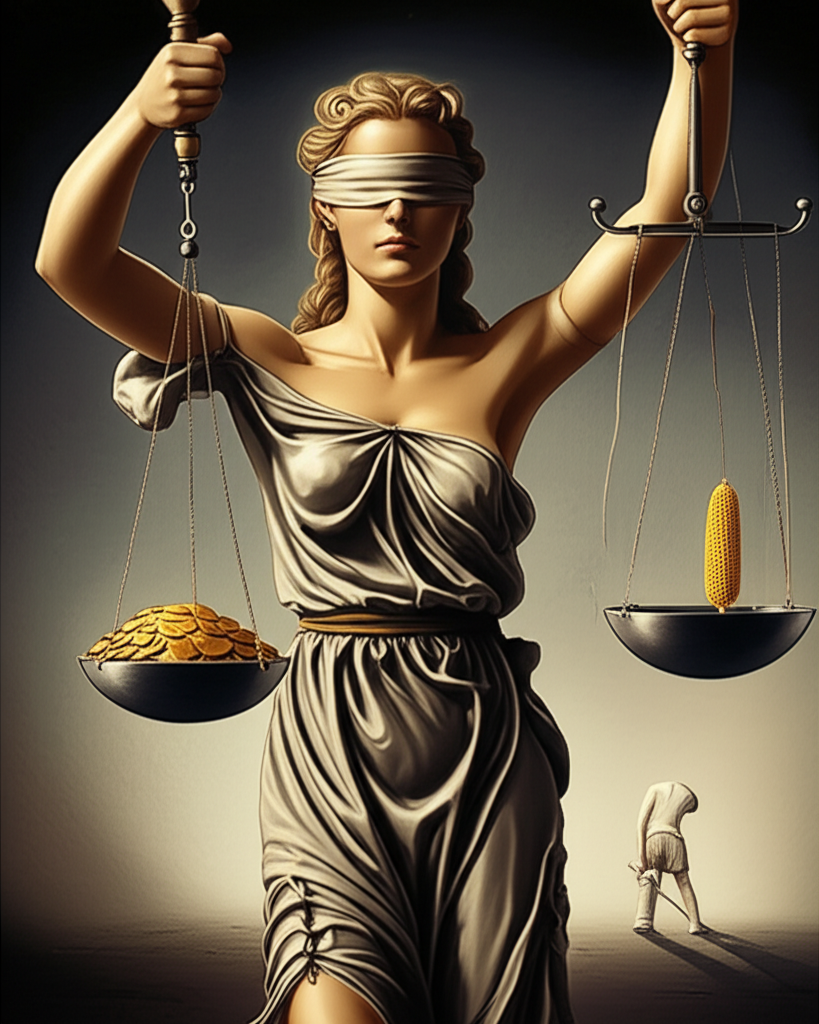
Critiques of Capital and the Value of Labor
The Industrial Revolution brought unprecedented levels of wealth alongside stark poverty, prompting profound critiques of existing economic systems and the concept of labor.
Marx's Critique of Capitalism and Exploitation
Karl Marx, in Das Kapital, launched a scathing critique of capitalism, arguing that its inherent structure leads to the exploitation of labor and the concentration of wealth in the hands of a few.
- Marx's theory: The value of commodities is derived from the labor expended in their production. Under capitalism, workers (proletariat) are paid less than the value they create, with the surplus value appropriated by the capitalists. This systematic exploitation, Marx argued, creates inherent class conflict and profound economic injustice. He envisioned a communist society where the means of production are collectively owned, and wealth is distributed according to need, with the State eventually withering away after its role in revolution.
Contemporary Challenges and Philosophical Debates
The philosophical debate surrounding wealth distribution continues today, grappling with complex issues like global inequality, the role of technology, and differing conceptions of justice.
| Philosophical Approach | Key Tenet Regarding Wealth Distribution | Role of the State |
|---|---|---|
| Utilitarianism | Maximize overall societal welfare/happiness, potentially through redistribution if it leads to the greatest good for the greatest number. | Intervene to optimize social utility, potentially through progressive taxation or social safety nets. |
| Egalitarianism | Strive for greater equality in wealth or opportunity, believing significant disparities are unjust. | Actively redistribute wealth or ensure equal opportunities through social programs and regulations. |
| Libertarianism | Uphold individual liberty and property rights; wealth acquired through just means is legitimate, regardless of inequality. | Primarily protect individual rights (life, liberty, property) and enforce contracts; minimal intervention in wealth distribution. |
| Communitarianism | Emphasize the common good and shared values of a community; distribution should reflect community norms and needs. | Reflect and enforce community values, potentially balancing individual rights with collective well-being. |
These ongoing debates highlight the fundamental tension between individual liberty, economic efficiency, and the pursuit of a just society. Whether through direct redistribution, ensuring equality of opportunity, or protecting property rights, the State remains a central actor in shaping how wealth is generated, accumulated, and shared. Understanding these philosophical underpinnings is crucial for navigating the complex ethical landscape of modern economies.
📹 Related Video: PLATO ON: The Allegory of the Cave
Video by: The School of Life
💡 Want different videos? Search YouTube for: ""John Rawls Theory of Justice Explained""
📹 Related Video: What is Philosophy?
Video by: The School of Life
💡 Want different videos? Search YouTube for: ""Marxism and Capitalism: Crash Course Philosophy #33""