

The Uneven Scales: Navigating Wealth Distribution and Economic Justice
The distribution of wealth within societies is not merely an economic concern; it is a profound philosophical challenge, deeply entwined with our understanding of justice, the value of labor, and the very purpose of the State. This article delves into the historical philosophical debates from the Great Books of the Western World that shape our contemporary discussions on economic fairness, exploring how thinkers from Plato to Marx grappled with questions of who deserves what, how wealth should be acquired, and what role governance plays in creating a just economic order. We will examine foundational ideas on property, equity, and the inherent tensions between individual prosperity and collective well-being, highlighting the enduring relevance of these inquiries in today's world.
The Uneven Scales of Prosperity: An Enduring Philosophical Dilemma
Look around, and you’ll see it: the stark disparities in wealth that define our modern world. From opulent skylines to struggles for basic necessities, the question of how resources are, and should be, distributed is one of the most pressing issues of our time. But before we get lost in spreadsheets and statistics, let’s pull back and ask the fundamental questions: What constitutes a just distribution of wealth? Is it about equality, equity, or something else entirely? And what role does the State play in mediating these often-contentious claims? This isn't a new debate; it's a centuries-old philosophical quest, echoing through the pages of history's greatest minds.
Foundations of Fairness: What is Economic Justice?
Before we can discuss distribution, we must first define justice in an economic context. Economic justice isn't simply about ensuring everyone has something; it’s about the fairness of how resources are produced, exchanged, and allocated. Philosophers often distinguish between:
- Distributive Justice: Concerned with the fair allocation of goods, services, and opportunities among members of a society. Who gets what, and why?
- Commutative (or Corrective) Justice: Focused on fairness in transactions and the rectification of wrongs. This applies to contracts, exchanges, and the punishment of crimes.
The pursuit of economic justice often involves navigating complex ethical landscapes, balancing individual freedoms with collective responsibilities, and questioning the very structures that govern our economic lives.
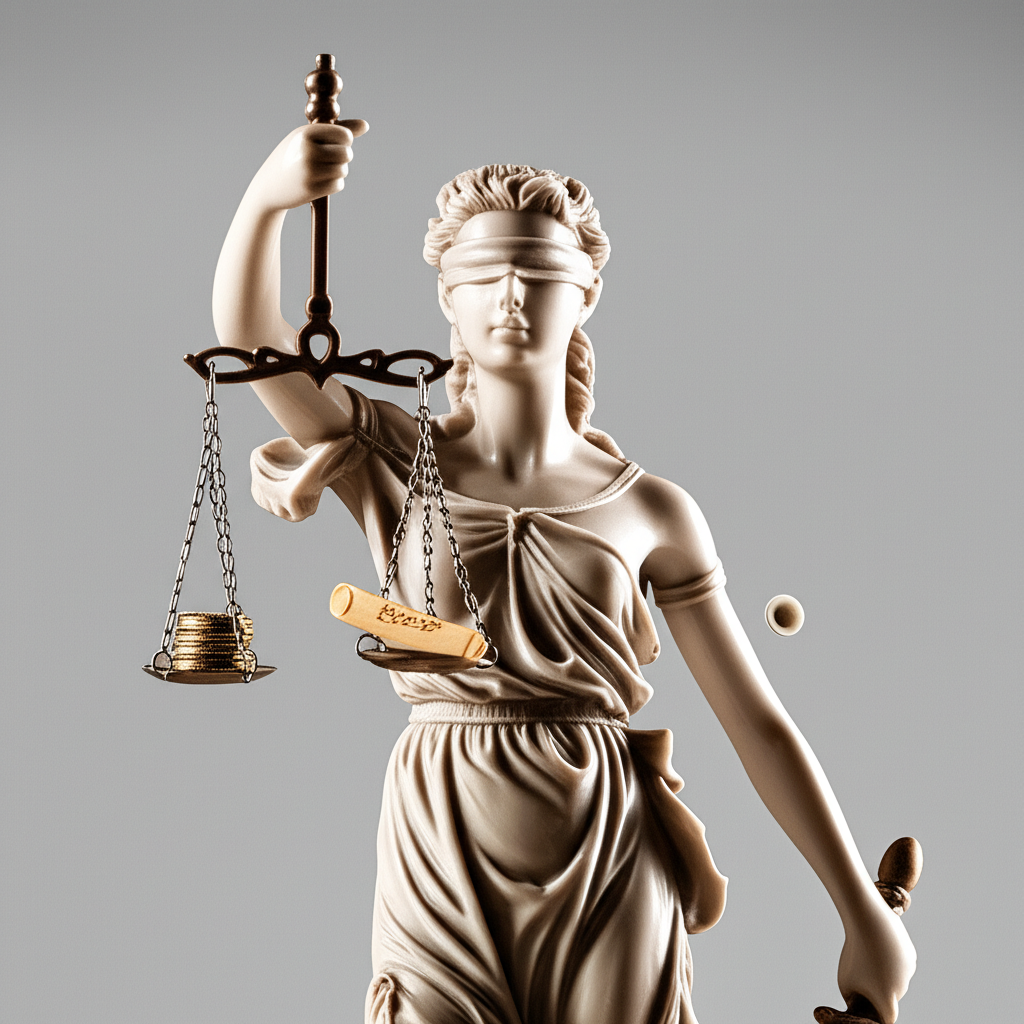
Ancient Echoes: Plato, Aristotle, and the Ideal State
Our journey begins in ancient Greece, where the very concept of a well-ordered society was intrinsically linked to its economic arrangements.
Plato's Republic and the Division of Labor
In Plato’s Republic, justice in the individual mirrors justice in the State. For Plato, a just society (his ideal city, Kallipolis) is one where everyone performs the role for which they are best suited, leading to a harmonious whole. This division of labor is not just about efficiency; it's fundamental to societal justice.
- Guardians: The philosopher-kings, tasked with ruling, possessing no private property or wealth to avoid corruption, living communally.
- Auxiliaries: The soldiers, also living communally, protecting the State.
- Producers: Farmers, artisans, and merchants, who are allowed private property and the accumulation of wealth, but are subordinate to the guardians.
Plato's vision suggests that extreme disparities in wealth could destabilize the State. He argued that too much wealth leads to luxury and idleness, while too much poverty leads to meanness and poor workmanship. The State, through its wise rulers, must regulate these extremes to maintain social harmony and justice.
Aristotle on Distributive Justice and Property
Aristotle, Plato's student, offered a more pragmatic view in his Nicomachean Ethics and Politics. He famously distinguished between different forms of justice, with distributive justice being central to our discussion. For Aristotle, distributive justice means that goods, honors, or wealth should be distributed according to merit or some proportional standard, not necessarily equally. Equals should be treated equally, and unequals unequally, in proportion to their relevant inequality.
Regarding wealth and property, Aristotle critiqued Plato’s communal property for the guardians, arguing that private property, while needing regulation, is generally preferable because:
- It provides incentive for care and improvement.
- It allows for the virtue of generosity.
- It is deeply rooted in human nature and the household (oikonomia).
However, Aristotle was wary of excessive wealth accumulation, especially through usury or trade for trade's sake. The State, for Aristotle, should aim to create a virtuous citizenry, and extreme economic inequality could hinder this, leading to political instability. He advocated for a strong middle class as the most stable foundation for a polis.
The Dawn of Modernity: Labor, Property, and the Social Contract
Moving into the Enlightenment, philosophers began to ground property rights and wealth acquisition in individual labor and natural rights, shifting the focus from the collective good of the ancient polis to the rights of the individual.
John Locke and the Labor Theory of Property
John Locke, in his Second Treatise of Government, profoundly influenced modern thought on property. He argued that individuals have a natural right to their own person, and therefore to their own labor. When a person mixes their labor with unowned natural resources, that resource becomes their property.
- Origin of Property: "Every man has a property in his own person: this no body has any right to but himself. The labor of his body, and the work of his hands, we may say, are properly his."
- Limits on Acquisition: Locke initially posited limits: one could only appropriate as much as one could use before it spoiled, and "enough and as good" must be left for others.
- Money and Inequality: The invention of money, however, allowed for the accumulation of more wealth than one could personally use, as money does not spoil. This, Locke acknowledged, allowed for greater inequality, which he believed was consented to by tacit agreement through the use of money.
For Locke, the primary role of the State is to protect these natural rights, especially the right to life, liberty, and property (including wealth acquired through labor). A just State upholds these rights, even if it results in significant disparities in wealth.
Rousseau's Critique of Inequality
Jean-Jacques Rousseau, in his Discourse on the Origin and Basis of Inequality Among Men, offered a stark counter-narrative to Locke. Rousseau famously argued that private property was the beginning of societal inequality and moral corruption.
- The Fall from Grace: For Rousseau, humanity in its natural state was free and equal. The moment someone enclosed a piece of land and declared, "This is mine," marking the origin of private property, was the moment civil society began its descent into conflict and injustice.
- The Social Contract: While critiquing the origins of property, Rousseau later, in The Social Contract, proposed a form of governance where individuals surrender their natural liberties to a collective "general will" to gain civil liberty. This collective body, the State, could then legislate for the common good, implicitly including regulations on wealth to prevent extreme inequality that would undermine the general will.
Rousseau's work fundamentally questioned whether the accumulation of wealth and private property, even if derived from labor, truly leads to a just and free society.
Industrial Revolutions and the Critique of Capital
The Industrial Revolution brought unprecedented wealth generation but also stark new forms of poverty and exploitation, prompting radical critiques of economic systems.
Karl Marx: Wealth, Labor, and Class Struggle
Karl Marx, writing in the 19th century, analyzed the capitalist system with a critical eye, detailed in Das Kapital and The Communist Manifesto. For Marx, the capitalist accumulation of wealth was inherently unjust, built upon the exploitation of labor.
- Surplus Value: Marx argued that the value of a commodity is derived from the labor invested in it. Capitalists, however, pay workers only a subsistence wage (the cost of reproducing their labor power), while appropriating the "surplus value"—the difference between the value workers create and what they are paid. This surplus value is the source of capitalist profit and wealth.
- Class Struggle: Society, for Marx, is fundamentally divided into two classes: the bourgeoisie (owners of capital, accumulating wealth) and the proletariat (workers, whose labor is exploited). This inherent conflict, or class struggle, drives historical change.
- The State as a Tool: Marx viewed the State not as a neutral arbiter of justice, but as an instrument of the ruling class, designed to protect the interests and wealth of the bourgeoisie and maintain the existing power structures.
- Revolutionary Change: True economic justice, for Marx, could only be achieved through a revolutionary overthrow of capitalism and the establishment of a classless, communist society where the means of production are communally owned, eliminating private wealth accumulation and exploitation of labor.
Marx's powerful critique forced a re-evaluation of the relationship between wealth, labor, and justice, profoundly influencing 20th-century political and economic thought.
The Enduring Debate: Contemporary Challenges
The philosophical debates concerning wealth distribution and economic justice continue to resonate today. From global inequality to the impact of automation on labor, from debates over taxation and welfare State policies to the ethics of corporate wealth, the questions posed by Plato, Aristotle, Locke, Rousseau, and Marx remain acutely relevant. How do we balance individual incentives with collective well-being? What is the just return on labor in a highly automated world? What is the appropriate role of the State in mitigating economic disparities without stifling innovation or individual liberty? These are not easily answered, but the rich history of philosophical inquiry provides invaluable frameworks for understanding and engaging with these complex issues.
📹 Related Video: KANT ON: What is Enlightenment?
Video by: The School of Life
💡 Want different videos? Search YouTube for: ""Justice: What's The Right Thing To Do? Episode 8: 'Whose Property Is It?' - Michael Sandel""
📹 Related Video: What is Philosophy?
Video by: The School of Life
💡 Want different videos? Search YouTube for: ""Karl Marx's Philosophy: The Theory of Alienation and Class Struggle Explained""
Conclusion: A Call for Philosophical Engagement
The pursuit of economic justice is an ongoing journey, fraught with tensions and competing ideals. From ancient visions of harmonious societies to modern critiques of capitalist wealth accumulation, philosophers have consistently challenged us to think critically about how our societies are structured and whether those structures serve the cause of justice. Understanding these historical perspectives from the Great Books of the Western World is not just an academic exercise; it's a vital tool for engaging thoughtfully with the profound challenges of wealth distribution in our own time, urging us to question, to debate, and to strive for a more equitable future.