

The Unsettling Scales: Wealth Distribution and Economic Justice
The question of how societies ought to distribute their resources is not merely an economic puzzle but a profoundly philosophical one. At its core, the debate over wealth distribution and economic justice forces us to confront our deepest convictions about fairness, desert, and the very purpose of collective living. From ancient city-states grappling with social stratification to modern global economies wrestling with unprecedented inequality, philosophers have ceaselessly pondered the moral legitimacy of different economic arrangements, the value of labor, and the appropriate role of the State in shaping these outcomes. This article delves into the rich philosophical tradition that informs our understanding of these critical issues, drawing insights from the foundational texts that continue to illuminate our path.
The Enduring Question of Economic Justice
Why does it matter how wealth is distributed? For many, the answer lies in the concept of justice itself. Is it just for some to live in opulent luxury while others struggle for basic necessities? Is it just for individuals to accumulate vast fortunes while paying minimal taxes, or for corporations to prioritize profit over equitable wages? These are not new concerns. Philosophers throughout history have recognized that economic structures are not neutral; they reflect and reinforce certain values, power dynamics, and conceptions of human flourishing. Understanding economic justice requires us to move beyond mere statistics and engage with the ethical principles that should guide our collective economic life.
Foundations of Justice: From Ancient Polis to Modern Society
The quest for economic justice finds its roots deep in the annals of philosophy, with thinkers from the Great Books of the Western World laying crucial groundwork.
Plato's Ideal State and the Division of Labor
In his seminal work, The Republic, Plato grappled with the ideal State and the principles of justice that should govern it. For Plato, justice in the city mirrored justice in the soul: a harmonious arrangement where each part performs its proper function. This led to a rigid division of labor, with guardians, auxiliaries, and producers each fulfilling their specific roles. While he advocated for communal property among the guardian class to prevent corruption and self-interest, his vision wasn't necessarily about equal distribution of material wealth among all citizens, but rather a just allocation of roles and responsibilities to achieve societal harmony. The producers, for instance, were allowed private property, but their economic activities were to serve the good of the whole.
Aristotle on Distributive and Commutative Justice
Aristotle, in his Nicomachean Ethics and Politics, offered a more nuanced exploration of justice, distinguishing between different forms.
- Distributive Justice: This concerns the fair allocation of common assets, honors, or resources among members of a community. Aristotle argued that distribution should be proportional to merit or contribution, not necessarily equal. "Equals ought to have equal shares and unequals unequal shares, proportioned to their inequality," he famously stated. The challenge, of course, lies in defining what constitutes "merit" or "contribution" in a just way.
- Commutative (or Corrective) Justice: This deals with fairness in transactions and interactions between individuals, ensuring that no one gains unfairly at another's expense. It applies to both voluntary exchanges (like buying and selling) and involuntary ones (like theft or injury), aiming to restore equality if it has been disturbed.
Aristotle's framework highlights that justice is not a monolithic concept but requires careful consideration of context and purpose, directly influencing how we think about the distribution of wealth.
The Genesis of Wealth: Labor, Property, and Value
The philosophical understanding of how wealth is created and what gives rise to legitimate claims over it has evolved dramatically, often revolving around the concept of labor.
Locke's Labor Theory of Property
John Locke, in his Two Treatises of Government, provided a powerful justification for private property based on labor. He argued that an individual owns their own person and their labor. When one "mixes" their labor with something in nature that is unowned, they thereby make it their own. This act of working transforms common resources into private property. However, Locke's theory was not without caveats, including the "Lockean proviso" – that there must be "enough, and as good, left in common for others." This raises critical questions about the accumulation of vast wealth in a finite world.
Rousseau's Critique of Property and Inequality
Jean-Jacques Rousseau, particularly in his Discourse on the Origin and Basis of Inequality Among Men, offered a stark counterpoint to Locke. Rousseau famously posited that the first person to enclose a piece of land and declare "This is mine," and find people simple enough to believe him, was the true founder of civil society – and the source of much human misery. For Rousseau, private property, far from being a natural right, was the genesis of social inequality, corruption, and the loss of natural liberty. He viewed the State as often emerging to protect the property of the rich, thereby perpetuating injustice.
Marx's Analysis of Labor and Capital
Perhaps no philosopher critiqued the relationship between labor and wealth more profoundly than Karl Marx. In Das Kapital and The Communist Manifesto, Marx argued that under capitalism, wealth is primarily generated through the exploitation of labor. Workers sell their labor power for a wage, but the value they produce (surplus value) exceeds that wage. This surplus is appropriated by the capitalist, leading to the accumulation of capital and the concentration of wealth in the hands of a few, while the working class remains alienated and impoverished. For Marx, the State was not a neutral arbiter but an instrument of the ruling class, designed to protect capitalist property relations and maintain this exploitative system. His call for a revolution was fundamentally a demand for economic justice through the collective ownership of the means of production.
The State's Role in Distributing Wealth
The role of the State in addressing wealth distribution and achieving economic justice has been a contentious point across philosophical traditions.
From Minimal Intervention to Welfare Provision
- Adam Smith's "Invisible Hand": In The Wealth of Nations, Adam Smith championed the free market, arguing that individual self-interest, guided by an "invisible hand," would lead to the greatest collective wealth. He saw the State's role as limited to enforcing contracts, protecting property, providing national defense, and funding certain public works that private enterprise would not undertake. For Smith, excessive State intervention could distort markets and hinder prosperity.
- The Rise of the Welfare State: In contrast, later philosophical and political movements argued for a more active State in ensuring economic justice. This often stems from the recognition that markets, left entirely unregulated, can lead to significant inequalities, market failures, and insufficient provision of public goods. Philosophers advocating for welfare provisions often draw on ideas of social justice, suggesting that the State has a moral obligation to ensure a basic standard of living, access to education, healthcare, and opportunities for all its citizens, thereby mitigating extreme disparities in wealth.
The Spectrum of State Intervention
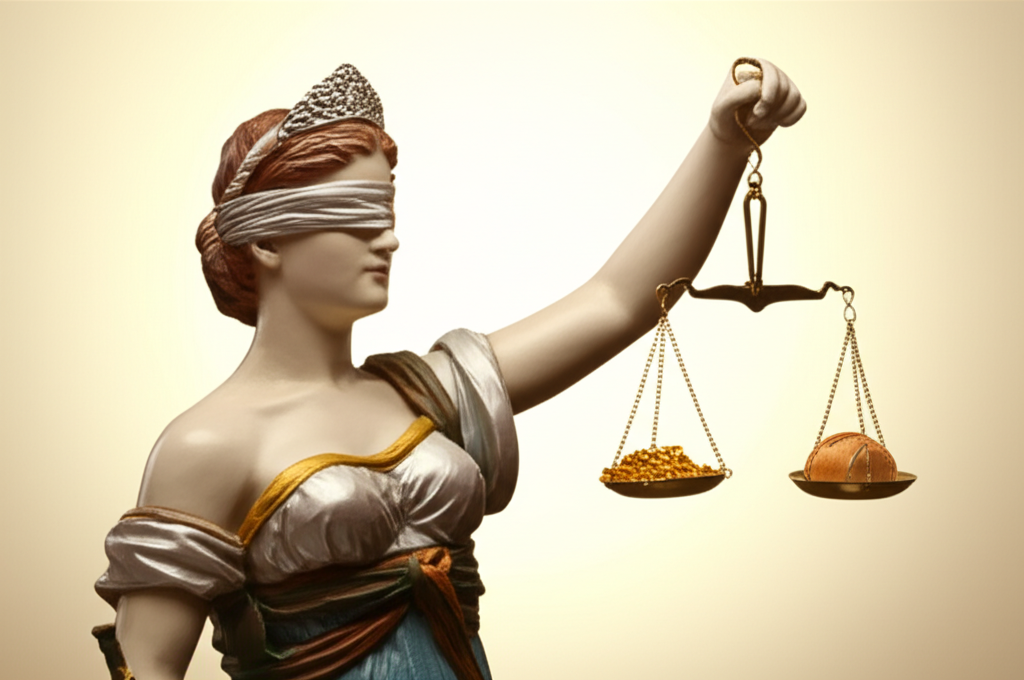
The philosophical debate over the State's role ranges from libertarian arguments for minimal government (emphasizing individual liberty and property rights) to socialist arguments for extensive State control over the economy (prioritizing collective well-being and equality of outcome). The tension between individual freedom to accumulate wealth and the collective demand for a just and equitable distribution remains a central challenge in political philosophy. How much redistribution is too much? What level of inequality is tolerable? These are questions that demand ongoing ethical deliberation.
Charting the Course: Modern Debates and Future Directions
The historical philosophical insights into wealth, justice, labor, and the State remain profoundly relevant today. As we face new economic realities—from globalized markets and the rise of automation to the gig economy and unprecedented levels of global inequality—the questions posed by Plato, Aristotle, Locke, Rousseau, and Marx continue to challenge us. Debates around universal basic income, progressive taxation, corporate social responsibility, and the ethics of technological disruption are all direct descendants of these enduring philosophical inquiries. The pursuit of economic justice is not a solved problem but an ongoing, dynamic project that demands constant re-evaluation and moral courage.
Conclusion: An Unfinished Philosophical Project
The philosophical journey through wealth distribution and economic justice reveals a complex tapestry of ideas, where the creation of value, the rights of the individual, and the responsibilities of the collective are constantly in tension. From the ancient Greek concern for the harmonious polis to Marx's radical critique of capitalist exploitation, the core questions persist: What constitutes a just economic order? How should the fruits of labor be shared? And what is the legitimate scope of the State's power in shaping these outcomes? These are not questions with easy answers, but they are questions that define our humanity and our aspirations for a more equitable world.
YouTube Video Suggestions:
-
📹 Related Video: KANT ON: What is Enlightenment?
Video by: The School of Life
💡 Want different videos? Search YouTube for: "John Rawls A Theory of Justice Explained"
2. ## 📹 Related Video: KANT ON: What is Enlightenment?
Video by: The School of Life
💡 Want different videos? Search YouTube for: "Adam Smith The Invisible Hand Explained"