

The Enduring Question: Wealth Distribution and Economic Justice
The distribution of wealth, and the justice of that distribution, stands as one of philosophy's most persistent and vexing challenges. From ancient city-states to modern global economies, thinkers have grappled with how societies ought to organize their economic lives to ensure fairness, stability, and the flourishing of their citizens. This article delves into the rich philosophical tradition of the Great Books of the Western World to explore the foundational arguments concerning wealth, justice, labor, and the role of the state in mediating these complex relationships. We will examine how different epochs and thinkers have conceived of economic justice, revealing a continuous dialogue that shapes our understanding today.
I. Ancient Echoes: Justice, Property, and the Polis
The earliest systematic philosophical inquiries into economic justice emerged from classical Greece, where the ideal structure of the polis (city-state) was paramount.
A. Plato's Republic: Communalism and the Ideal State
In Plato's Republic, the concept of justice is central to the well-ordered state. For the guardian class, he proposes a radical form of communal living, where private property and personal wealth are abolished. This is not for economic equality among all citizens, but to prevent corruption and factionalism among those who govern. Plato believed that the pursuit of personal riches could distract guardians from their duty to the common good. While not a universal prescription for the entire society, it highlights an early philosophical argument for the state's role in controlling wealth for specific ethical ends.
B. Aristotle's Politics: Property, Virtue, and the Polis
Aristotle, in his Politics, offers a more nuanced view. While acknowledging the potential pitfalls of excessive wealth and poverty, he argues against Plato's complete communalism. Aristotle believed that private property, within limits, is conducive to human flourishing and responsibility. He contended that:
- Property provides incentive: People care more for what is their own.
- Property allows for generosity: Sharing one's own wealth is a virtue; sharing communal wealth is less so.
- Property is rooted in human nature: The love of self, family, and property are natural inclinations.
However, Aristotle also stressed the importance of moderation and the state's role in preventing extreme disparities. He advocated for a strong middle class, believing it to be the most stable foundation for a just state, where citizens could engage in public life without being consumed by either destitution or excessive wealth. His notion of distributive justice aimed at assigning goods according to merit, though the definition of merit itself remained a point of contention.
II. The Enlightenment's Lens: Labor, Rights, and the Social Contract
Centuries later, Enlightenment thinkers reframed the debate around individual rights, the origins of property, and the legitimate functions of the state.
A. John Locke: Labor as the Foundation of Wealth and Property
John Locke's Two Treatises of Government provides a foundational argument for property rights rooted in labor. He posited that in the state of nature, individuals acquire property by mixing their labor with natural resources.
- The Labor Theory of Property: "Every man has a property in his own person: this no body has any right to but himself. The labor of his body, and the work of his hands, we may say, are properly his. Whatsoever then he removes out of the state that nature hath provided, and left it in, he hath mixed his labor with, and joined to it something that is his own, and thereby makes it his property."
- Limits to Acquisition: Locke initially suggested limits – one could only appropriate as much as one could use before it spoiled, and "enough and as good" must be left for others.
- The Role of Money: The invention of money, however, allowed for the accumulation of wealth beyond immediate need, potentially leading to greater inequality, which Locke implicitly accepted as a consequence of consensual exchange.
For Locke, the primary purpose of the state was to protect these pre-existing natural rights, including the right to property and the fruits of one's labor.
B. Jean-Jacques Rousseau: The Origins of Inequality and the State's Role
In stark contrast to Locke, Jean-Jacques Rousseau, particularly in his Discourse on the Origin and Basis of Inequality Among Men, critically examined the very concept of private property. He famously declared, "The first man who, having enclosed a piece of ground, bethought himself of saying This is mine, and found people simple enough to believe him, was the real founder of civil society."
Rousseau argued that while natural inequalities exist, it is the institution of private property and the social conventions built around it that create profound and morally objectionable social inequalities. He saw the state, as it historically developed, as often serving to legitimize and perpetuate these inequalities, protecting the wealth of the powerful rather than ensuring true justice. His solution, outlined in The Social Contract, called for a state founded on the "general will," where citizens collectively determine laws that ideally serve the common good, potentially requiring a more active role in mitigating extreme disparities.
III. The Industrial Age and the Critique of Capital
The advent of industrialization brought unprecedented wealth generation but also stark new forms of economic inequality, prompting profound critiques.
A. Adam Smith: The Wealth of Nations and the Division of Labor
Adam Smith's The Wealth of Nations (a seminal work within the Great Books tradition) laid the groundwork for classical economics, explaining how wealth is created through the division of labor and free markets. Smith argued that individual self-interest, guided by an "invisible hand," could lead to greater overall prosperity for society. He believed that the freedom to pursue economic endeavors, largely unhindered by the state, would maximize wealth production.
However, Smith was not oblivious to the social consequences. He recognized that the division of labor, while efficient, could also degrade the worker, making them "as stupid and ignorant as it is possible for a human creature to become." He also acknowledged the potential for employers to collude against workers, suppressing wages. While advocating for free markets, Smith also saw a role for the state in providing public goods (like education and infrastructure) and ensuring a basic level of justice and security.
B. Karl Marx: Capital, Alienation, and Revolutionary Justice
Karl Marx's monumental work, Das Kapital, offers a radical critique of capitalism, arguing that the system inherently leads to exploitation and injustice. For Marx, labor is the source of all value, but under capitalism, workers are alienated from their labor, its products, and ultimately themselves.
- Exploitation: Capitalists, who own the means of production, pay workers less than the value their labor creates, appropriating the "surplus value" as profit. This, for Marx, is the fundamental injustice of capitalism, leading to the accumulation of immense wealth for a few and poverty for many.
- Class Struggle: Society is divided into antagonistic classes – the bourgeoisie (owners of capital) and the proletariat (workers). The state, according to Marx, is an instrument of the ruling class, designed to protect its property and maintain the existing power structure.
- Revolutionary Justice: Marx envisioned a revolutionary overthrow of the capitalist system, leading to a classless society where the means of production are communally owned. Only then, he believed, could true justice and the equitable distribution of wealth be achieved, freeing individuals from economic oppression.
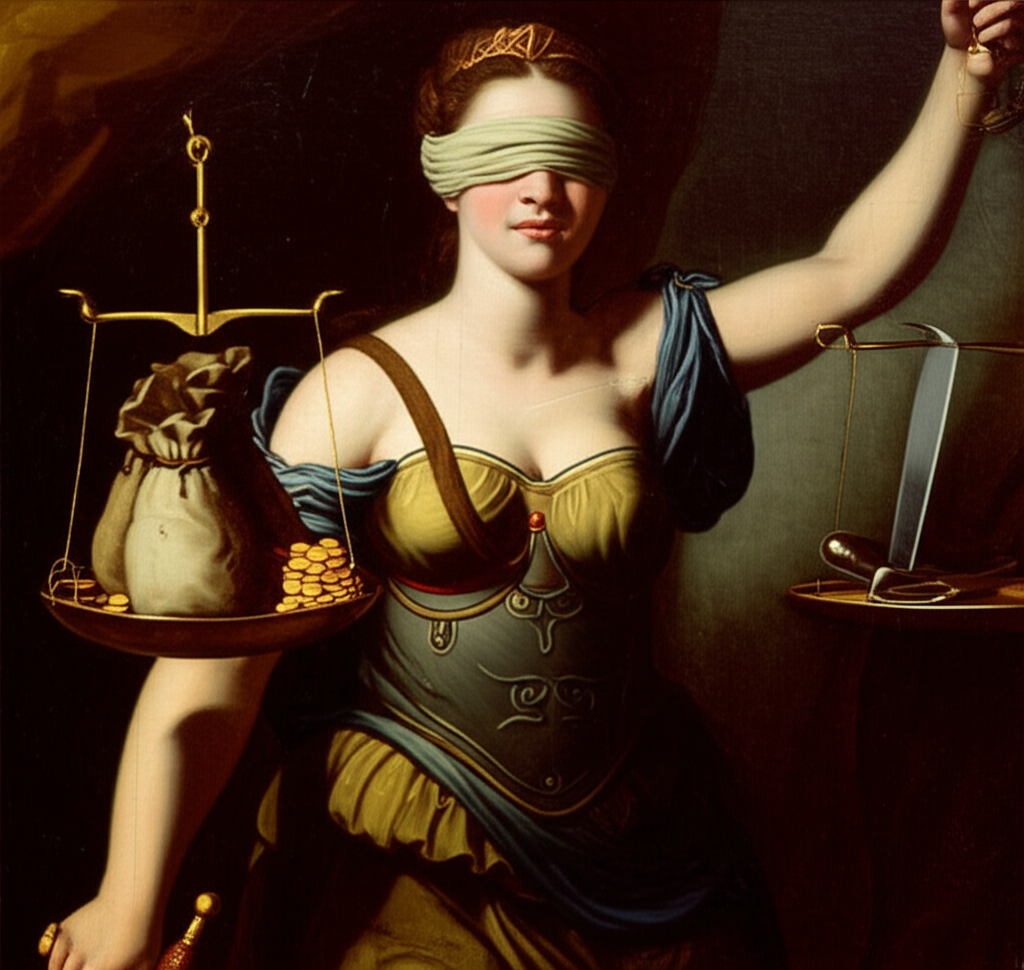
IV. The Modern Dilemma: Reconciling Wealth and Justice
The historical perspectives from the Great Books continue to inform contemporary debates. The central tension remains: how much inequality in wealth distribution is acceptable, and what role should the state play in achieving economic justice?
A. The Role of the State: Regulation, Redistribution, and Rights
Modern discussions often revolve around the state's responsibility to:
- Regulate Markets: To prevent monopolies, ensure fair competition, and protect consumers and workers.
- Provide Social Safety Nets: Through welfare programs, unemployment benefits, and public healthcare, aiming to mitigate extreme poverty and provide a baseline of security.
- Redistribute Wealth: Through progressive taxation, inheritance taxes, and public services, to reduce economic disparities.
These interventions are frequently debated in terms of individual liberty versus collective well-being, efficiency versus equity. The philosophical underpinnings of these debates often harken back to Locke's emphasis on rights, Rousseau's concern for equality, and Marx's critique of exploitation.
B. The Unfinished Debate: Is Economic Inequality Inevitable or Unjust?
The question of whether significant economic inequality is an inevitable byproduct of a free society or a correctable injustice remains at the forefront.
| Philosophical Stance | Key Argument Regarding Wealth & Justice |
|---|---|
| Meritocracy | Wealth reflects individual talent, effort, and contribution; inequality is a just outcome if opportunities are equal. |
| Egalitarianism | Excessive wealth inequality is inherently unjust; society should strive for greater equality of outcome or opportunity. |
| Libertarianism | Justice lies in the protection of individual rights and voluntary transactions; wealth distribution, however unequal, is just if acquired without coercion or fraud. |
| Communitarianism | Justice is context-dependent and tied to the shared values of a community; wealth distribution should reflect the community's vision of the good life. |
Conclusion: A Continuing Philosophical Quest
The philosophical journey through the Great Books of the Western World reveals that the questions surrounding wealth distribution and economic justice are deeply intertwined with our understanding of human nature, the purpose of the state, and the very meaning of a good society. From Plato's communal ideals to Marx's revolutionary call, the dialogue is rich, complex, and far from concluded. As societies continue to grapple with technological change, globalization, and persistent disparities, the insights gleaned from these foundational texts remain indispensable for charting a path toward a more just and equitable future.
📹 Related Video: PLATO ON: The Allegory of the Cave
Video by: The School of Life
💡 Want different videos? Search YouTube for: ""Plato Aristotle Justice Property""
📹 Related Video: PLATO ON: The Allegory of the Cave
Video by: The School of Life
💡 Want different videos? Search YouTube for: ""John Locke Rousseau Marx Wealth Labor State""