

War and Peace: Fundamental States of Existence
War and Peace are often perceived as mere events or conditions – a period of conflict, or its absence. Yet, a deeper philosophical inquiry reveals them to be something far more profound: fundamental states of existence that shape not only human societies but the very fabric of individual experience. These are not static conditions but dynamic, interwoven realities, constantly in flux, driving change and defining the boundaries of life and death. To understand humanity is to grapple with this primal dichotomy, recognizing that our being is perpetually navigating the tension and harmony between these two poles.
The Inescapable Dichotomy: More Than Mere Events
From the earliest philosophical ponderings found within the Great Books of the Western World, thinkers have wrestled with the nature of conflict and concord. It's clear that "war" extends beyond the battlefield; it signifies a state of discord, struggle, and disequilibrium, whether internal to the soul or external in the polis. Similarly, "peace" is more than just the absence of fighting; it represents a state of harmony, order, and flourishing. These aren't just external circumstances; they are deeply ingrained modes of being that influence our perceptions, our values, and our very capacity for life and death.
War: A State of Disruption, Flux, and Violent Change
When we speak of war as a state, we move beyond the transient clash of armies and into a pervasive condition of being. In this state, norms are inverted, certainties dissolved, and the very structure of reality is called into question.
- Heraclitean Flux: The ancient philosopher Heraclitus famously declared, "War is the father of all things." This isn't an endorsement of violence, but a recognition that conflict, struggle, and opposition are fundamental drivers of change and creation. In the state of war, things are constantly being broken down and reformed, testing the limits of endurance and ingenuity.
- Hobbesian Anarchy: Thomas Hobbes, in Leviathan, posited a "state of nature" as a "war of every man against every man." This describes a state where absence of governing authority leads to perpetual fear and insecurity, where life and death hang precariously in the balance. It's a reminder that the state of war can be a default mode when order collapses.
- Existential Confrontation: For the individual, the state of war can manifest as an internal struggle, a profound period of crisis or opposition that forces re-evaluation. It is here that the raw realities of life and death are most acutely felt, pushing humanity to its extremes.
The state of war is fundamentally a state of change, often violent and disruptive, but undeniably transformative. It strips away illusions and forces a confrontation with foundational truths about human nature and resilience.
Peace: A State of Equilibrium, Order, and Sustained Being
Conversely, peace as a state represents a condition of order, stability, and flourishing. It is the environment in which culture, justice, and individual well-being can thrive.
- Platonic Ideal: Plato's Republic envisions an ideal state of justice and harmony, where each part of society, like each part of the soul, performs its proper function, leading to collective peace. This isn't an absence of activity, but a balanced, ordered activity.
- Aristotelian Flourishing: For Aristotle, true peace allows for eudaimonia, or human flourishing. It's a state where individuals can pursue virtue and realize their potential, free from the constant threat of life and death inherent in conflict.
- Kantian Perpetual Peace: Immanuel Kant's vision of "perpetual peace" describes an ideal global state where rational beings, bound by moral law, create conditions that make war obsolete. This requires a profound transformation in human relations, moving beyond self-interest to universal principles.
The state of peace, while often desired, is inherently fragile. It requires constant vigilance, justice, and a commitment to maintaining the delicate balance that prevents a reversion to the state of war. It's a state that allows for the full expression of life, but it is always susceptible to change.
The Dynamic Interplay: Change as the Constant
The profound insight is that War and Peace are not isolated phenomena but two sides of the same existential coin, bound by the inevitability of change. One often gives rise to the other, creating a perpetual cycle that defines human history and individual journeys.
| Feature | War (State of Existence) | Peace (State of Existence) |
|---|---|---|
| Core Nature | Discord, Conflict, Disruption | Harmony, Order, Stability |
| Primary Driver | Opposition, Struggle, Scarcity | Cooperation, Justice, Abundance |
| Relationship to Change | Accelerates, Forces, Destroys to Rebuild | Sustains, Allows Growth, Evolves Gradually |
| Impact on Life & Death | Heightened risk, Mass casualty, Rebirth through struggle | Preservation, Flourishing, Meaningful existence |
| Philosophical Link | Heraclitus, Hobbes, Machiavelli | Plato, Aristotle, Kant, Locke |
This constant change between states is the fundamental rhythm of existence. Peace can breed complacency, leading to the seeds of future conflict. War, in its destruction, can forge new understandings and a desperate longing for peace.
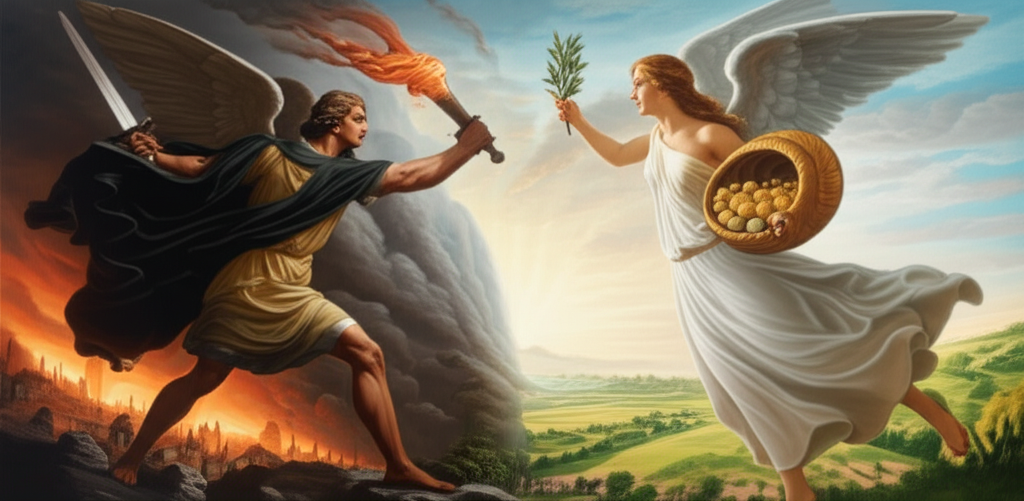
The Human Condition: Navigating Life and Death
Ultimately, understanding War and Peace as states of existence forces us to confront the human condition itself. We are beings constantly navigating the tensions between chaos and order, destruction and creation, life and death. Our individual lives are punctuated by moments of internal "war" – struggles, crises, periods of profound change – and moments of "peace" – stability, contentment, and flourishing.
Philosophers across the ages have sought to understand not just how to achieve peace, but how to live meaningfully within these alternating states. The wisdom gleaned from the Great Books suggests that while we strive for the state of peace, we must also comprehend the lessons, the transformations, and the stark realities that emerge from the state of war. It is through this continuous dialectic that humanity evolves, confronting its limits and redefining its potential.
The Enduring Philosophical Inquiry
To view War and Peace as fundamental states of existence is to acknowledge their pervasive influence on every aspect of our being. They are not merely historical footnotes or political negotiations, but profound philosophical concepts that reveal the very essence of change, the fragility of life and death, and the perennial challenge of human existence. The inquiry into these states remains as vital today as it was in antiquity, guiding our understanding of self, society, and the enduring quest for meaning.
📹 Related Video: What is Philosophy?
Video by: The School of Life
💡 Want different videos? Search YouTube for: ""Great Books of the Western World philosophy on conflict""
📹 Related Video: ARISTOTLE ON: The Nicomachean Ethics
Video by: The School of Life
💡 Want different videos? Search YouTube for: ""Hobbes State of Nature explained""