

The Perpetual Flux: War and Peace as Fundamental States of Existence
Summary: War and Peace are often perceived as mere events—periods of conflict or harmony. However, a deeper philosophical inquiry reveals them as profound states of existence, not only for nations but for individuals and the cosmos itself. These states are never static; they are in constant change, intimately tied to the cycles of Life and Death, shaping and redefining reality in an unending dialectic. Exploring this perspective, as many thinkers within the Great Books of the Western World have done, illuminates the dynamic nature of being.
The Inherent Duality: More Than Mere Events
When we speak of "war" or "peace," our minds often conjure images of battlefields or diplomatic treaties. Yet, for centuries, philosophers have understood these concepts as something far more fundamental—as intrinsic states of being. They represent opposing forces, yes, but forces that are inextricably linked, each defining the other, much like light and shadow. To exist is to navigate the spectrum between these poles, to experience their ebb and flow, their subtle shifts and dramatic upheavals.
This isn't just about geopolitics; it's about the very fabric of existence. Is the universe in a state of perpetual cosmic struggle, or is there an underlying harmony? Are our individual lives a constant internal battle, or can we achieve lasting serenity? The answer, perhaps, lies in recognizing that these aren't fixed destinations but dynamic conditions.
The Philosophical Landscape of States and Change
From the earliest recorded thoughts, the notion of change has been central to understanding the world. Heraclitus famously declared that "War is the father of all things," suggesting that conflict and opposition are not aberrations but the very engines of creation and transformation. This perspective elevates war from a regrettable event to a fundamental principle of change—a catalyst that brings forth new forms, new ideas, and new orders from the old.
Conversely, peace, while often idealized as an end-state, can also be understood as a state of equilibrium, a temporary balance that allows for growth and consolidation before the next inevitable shift. It's the fertile ground upon which new conflicts may eventually sprout, or from which new understandings may emerge.
Key Characteristics of War and Peace as States:
- Dynamic: Never static; always evolving or transitioning.
- Interdependent: Each state helps define the other; one often contains the seeds of the next.
- Multi-scalar: Manifest at individual, societal, and cosmic levels.
- Existential: Pervasive conditions that shape experience and reality.
From Microcosm to Macrocosm: Manifestations of State
The interplay of War and Peace as fundamental states can be observed across all scales of existence:
The Individual State: Inner Turmoil and Serenity
Within each person lies a constant struggle. Plato, in his Republic, explored the internal state of the soul, positing a conflict between reason, spirit, and appetite. A harmonious soul is one in a state of peace, where reason governs. Discord, on the other hand, leads to an internal war, disrupting the individual's well-being. This internal change from turmoil to tranquility, or vice-versa, is a deeply personal experience of these existential states. The Life and Death of one's aspirations, beliefs, or even aspects of the self, are often products of these inner conflicts and resolutions.
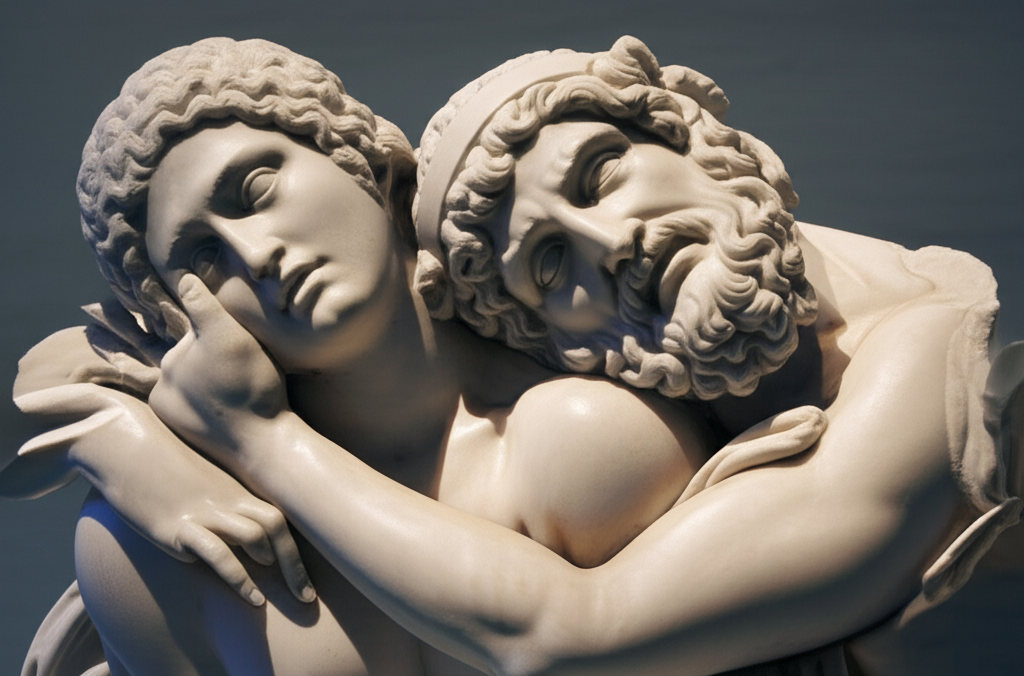
The Societal State: Empires and Eras
On a grander scale, civilizations are defined by their prevailing states of war or peace. Thucydides' History of the Peloponnesian War offers a stark account of how fear, honor, and interest drive nations into conflict, altering their very state of being. Machiavelli, too, understood the perpetual struggle for power as an inherent state of political life. Yet, periods of peace allow for flourishing arts, sciences, and stable governance, providing the conditions for societal life and prosperity, even as they sow the seeds for future conflicts or eventual death and decline. The change from one empire to another, from an era of expansion to one of consolidation, perfectly illustrates this cyclical dynamic.
Life, Death, and the Perpetual Flux
The concepts of Life and Death are intrinsically woven into these states. War, by its very nature, brings death and destruction, yet it can also be seen as a brutal form of societal rebirth, clearing the way for new political orders or technological advancements. Peace, while fostering life and growth, can also lead to stagnation, complacency, and a slow, almost imperceptible death of innovation or vigor, paving the way for eventual disruption.
This perpetual flux—this unending change between states of war and peace, and their profound impact on Life and Death—is not merely a historical observation but a philosophical insight into the nature of reality itself. It suggests that existence is not a linear progression towards a fixed end but a continuous oscillation, a dance between opposing forces that defines what it means to be.
Embracing the Dynamic: A Call to Understanding
Understanding War and Peace as fundamental states of existence, constantly in change, rather than as isolated events, offers a richer, more nuanced perspective. It compels us to look beyond immediate causes and effects, to appreciate the deeper currents that shape human experience. This perspective, echoed by countless thinkers in the Great Books of the Western World, invites us to embrace the inherent dynamism of life, recognizing that even in the most profound peace, the seeds of future transformation are already stirring, and in the midst of conflict, the potential for new forms of harmony may be forged.
YouTube Video Suggestions:
-
📹 Related Video: What is Philosophy?
Video by: The School of Life
💡 Want different videos? Search YouTube for: ""Heraclitus Philosophy of Change War Father All Things""
-
📹 Related Video: PLATO ON: The Allegory of the Cave
Video by: The School of Life
💡 Want different videos? Search YouTube for: ""Hobbes Leviathan State of Nature War Peace""