

The Shifting Sands of Being: War and Peace as Fundamental States of Existence
Summary: Beyond mere historical events or political conditions, War and Peace represent fundamental states of existence, deeply embedded in the fabric of reality, from the cosmic to the individual psyche. This article explores how these seemingly opposing forces are, in fact, dynamic, interdependent conditions, constantly in flux, driving change, and inextricably linked to the cycles of Life and Death. Drawing from the enduring wisdom found within the Great Books of the Western World, we contend that understanding these states is crucial to comprehending the very nature of being and becoming.
Beyond the Battlefield: Defining War and Peace as States
When we speak of War and Peace, our minds often conjure images of armies clashing or treaties being signed. Yet, to truly grasp their philosophical weight, we must elevate these concepts beyond the realm of mere political or military affairs. Here at planksip.org, we posit that War and Peace are not just actions or outcomes, but profound states of existence – conditions that define reality at its most fundamental level.
A state of existence implies an inherent condition, a mode of being that permeates a system, whether it be an individual, a society, or the cosmos itself. In this sense, War is the state of tension, conflict, disequilibrium, and struggle – a perpetual striving of opposing forces. Peace, conversely, is not simply the absence of conflict, but a state of harmony, balance, and dynamic equilibrium, where forces, though still present, coexist without destructive friction. The wisdom of Heraclitus, found within the fragments collected in the Great Books of the Western World, famously declares, "War is the father of all and king of all." This is not an endorsement of violence, but a profound recognition of conflict as a generative force, a primary driver of change and differentiation in the universe.
The Dialectic of Being: War, Peace, and the Engine of Change
The philosophical tradition, from ancient Greece to modern thought, consistently grapples with the interplay of these states. Consider the following perspectives:
- Heraclitus: For the Ephesian philosopher, War (or strife, polemos) is the underlying principle of the cosmos. It's the tension that holds things together, the force that brings forth change. Without this inherent conflict, there would be no movement, no development, no Life and Death. The river, always flowing, is a perfect metaphor for this perpetual state of becoming.
- Plato: In works like The Republic, Plato explores the ideal state of the city and the soul. While he seeks peace and harmony through justice and reason, he acknowledges the internal war of desires versus reason within the individual, and the potential for external war arising from injustice or unchecked appetites. The pursuit of the ideal state is itself a struggle against disorder.
- Hobbes: His Leviathan famously describes the "state of nature" as a "war of all against all," where Life and Death are precarious. For Hobbes, the social contract is an attempt to escape this terrifying state of perpetual conflict and establish a state of civil peace, albeit one maintained by absolute power.
- Hegel: The Hegelian dialectic is perhaps the most explicit philosophical framework for understanding change through conflict. Thesis meets antithesis, creating a state of tension (a form of war), which then resolves into a synthesis, a new state that incorporates elements of both. This process drives historical and intellectual development.
These thinkers, across centuries, illuminate how War and Peace are not static end-points but active, evolving states that continually transform one another.
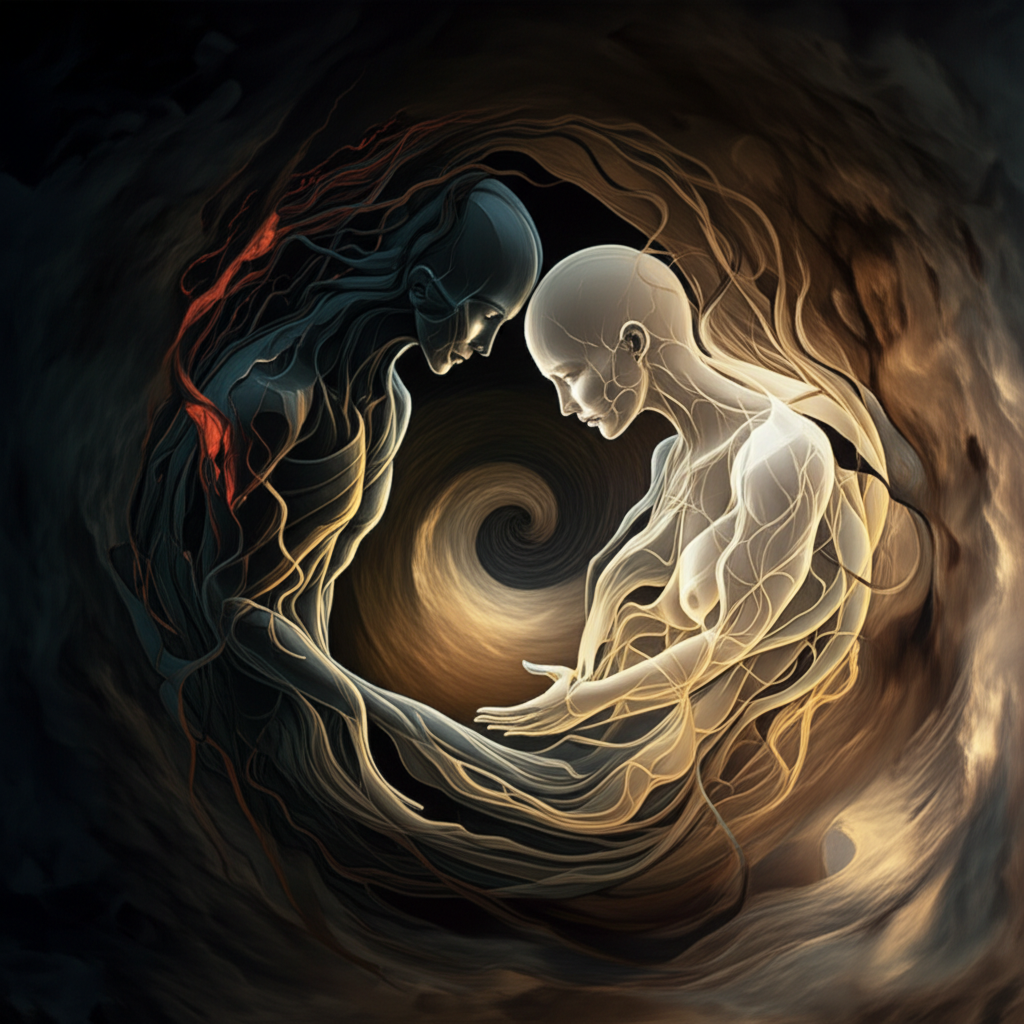
Life, Death, and the Ultimate States
The most profound manifestation of these states lies in the cycle of Life and Death. Is life itself not a state of perpetual struggle against entropy, a constant war against decay, a striving for growth amidst limitations? And is death not a state of ultimate peace, a cessation of conflict, a return to an undifferentiated whole?
Consider the biological realm: cells are in a constant state of metabolic war against pathogens, and internal processes are a delicate peace maintained by homeostatic mechanisms. When this peace is broken, illness (a state of internal conflict) ensues, potentially leading to death. Yet, death itself can be seen as a necessary change, clearing the way for new life, new states of existence.
This dynamic is not merely metaphorical. From the birth of stars through cosmic explosions (a form of celestial war) to the eventual equilibrium of black holes (a state of ultimate, albeit destructive, peace), the universe itself cycles through these fundamental states.
Key Aspects of War and Peace as States:
| Aspect | War as a State | Peace as a State |
|---|---|---|
| Nature | Conflict, tension, disequilibrium, struggle, chaos | Harmony, balance, equilibrium, coexistence, order |
| Function | Drives change, breaks stagnation, creates new forms | Facilitates growth, stability, consolidation, flourishing |
| Experience | Stress, fear, destruction, struggle, innovation | Calm, security, construction, reflection, preservation |
| Duration | Often intense and transformative, but unsustainable | Desired as permanent, but inherently fragile and dynamic |
| Relation to Life & Death | Catalyst for both destruction and new beginnings | Condition for flourishing life; ultimate peace in death |
Navigating the Inevitable: Embracing Change
To recognize War and Peace as fundamental states of existence is not to resign ourselves to an endless cycle of violence. Rather, it is to understand the inherent change that defines reality. It is to appreciate that true peace is not a static absence of war, but a dynamic equilibrium that requires constant maintenance, negotiation, and adaptation. It is a state that acknowledges the potential for conflict and strives to integrate opposing forces creatively rather than destructively.
The great works of philosophy teach us that wisdom lies in understanding these rhythms, in recognizing the ebb and flow of tension and harmony, Life and Death. By doing so, we move beyond simplistic binaries and engage with the profound complexity of our own existence and the world around us. We learn to navigate the ever-present change, seeking not to eliminate conflict entirely, but to channel its generative power towards constructive ends, fostering states of being that allow for flourishing and profound understanding.
📹 Related Video: What is Philosophy?
Video by: The School of Life
💡 Want different videos? Search YouTube for: ""Heraclitus Flux and Change Philosophy" and "Hobbes Leviathan State of Nature Explained""