

War and Peace: Inescapable States of Human Existence
War and Peace are not merely historical epochs or political events; they are profound, fundamental states of human existence, both individually and collectively. This article explores how these conditions are in constant flux, shaped by the inevitability of change, and inextricably linked to the ultimate stakes of life and death. Drawing from the enduring wisdom of the Great Books of the Western World, we will delve into the philosophical underpinnings of these twin forces, examining their nature, their interplay, and their profound implications for humanity and the very concept of the State.
The Enduring Dichotomy: Defining War and Peace as States
At its core, the distinction between War and Peace transcends simple definitions of conflict and tranquility. Philosophically, they represent fundamental modes of being, pervasive conditions that define human reality. Peace, in this sense, is not merely the absence of war, but a state of equilibrium, a condition where societal and individual flourishing is possible. Conversely, war is a state of profound disequilibrium, characterized by active antagonism and the breakdown of established order.
For thinkers like Thomas Hobbes, the "state of nature" itself was a "war of every man against every man," where life was "solitary, poor, nasty, brutish, and short." The creation of the political State (the Leviathan) was, for Hobbes, the only escape from this perpetual conflict, a necessary imposition to secure peace and preserve life. Yet, even this peace is often a fragile construct, a temporary armistice rather than an eternal condition. The Great Books consistently present these not as momentary occurrences, but as pervasive atmospheres that dictate the very fabric of existence.
The Inevitability of Change: From One State to Another
Perhaps the most consistent philosophical insight regarding War and Peace is their impermanence. Nothing, as Heraclitus observed, truly stands still; everything is in a state of flux. This principle of change dictates the oscillation between war and peace, making neither a static destination but rather a point on a continuous spectrum.
Throughout history, societies have moved from periods of relative peace to devastating war, and back again. Thucydides' account of the Peloponnesian War vividly illustrates how a state of peace, however long-lasting, can erode under the pressures of fear, honor, and interest, inevitably giving way to conflict. Conversely, war, while destructive, often acts as a catalyst for profound societal change, leading to new political orders, redefinitions of justice, and the emergence of new forms of peace. This dynamic interplay underscores that peace can contain the seeds of future conflict, just as war can, paradoxically, lay the groundwork for a new, albeit often fragile, peace.
The Dynamic Cycle:
- Peaceful Stability: A period of growth, often leading to complacency or internal divisions.
- Mounting Tensions: Unresolved conflicts, power imbalances, or ideological clashes begin to ferment.
- Outbreak of War: The state shifts dramatically, characterized by violence, destruction, and a reordering of priorities.
- Post-Conflict Transition: A period of rebuilding, re-evaluation, and the establishment of a new, often uneasy, peace.
- Return to Stability: The cycle continues, often with lessons learned, but rarely with the elimination of the potential for future change.
Life and Death: The Ultimate Stakes of Existence
The most profound consequences of these states of being manifest in the realms of life and death. War, by its very nature, is a celebration of death and destruction. It is the ultimate test of human endurance, pushing individuals and societies to the brink, forcing choices between survival and annihilation. The toll in human life is immeasurable, leaving scars that span generations.
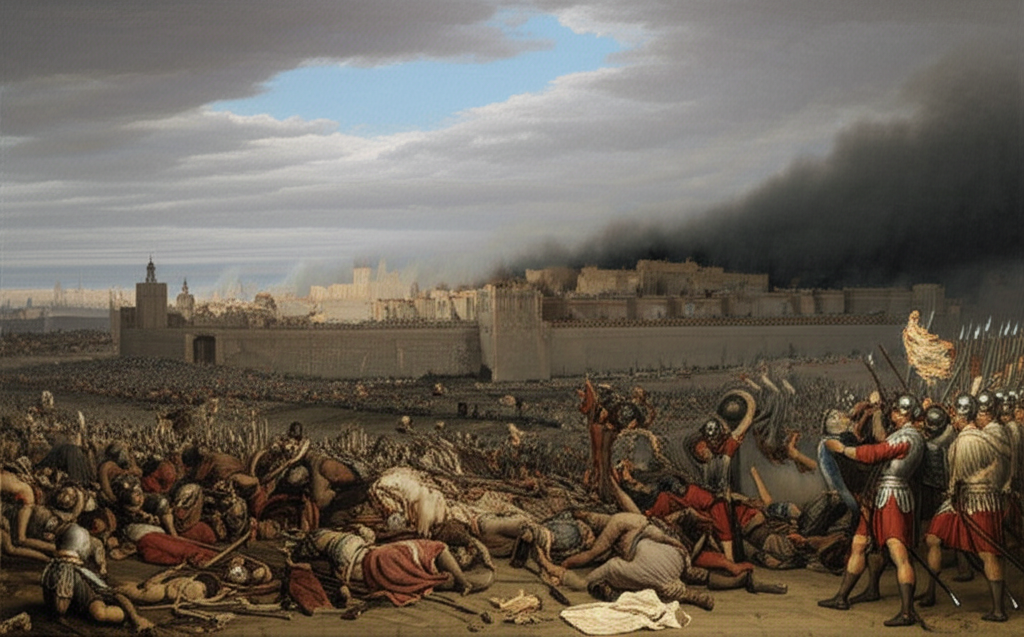
Yet, even in this state of devastation, life persists and adapts. War can forge new identities, create unexpected solidarities, and, in its aftermath, lead to a renewed appreciation for life and its simple pleasures. Peace, on the other hand, provides the fertile ground for life to flourish. It is the state in which culture, philosophy, art, and scientific inquiry thrive. It allows for the long-term planning, the nurturing of relationships, and the pursuit of individual and collective well-being that defines human progress. The choice between these states is, therefore, fundamentally a choice between conditions that foster life or hasten death.
The State as Architect and Arena of War and Peace
The political State emerges as a central player in this philosophical drama. As discussed by thinkers from Plato to Machiavelli to Kant, the very purpose of the State is often conceived in relation to managing or creating conditions of War and Peace.
- The State as Peacemaker: For many, the State exists to prevent the "war of all against all" within its borders, providing order, justice, and security. It is the institutional embodiment of the desire for a peaceful state of affairs.
- The State as War-maker: Paradoxically, the State is also the primary entity capable of waging war on a grand scale. Machiavelli, in The Prince, argued that a ruler must understand the necessity of war for the State's survival, expansion, and the maintenance of power. The pursuit of national interest can often lead to interstate conflict.
- The Ideal State: Philosophers like Kant envisioned a "perpetual peace" among nations, a global state achieved through international law and republican governance. This remains an enduring ideal, a testament to humanity's yearning for a more permanent state of peace.
The internal and external actions of the State are thus crucial determinants of whether society finds itself in a state of war or peace, constantly navigating the complex interplay of power, morality, and necessity.
Internal Wars, Internal Peace: The Individual Dimension
Beyond the grand scale of nations and empires, War and Peace also manifest as internal states within the individual. Plato, in The Republic, described the ideal state of the soul as one where reason governs the appetites and spirit, achieving an internal harmony – a personal peace. When these elements are in conflict, the soul experiences an internal "war," leading to discord and unhappiness.
This individual change from internal conflict to inner peace, or vice versa, profoundly impacts the collective. A society composed of individuals at war with themselves is unlikely to sustain a true state of peace for long. Conversely, the pursuit of virtue and self-mastery, as advocated by Stoic philosophers, is an attempt to cultivate an unshakeable inner peace, allowing one to navigate the external states of war and peace with greater resilience and wisdom.
Conclusion: The Enduring Dance
The philosophical exploration of War and Peace reveals them not as transient events, but as fundamental, dynamic states of human existence. They are inextricably linked to the ceaseless process of change, dictating the ultimate consequences of life and death, and are profoundly shaped by, and in turn shape, the very nature of the State. From the individual soul to the global stage, humanity is caught in this eternal dance, perpetually striving for the elusive ideal of lasting peace while acknowledging the ever-present potential for conflict. Understanding these states, their causes, and their effects, remains one of the most vital and enduring challenges for philosophical inquiry.
📹 Related Video: KANT ON: What is Enlightenment?
Video by: The School of Life
💡 Want different videos? Search YouTube for: ""Hobbes State of Nature Explained," "Kant Perpetual Peace Summary""