

War and Peace: Inherent States of Existence
War and Peace are often perceived as mere historical periods or political conditions, yet a deeper philosophical lens reveals them as fundamental states of existence that profoundly shape human experience and the very fabric of reality. This article posits that these are not merely external circumstances but intrinsic conditions of being, constantly in flux, driving change, and inextricably linked to the cycles of life and death. From the individual soul to global civilization, understanding War and Peace as fundamental states offers a richer perspective on our journey through existence, echoing the profound inquiries found within the Great Books of the Western World.
Beyond Event: Defining States of Existence
To consider War and Peace as states of existence is to move beyond their episodic manifestations. A state, in this context, refers to a fundamental condition or mode of being, a pervasive quality that defines an entity or system for a period. It implies an underlying nature, a disposition that influences all within its domain.
- War as a State: Not merely armed conflict, but a condition characterized by tension, struggle, opposition, and a fundamental disharmony. This can manifest externally (nations at odds) or internally (the individual's struggle with self, virtue, or desire).
- Peace as a State: More than the absence of conflict, it is a condition of equilibrium, harmony, flourishing, and integrated coexistence. It implies a stability that allows for growth, creation, and deeper understanding, both personally and communally.
Philosophers throughout history have grappled with which of these states is more "natural" or desirable, exploring their origins in human nature, divine will, or the cosmic order.
The All-Encompassing Nature of War
The state of war, as explored by thinkers from Heraclitus to Hobbes, is often depicted as a primal, inherent condition. Heraclitus famously stated, "War is the father of all things," suggesting that conflict is the engine of creation and change.
- The Hobbesian Perspective: Thomas Hobbes, in his Leviathan, posited that in the absence of a sovereign power, humanity exists in a "war of all against all" (bellum omnium contra omnes). This is not constant fighting, but a perpetual readiness for conflict, where life and death hang precariously in the balance. This state is characterized by "continuall feare, and danger of violent death; And the life of man, solitary, poore, nasty, brutish, and short."
- Internal War: Plato, in his Republic, illustrates an internal war within the soul, where reason, spirit, and appetite vie for dominance. A just individual achieves peace by aligning these faculties, but the constant potential for internal strife is ever-present. Augustine's Confessions similarly describes a profound internal struggle between divine will and earthly desires.
- War as Catalyst for Change: Historically, periods of war have often preceded profound societal, technological, and philosophical change. The destruction wrought by conflict can clear the ground for new ideas, new political structures, and a re-evaluation of fundamental values.
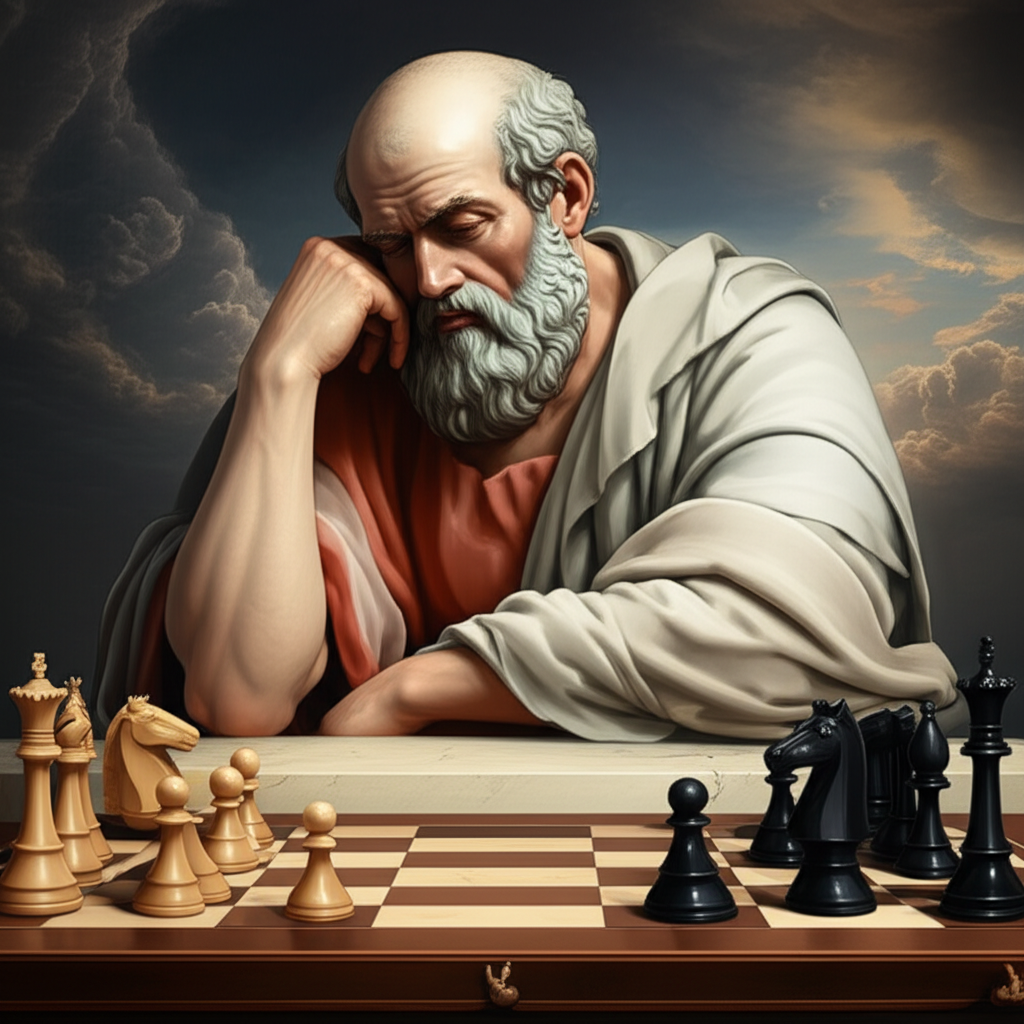
The Elusive Yet Essential State of Peace
While war often imposes itself, peace often feels like an achievement, a cultivated state. It is not merely the cessation of hostilities but an active condition of well-being and flourishing.
- Aristotle's Eudaimonia: For Aristotle, the good life, eudaimonia, is a state of flourishing achieved through virtuous activity. This state implicitly requires a degree of societal peace and stability to allow individuals to pursue their highest potential.
- Kant's Perpetual Peace: Immanuel Kant envisioned a state of "perpetual peace" not as a utopian dream, but as a moral imperative and a rational endpoint for human political development. This state would be founded on republican constitutions, a federation of free states, and universal hospitality, demanding a fundamental change in human interaction.
- The Fragility of Peace: The Great Books frequently remind us that peace is a fragile construct, requiring constant vigilance, justice, and moral effort to maintain. It is a dynamic balance, not a static endpoint. The very conditions that foster peace can, if neglected, lead to its dissolution, initiating a return to conflict.
The Dynamic Interplay: Change and the Cycles of Life and Death
The most profound insight into War and Peace as states of existence is their inherent dynamism. They are not isolated conditions but poles within an ongoing process of change. One state often contains the seeds of the other, and the transition between them is often abrupt and transformative, marking moments of profound life and death.
| Feature | State of War | State of Peace |
|---|---|---|
| Defining Quality | Conflict, tension, struggle, discord | Harmony, equilibrium, cooperation, flourishing |
| Primary Focus | Survival, dominance, destruction, defense | Creation, growth, development, preservation |
| Relationship to Change | Catalyst, disruptive force, rapid reordering | Gradual evolution, stable progress, sustained effort |
| Impact on Life & Death | High risk of death, existential threat, loss | Preservation of life, opportunity for flourishing |
| Underlying Emotion | Fear, anger, suspicion | Trust, security, contentment |
| Philosophical Basis | Hobbesian "natural state," Heraclitean flux | Aristotelian eudaimonia, Kantian idealism |
This table illustrates that while distinct, these states are deeply interconnected. Peace can become complacent, leading to the conditions for war. War, through its destructive change, can paradoxically lead to a profound desire and foundation for a new, often more robust, peace. The ebb and flow between these states defines much of human history and individual experience, constantly challenging our understanding of life and death and our capacity for moral agency.
Conclusion: The Enduring Philosophical Challenge
Considering War and Peace as fundamental states of existence rather than mere events elevates our understanding of the human condition. They are the twin pillars upon which our philosophical inquiries into justice, ethics, politics, and human nature are built. They are the crucible where our values are tested, where change is inevitable, and where the ultimate stakes of life and death are ever-present. The Great Books of the Western World continually invite us to reflect on these states, not just as historical phenomena, but as enduring philosophical challenges that define what it means to be human.
📹 Related Video: KANT ON: What is Enlightenment?
Video by: The School of Life
💡 Want different videos? Search YouTube for: ""Hobbes State of Nature Explained" and "Kant Perpetual Peace Philosophy""