

The Enduring Quest: Unpacking the Nature of Religious Truth
The human spirit, ever restless, perpetually seeks meaning and understanding. Among the most profound and enduring of these quests is the pursuit of Truth, particularly as it pertains to Religion. Unlike empirical truths that can be verified through observation or scientific experiment, religious truth often operates on a different plane, inviting contemplation, faith, and a unique form of Knowledge. This article delves into the multifaceted nature of religious truth, exploring how it has been conceived, pursued, and challenged through the ages, drawing insights from the rich tapestry of thought found within the Great Books of the Western World.
The Distinctive Landscape of Religious Truth
At its core, the nature of religious truth presents a singular philosophical challenge. While we speak of truth in mathematics, history, or science with a certain shared understanding of verification, religious truth often transcends the purely empirical or logical. It frequently concerns ultimate realities, the divine, the purpose of existence, and the afterlife – domains not readily accessible to conventional forms of proof.
- Transcendence and Immanence: Religious truth often posits a reality beyond the immediate physical world (transcendence) while simultaneously asserting its presence within or interaction with it (immanence).
- The Role of Faith: Central to many religious traditions is faith – a conviction not necessarily based on empirical evidence, but on trust, revelation, or spiritual experience. This does not imply irrationality, but rather a different epistemic pathway.
- Moral and Existential Dimensions: Religious truth is rarely purely descriptive; it often carries profound moral implications, guiding human conduct and providing frameworks for meaning and purpose in life.
Philosophical Pillars: Pathways to Religious Knowledge
Throughout history, thinkers have grappled with how one might apprehend religious truth. The Great Books reveal a spectrum of approaches, often blending reason, revelation, and experience in intricate ways.
1. Revelation: The Divine Disclosure
Many religious traditions assert that the most direct access to truth about God and ultimate reality comes through revelation – a direct disclosure from the divine. This can take various forms:
- Sacred Texts: The scriptures of the Abrahamic faiths (Torah, Bible, Quran), the Vedas, the Upanishads, and Buddhist sutras are considered divinely inspired or authoritative records of revelation.
- Prophetic Experience: Figures like Moses, Jeremiah, Paul, and Muhammad are seen as conduits through whom divine messages were communicated.
- Mystical Insight: Direct, unmediated spiritual experiences that transcend ordinary perception, often described by mystics across different traditions.
For thinkers like Augustine, divine illumination was crucial for understanding spiritual truths, suggesting that ultimate truth is not merely discovered by human reason but revealed to it.
2. Reason: Natural Theology and Philosophical Inquiry
Even within traditions that emphasize revelation, reason has played a vital role in articulating, defending, and understanding religious truth. This pursuit, often termed Natural Theology, seeks to understand God and divine attributes through the light of human reason and observation of the natural world.
- Cosmological Arguments: From Aristotle's concept of the Unmoved Mover to Aquinas's Five Ways, these arguments infer the existence of a first cause or necessary being from the existence and nature of the cosmos.
- Teleological Arguments: Observing the apparent design and order in the universe, these arguments infer an intelligent designer or purpose-giver.
- Ontological Arguments: Anselm's famous argument seeks to prove God's existence from the very concept of God as "that than which no greater can be conceived."
The Scholastics, particularly Thomas Aquinas, dedicated immense intellectual effort to demonstrating the compatibility, and indeed the complementary nature, of faith and reason, asserting that Truth cannot contradict Truth, whether revealed or discovered through natural Knowledge.
3. Experience: Personal Encounters and Community
Beyond formal revelation and abstract reason, personal experience and communal practice contribute significantly to the understanding and validation of religious truth.
- Individual Conversion and Transformation: Many individuals attest to profound personal experiences that lead to a conviction of religious truth, often involving a sense of divine presence, peace, or radical life change.
- Communal Worship and Ritual: Shared rituals, prayers, and communal life reinforce religious beliefs and provide a lived experience of truth, fostering a sense of belonging and shared understanding.
- Moral Transformation: The perceived positive moral impact of religious adherence on individuals and societies is often cited as evidence of its truth and efficacy.
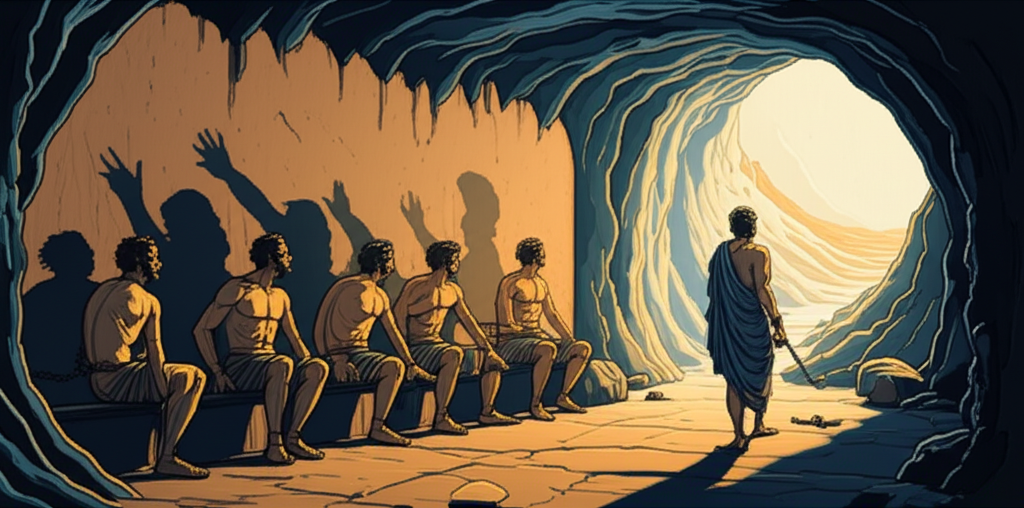
The Challenges to Religious Truth: Interpretation and Pluralism
The pursuit of religious truth is not without its complexities and profound challenges.
Conflicting Claims and Hermeneutics
One of the most significant challenges arises from the plurality of religions, each often claiming unique access to ultimate truth. This leads to questions of how to reconcile, or even evaluate, these diverse claims.
- Literal vs. Symbolic Interpretation: How should sacred texts be read? Are they literal accounts of historical events, or do they employ metaphor, allegory, and myth to convey deeper, spiritual truths? The hermeneutical challenge – the art and science of interpretation – is central to understanding religious texts and traditions.
- The Problem of Evil: The existence of suffering and evil in a world supposedly created by an all-good, all-powerful God presents a persistent theological and philosophical dilemma.
Modernity and the Limits of Knowledge
The Enlightenment brought forth new critiques of religious truth, particularly from philosophers like Immanuel Kant, who argued for the limitations of human reason in apprehending metaphysical realities, including God. Kierkegaard, on the other hand, emphasized the subjective nature of faith, viewing it as a passionate "leap" rather than a logical deduction. These perspectives underscore the profound chasm that can exist between objective, verifiable knowledge and the deeply personal, often non-rational, encounter with religious truth.
The Enduring Significance of the Quest
Despite these challenges, the human quest for religious truth remains a powerful and enduring aspect of our intellectual and spiritual heritage. For countless individuals, religious truth offers:
- Meaning and Purpose: A framework for understanding life's ultimate meaning and one's place within the cosmos.
- Moral Guidance: Ethical principles and virtues that shape individual character and societal structures.
- Hope and Transcendence: Comfort in the face of suffering, and a vision of reality that extends beyond mortal existence.
The study of Theology and the philosophy of Religion continue to be vibrant fields precisely because the questions surrounding the nature of religious Truth are fundamental to the human condition. They push the boundaries of our Knowledge and challenge us to consider the deepest mysteries of existence.
YouTube: "Philosophy of Religion: Arguments for God's Existence"
YouTube: "Augustine's Confessions Explained"
📹 Related Video: What is Philosophy?
Video by: The School of Life
💡 Want different videos? Search YouTube for: "The Nature of Religious Truth philosophy"