

The Nature of Religious Truth
This article delves into the profound and often enigmatic concept of Truth as it pertains to Religion. Unlike empirical or scientific truths, religious truth frequently transcends the measurable, engaging instead with matters of ultimate meaning, existence, and divine reality. We will explore how philosophers and theologians, from the ancient Greeks to the medieval scholastics, have grappled with the unique character of religious Knowledge, examining the interplay between faith, reason, revelation, and personal experience in its apprehension. Our journey will draw upon the rich intellectual heritage enshrined in the Great Books of the Western World, seeking to illuminate the distinct pathways through which religious claims assert their veracity.
Unpacking the Concept of Truth in a Religious Context
The quest for Truth is arguably the oldest and most persistent human endeavor. Yet, when we append the adjective "religious" to it, the very definition of truth undergoes a significant transformation. What constitutes truth in Religion? Is it a set of verifiable propositions, a subjective experience, a moral imperative, or a revealed dogma?
For centuries, philosophers have distinguished between various forms of truth:
- Correspondence Truth: Where a statement is true if it corresponds to a fact in the world.
- Coherence Truth: Where a statement is true if it fits logically within a larger system of beliefs.
- Pragmatic Truth: Where a statement is true if it is useful or effective in practice.
Religious truth often intertwines these, but frequently introduces dimensions beyond them, such as revelatory truth or existential truth. It is here that Theology emerges as a distinct discipline, seeking to systematically articulate and defend the truth claims inherent in religious traditions.
The Philosophical Foundations: Ancient Insights into Ultimate Reality
From the very dawn of Western philosophy, thinkers grappled with realities beyond the immediately observable. Plato, in his Republic and other dialogues, posited the existence of a realm of perfect, eternal Forms, accessible not through the senses but through intellect and philosophical contemplation. For Plato, true Knowledge was knowledge of these Forms, with the Form of the Good standing as the ultimate reality and source of all other truths. This pursuit of a higher, immutable truth laid a conceptual groundwork for later religious thought that would seek truth beyond the transient material world.
Aristotle, while grounding his philosophy more firmly in the empirical world, still ascended to metaphysical inquiries concerning first principles and the Prime Mover in his Metaphysics. His concept of an unmoved mover, an ultimate cause of all motion and change, provided a rational framework that would later be adopted by Theology to articulate the nature of God, thereby bridging philosophical Knowledge with religious understanding.
Faith and Reason: The Medieval Synthesis
The Middle Ages witnessed an intense intellectual effort to reconcile the dictates of faith with the demands of reason. This period, rich with theological and philosophical discourse, stands as a testament to the enduring human desire to understand the Truth of Religion through both divine revelation and rational inquiry.
St. Augustine: Illumination and Inner Truth
St. Augustine of Hippo, a pivotal figure in the Great Books, articulated a profound understanding of religious Truth in works like his Confessions and City of God. For Augustine, ultimate truth resided in God, and human Knowledge of this truth was not solely an act of rational deduction but often an illumination from within, a divine enlightenment. He famously declared, "Believe in order to understand," suggesting that faith precedes and enables deeper rational comprehension of divine truths. Religious truth, in this view, is not merely intellectual assent but a transformative encounter with the divine.
St. Thomas Aquinas: Harmonizing Revelation and Philosophy
Perhaps the most comprehensive attempt to synthesize faith and reason was undertaken by St. Thomas Aquinas in his monumental Summa Theologica. Aquinas meticulously argued that while some truths of Religion are accessible only through divine revelation (e.g., the Trinity), others can be known through natural reason alone (e.g., the existence of God, derived from observable reality).
Aquinas's Approach to Religious Knowledge:
| Pathway to Knowledge | Description | Examples of Truths Attainable |
|---|---|---|
| Natural Reason | Derived from observation, logic, and philosophical inquiry. | The existence of God (Prime Mover, First Cause), moral law. |
| Divine Revelation | Communicated directly by God through scripture, prophets, or tradition. | The Incarnation, the Trinity, divine grace. |
Aquinas asserted that there could be no fundamental contradiction between truths discovered by reason and truths revealed by God, as both ultimately emanate from the same divine source. This rational articulation of Theology sought to demonstrate that religious Truth was not irrational, but rather supra-rational, extending beyond the limits of human reason while not contradicting it.
The Existential Dimension of Religious Truth
Beyond propositional assertions or rational deductions, religious Truth often carries a profound existential weight. It speaks to the meaning of life, suffering, death, and the ultimate destiny of humanity. In this sense, religious Knowledge is not merely about what is true, but about how one lives in light of that truth.
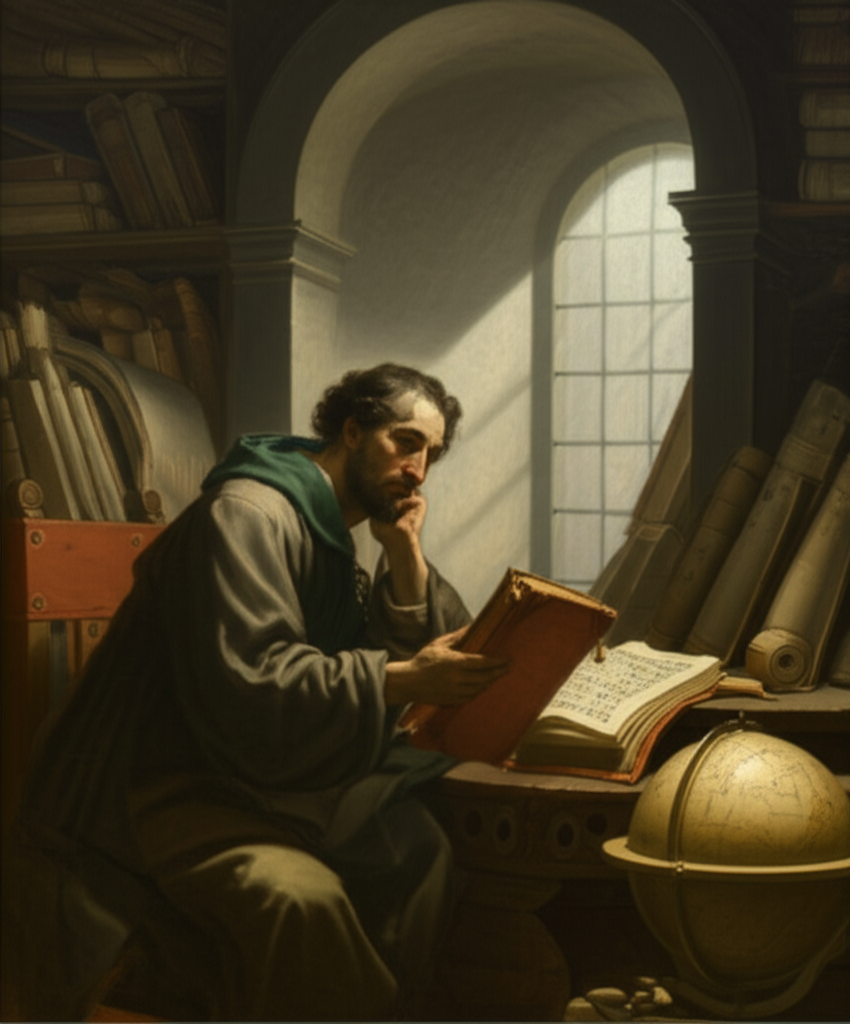
Truth as Lived Experience and Personal Transformation
For many, religious truth is not merely something to be believed, but something to be experienced. It manifests in practices, rituals, ethical living, and a personal relationship with the divine. The Truth of Religion in this context is less about an objective fact and more about a subjective reality that shapes one's entire being. This perspective often emphasizes the transformative power of faith and the inner conviction that arises from a profound spiritual encounter.
Conclusion: The Enduring Quest for Religious Truth
The nature of religious Truth remains a multifaceted and deeply personal inquiry. From Plato's Forms to Augustine's illumination and Aquinas's synthesis of faith and reason, the Great Books of the Western World bear witness to humanity's tireless pursuit of Knowledge concerning the ultimate realities. Religious truth, therefore, is not a monolithic concept but a rich tapestry woven from philosophical inquiry, theological dogma, personal experience, and divine revelation. It challenges us to look beyond the immediately apparent, to contemplate the transcendent, and to seek meaning in the grand narratives that have shaped civilizations. The journey to understand religious Truth is an ongoing dialogue, inviting each generation to engage with its profound questions and to discover its enduring significance.
YouTube Video Suggestions:
-
📹 Related Video: PLATO ON: The Allegory of the Cave
Video by: The School of Life
💡 Want different videos? Search YouTube for: ""Plato's Theory of Forms Explained Philosophy""
-
📹 Related Video: KANT ON: What is Enlightenment?
Video by: The School of Life
💡 Want different videos? Search YouTube for: ""Aquinas Five Ways for God's Existence Summary""