

Unveiling the Sacred: An Inquiry into the Nature of Religious Truth
The question of Truth, particularly within the domain of Religion, stands as one of humanity's most enduring and profound philosophical challenges. This article explores the multifaceted nature of religious Truth, distinguishing it from other forms of knowledge, examining its epistemological foundations, and considering the enduring quest for understanding that it represents. We delve into how religious Truth is conceived, acquired, and validated, drawing upon the rich intellectual heritage that has grappled with these concepts for millennia.
The Elusive Quest for Truth in Religion
What constitutes Truth when we speak of Religion? Unlike empirical or scientific truths, which are often verifiable through observation and experimentation, religious Truth frequently operates on different planes of understanding. It often concerns matters of ultimate meaning, moral imperatives, and the transcendent, inviting a unique form of inquiry. This distinct character has led philosophers and theologians throughout history to ponder whether religious Truth can be known, and if so, how that Knowledge is acquired and justified.
Historical Perspectives on Truth and the Sacred
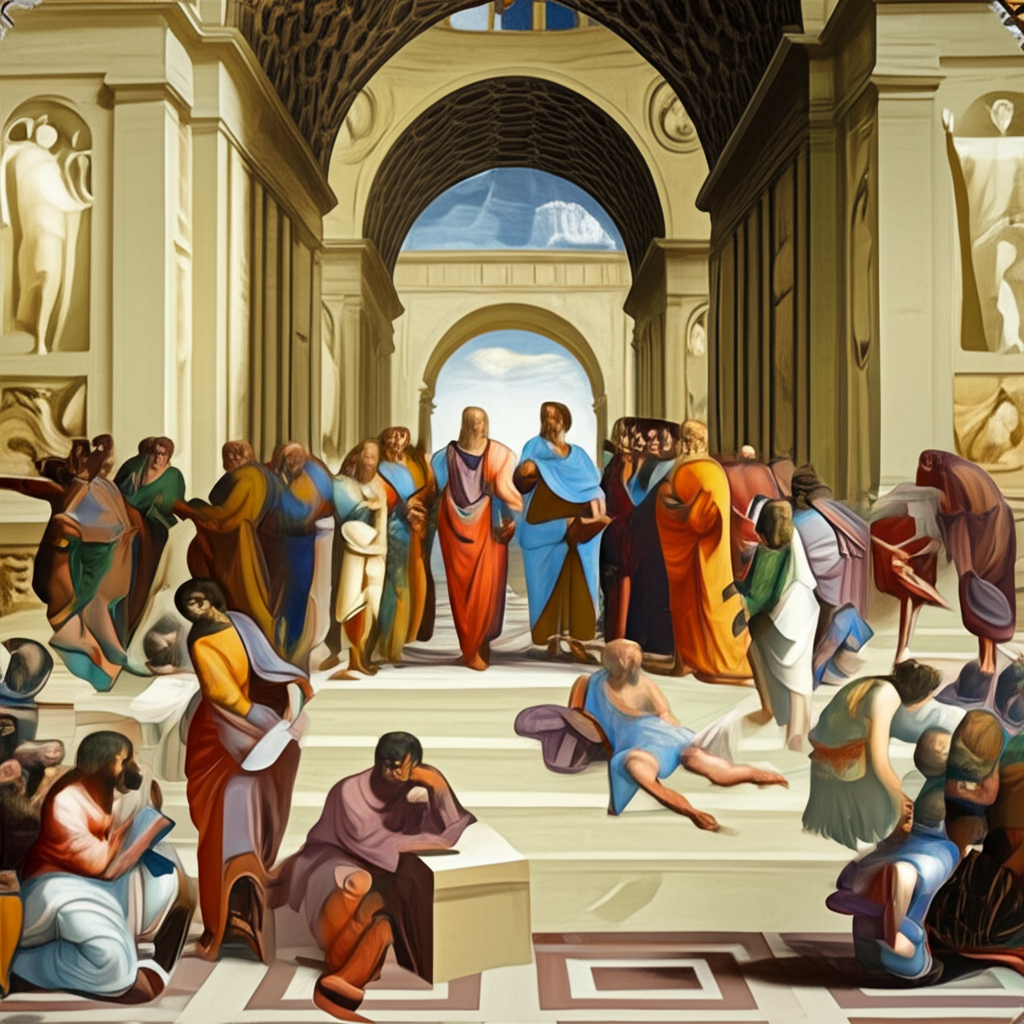
The Western philosophical tradition, as chronicled in the Great Books of the Western World, offers a foundation for understanding the concept of Truth. Ancient Greek thinkers like Plato posited an ideal realm of Forms, where true reality resided, accessible through reason. Aristotle, while emphasizing empirical observation, also sought universal principles. When these philosophical frameworks encountered early Christian thought, a fascinating synthesis began.
- Plato and the Forms: For Plato, genuine Truth existed beyond the fleeting appearances of the sensory world, residing in eternal, unchanging Forms. The highest of these was the Form of the Good, which illuminated all other truths.
- Aristotle and First Principles: Aristotle sought Truth through systematic inquiry, moving from observation to the discovery of underlying causes and first principles, accessible through intellect.
- Augustine and Divine Illumination: Saint Augustine, deeply influenced by Neoplatonism, argued that Truth, particularly divine Truth, is ultimately granted through a divine illumination of the human intellect. Knowledge of God and spiritual realities was not merely discovered but revealed.
- Aquinas and the Harmony of Faith and Reason: Thomas Aquinas, building on Aristotle, posited that Truth could be apprehended through both faith and reason. While some truths were purely matters of revelation (e.g., the Trinity), others (e.g., God's existence) could be approached through rational argument, demonstrating a profound harmony between Theology and philosophy.
These historical perspectives highlight a consistent thread: the recognition that certain truths, especially those concerning the divine, might transcend purely human empirical or rational faculties.
The Distinctive Dimensions of Religious Truth
Religious Truth rarely conforms to a singular, universally accepted definition. Instead, it encompasses several dimensions, often intertwined, that differentiate it from other forms of Knowledge.
1. Revealed Truth (Revelation)
Many religions posit that fundamental truths are not discovered by human effort but are revealed by a divine source. This revelation might come through sacred texts, prophets, mystics, or direct divine encounters.
- Example: The Ten Commandments in Judaism and Christianity, or the Quran in Islam.
- Challenge: Interpretation of revealed texts and claims of authenticity.
2. Experiential Truth
Personal religious experience, often described as a direct encounter with the divine or a profound sense of spiritual realization, forms a powerful basis for Truth for many adherents. This can include mystical experiences, moments of conversion, or a deep sense of peace and purpose.
- Example: The transformative experience of Siddhartha Gautama becoming the Buddha, or a Christian's personal testimony of salvation.
- Challenge: Subjectivity and ineffability; difficulty in communicating or verifying such experiences externally.
3. Moral and Ethical Truth
Religions often provide comprehensive moral frameworks, defining right and wrong, and offering guidance for living a good life. These ethical Truths are frequently seen as divinely ordained or inherently true for the flourishing of individuals and communities.
- Example: The Golden Rule, the Eightfold Path, or the concept of dharma.
- Challenge: Divergent moral codes across different religions and the question of their universal applicability.
4. Narrative Truth (Myth and Metaphor)
Religious narratives, myths, and parables, while not always literally factual, often convey profound spiritual and existential Truths. They provide meaning, explain the origins of the world and humanity, and offer models for human behavior.
- Example: Creation myths, parables of Jesus, or stories of divine heroes.
- Challenge: Distinguishing between literal and symbolic interpretation, and the risk of fundamentalism.
 .)
.)
Epistemological Challenges and the Role of Theology
The pursuit of religious Truth inevitably leads to epistemological questions: How do we know what we claim to know? What are the criteria for validating religious assertions? This is where Theology plays a crucial role. Theology is the systematic study of religious faith, practice, and experience, often employing philosophical methods to clarify, interpret, and defend religious doctrines.
| Aspect of Religious Knowledge | Description | Primary Method of Validation |
|---|---|---|
| Doctrinal Knowledge | Understanding of creeds, dogmas, and theological principles. | Exegesis of sacred texts, logical coherence within a theological system, consensus of religious authorities. |
| Experiential Knowledge | Personal awareness derived from spiritual encounters. | Subjective conviction, transformative impact on the individual's life, alignment with broader religious tradition. |
| Moral Knowledge | Grasp of ethical precepts and their application. | Divine command, natural law, practical wisdom, communal acceptance. |
| Historical Knowledge | Understanding of events within a religious tradition (e.g., lives of prophets, founding events). | Historical-critical methods, archaeological evidence (where available), textual analysis. |
The tension between faith and reason is a central theme in Theology. While some traditions emphasize faith as the primary means to apprehend divine Truth, others seek to demonstrate the rationality of their beliefs, arguing that true Knowledge cannot contradict reason, even if it transcends it.
The Enduring Relevance of Religious Truth
Despite the complexities and challenges, the question of religious Truth remains profoundly relevant. For countless individuals, religious beliefs provide a framework for understanding existence, coping with suffering, and finding purpose. The pursuit of this Knowledge is not merely an academic exercise but a deeply personal and communal endeavor that shapes cultures, ethics, and individual lives.
The ongoing philosophical and theological inquiry into the nature of religious Truth continues to enrich our understanding of human intellectual and spiritual aspirations. It compels us to reflect on the limits of human Knowledge, the role of faith, and the diverse ways in which humanity seeks to connect with the ultimate realities of existence.
**## 📹 Related Video: What is Philosophy?
Video by: The School of Life
💡 Want different videos? Search YouTube for: ""Philosophy of Religion: Nature of Truth" or "Faith and Reason Aquinas""**
**## 📹 Related Video: What is Philosophy?
Video by: The School of Life
💡 Want different videos? Search YouTube for: ""What is Religious Experience? Mysticism and Truth""**