

Understanding Revolution as Political Change
By Chloe Fitzgerald
Revolution, at its core, represents a profound and often violent upheaval in the established political order. Far from mere reform or a change in administration, a true Revolution signifies a fundamental Change in the very fabric of Government and society, driven by deep-seated grievances and a vision for a new future. This article delves into the philosophical and historical dimensions of revolution, exploring its causes, characteristics, and enduring impact, drawing insights from the rich tapestry of Western thought found in the Great Books of the Western World.
The Essence of Revolutionary Change
A revolution is more than just a rebellion or a coup; it is a transformative event that seeks to dismantle existing power structures and re-establish society on entirely new principles. Throughout History, these moments have reshaped nations and global dynamics, challenging our understanding of legitimacy, authority, and the nature of political power itself.
Defining Revolution vs. Other Forms of Political Upheaval
To truly grasp revolution, it's crucial to distinguish it from related phenomena:
- Rebellion: An armed resistance against authority, often localized and aiming to redress specific grievances rather than overthrow the entire system.
- Coup d'état: A sudden, illegal seizure of power by a small group, typically within the existing Government or military, without broad popular mobilization.
- Reform: Incremental adjustments to existing laws or policies, intended to improve the system without fundamentally altering its structure or foundational principles.
A Revolution, conversely, aims for systemic transformation. It involves a broad mobilization of the populace, a rejection of the existing political and social contract, and the creation of a new order.
The Impetus for Revolution: Seeds of Discontent
The genesis of revolutionary Change is rarely singular. Philosophers and historians have identified common catalysts:
- Deep-seated Injustice: Perceived widespread inequality, oppression, or denial of fundamental rights. John Locke, in his Two Treatises of Government, argues that Government derives its legitimacy from the consent of the governed, and a persistent abuse of power by the sovereign can dissolve this contract, justifying resistance.
- Economic Disparity: Severe wealth gaps, widespread poverty, or economic crises that undermine the stability of the state. Karl Marx, a towering figure in the Great Books, posited that History is driven by class struggle, culminating in proletarian revolutions against capitalist systems.
- Ideological Ferment: The rise of new philosophies or ideologies that challenge the legitimacy of the existing order and offer a compelling alternative vision. The Enlightenment, with its emphasis on reason, liberty, and popular sovereignty, directly fueled revolutions in America and France.
- Weak or Ineffective Government: A state unable to maintain order, provide essential services, or respond to the needs of its populace can lose its authority, creating a power vacuum. Aristotle, in Politics, explored the various causes of stasis (political instability or revolution) within different regime types, often linking it to imbalances and injustices.
Philosophical Perspectives on Revolutionary Change
The concept of revolution has been a cornerstone of political philosophy for millennia. Thinkers have grappled with its justification, its morality, and its consequences.
| Philosopher/Era | Key Idea on Revolution | Source (Great Books) |
|---|---|---|
| Aristotle | Examined the causes of stasis (revolution or civil strife) as a cyclical phenomenon driven by inequality, honor, and fear. He detailed how different forms of Government (monarchy, aristocracy, polity) can degenerate and be overthrown. | Politics |
| Machiavelli | While not advocating for popular revolution, The Prince offers a pragmatic, often ruthless, analysis of how power is gained, maintained, and lost. He observed that rulers must adapt to changing circumstances to avoid being overthrown, implying a recognition of the dynamic nature of political power. | The Prince |
| John Locke | Argued for a natural right to resist tyrannical Government. If the state acts against the trust placed in it by the people, violating their natural rights to life, liberty, and property, the people have a right to dissolve that Government and establish a new one. | Two Treatises of Government |
| Jean-Jacques Rousseau | Advocated for popular sovereignty, where legitimate Government is based on the "general will" of the people. While he did not explicitly endorse violent revolution in all cases, his ideas provided a powerful philosophical justification for revolutionary Change when the Government fails to represent the general will, influencing the French Revolution. | The Social Contract |
| Hannah Arendt | Distinguished between rebellion (liberation from oppression) and revolution (the establishment of freedom and a new political order). She emphasized the inherent novelty and the promise of a "new beginning" that true revolutions offer, often contrasting the American and French Revolutions. | On Revolution (though not strictly a Great Book, it builds on their tradition) |
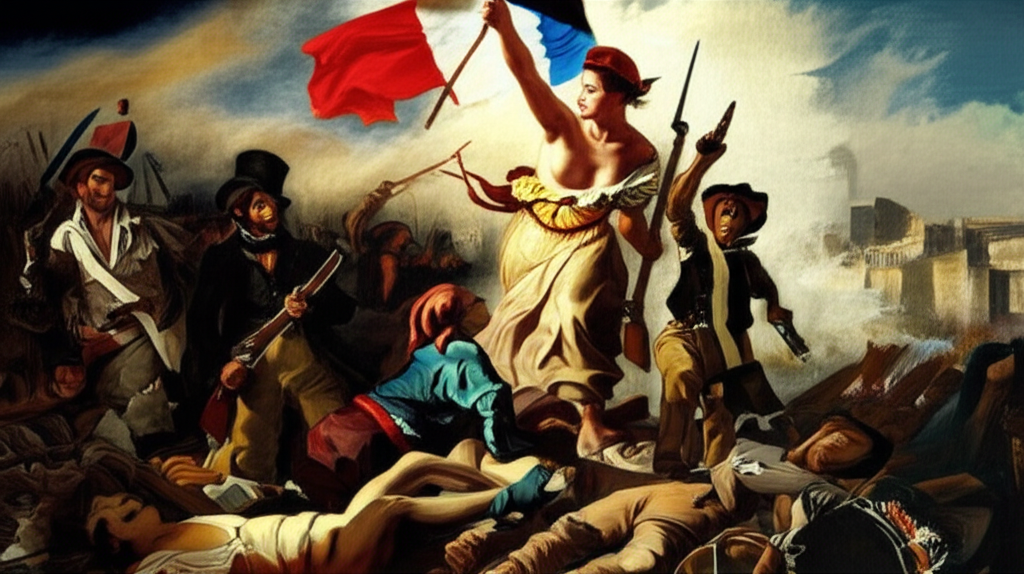
The Dynamics of Revolutionary Processes
The path of a revolution is rarely linear. It often involves distinct phases:
- Incubation: A period of growing discontent, intellectual ferment, and the articulation of grievances and alternative visions.
- Crisis: A triggering event or series of events that exposes the vulnerability of the existing Government and galvanizes popular opposition.
- Uprising: Widespread popular mobilization, often accompanied by violence, leading to the collapse of the old regime.
- Consolidation: The struggle to establish a new political order, often marked by internal conflicts, ideological purges, and the institutionalization of revolutionary ideals. This phase determines whether the initial promise of Change is realized or if new forms of tyranny emerge.
The success of a revolution is not merely in overthrowing the old Government, but in establishing a stable, legitimate, and improved political system that fulfills the aspirations of its participants. This often proves to be the most challenging aspect of post-revolutionary History.
The Enduring Legacy of Revolution
Revolutions are pivotal moments in human History, profoundly altering the course of nations and the lives of individuals. They remind us that political systems are not immutable and that the desire for justice, liberty, and self-Government can ignite transformative Change. While often brutal and disruptive, revolutions force societies to confront fundamental questions about power, legitimacy, and the ideal political order. By studying them, we gain deeper insights into the forces that shape our collective destiny and the perennial human quest for a better way of life.
📹 Related Video: KANT ON: What is Enlightenment?
Video by: The School of Life
💡 Want different videos? Search YouTube for: ""John Locke Two Treatises of Government explained""
📹 Related Video: KANT ON: What is Enlightenment?
Video by: The School of Life
💡 Want different videos? Search YouTube for: ""Hannah Arendt On Revolution summary""