

The Unfolding Tapestry of Power: Understanding Revolution as Political Change
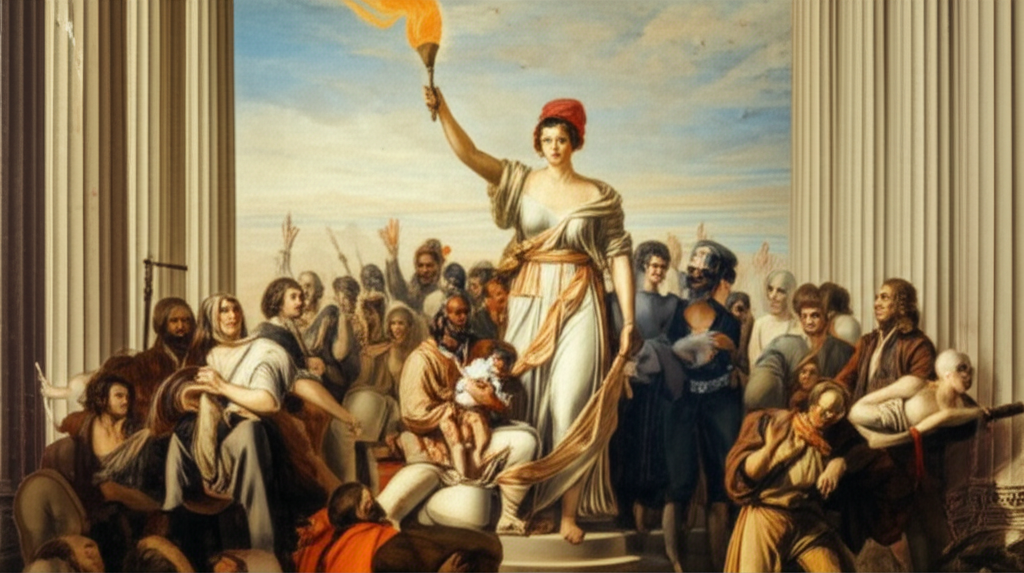
Revolution, a word that conjures images of upheaval and profound transformation, stands as one of the most potent forces in human history. Far more than mere rebellion or a change of leadership, a revolution signifies a fundamental, often rapid, and sometimes violent, change in the very fabric of a political system and its governing institutions. It is a seismic shift that redefines the relationship between the people and their government, challenging established norms and forging new societal blueprints. To truly grasp its essence, we must delve into the philosophical underpinnings and historical manifestations that make revolution a continuous subject of inquiry within political thought.
Defining the Storm: What is a Revolution?
At its core, a revolution represents a radical and transformative change in the political power structure. It is not simply a coup d'état, which might only replace one set of rulers with another without altering the underlying system. Instead, a revolution aims to dismantle and rebuild the existing order, seeking a fundamental reorientation of power, values, and social structures. The scope of such change is vast, impacting laws, economic systems, and the very identity of a nation.
- Systemic Transformation: Unlike minor reforms, revolutions target the entire political and often social system.
- Legitimacy Crisis: They arise from a deep-seated loss of faith in the existing government's legitimacy and its ability to address societal grievances.
- Popular Mobilization: While often led by elites, successful revolutions typically involve significant popular participation and support, signifying a collective demand for change.
Echoes from the Past: Philosophical Roots of Revolutionary Thought
The concept of political change and the potential for revolution has preoccupied philosophers for millennia, finding extensive treatment within the Great Books of the Western World. From ancient Greece to the Enlightenment and beyond, thinkers have grappled with the causes, justifications, and consequences of overthrowing established orders.
- Ancient Perspectives:
- Plato in his Republic explored the cyclical nature of governments, suggesting that even ideal states decay, leading to inevitable political transformations.
- Aristotle, in Politics, meticulously analyzed the causes of change and instability in various polities, identifying factors like economic inequality, shifts in the balance of power, and the pursuit of absolute rule as precursors to revolutionary upheaval.
- Enlightenment Thinkers:
- John Locke's concept of the social contract, articulated in his Two Treatises of Government, posited that government derives its legitimacy from the consent of the governed. When a government acts against the natural rights of its citizens (life, liberty, property), the people have a right, even a duty, to resist and institute a new one – a foundational idea for many modern revolutions.
- Jean-Jacques Rousseau, in The Social Contract, further developed ideas of popular sovereignty and the "general will," suggesting that a legitimate government must reflect the collective good of its citizens. Failure to do so could justify radical political change.
- Modern Interpretations:
- Karl Marx, drawing on a historical materialist perspective, viewed history as a series of class struggles culminating in socialist revolution. For Marx, economic forces and the inherent contradictions of capitalism were the primary drivers of revolutionary change, ultimately leading to the overthrow of the bourgeois state by the proletariat.
These diverse philosophical strands highlight that revolution is not merely an event but a complex process rooted in profound questions about justice, power, and the ideal structure of society.
The Anatomy of Upheaval: Mechanisms of Political Change
Understanding revolution requires more than just philosophical justification; it demands an examination of the practical mechanisms through which such radical change occurs. These mechanisms often involve a confluence of factors, both internal and external.
Key Elements Driving Revolutionary Change
- Deep-Seated Grievances: Widespread dissatisfaction stemming from economic hardship, political oppression, social injustice, or a perceived lack of representation.
- Weakening of State Authority: A government that is either unwilling or unable to address these grievances, often compounded by internal divisions, corruption, or military failures.
- Emergence of Alternative Ideologies: The development and popularization of new ideas, often championed by intellectuals, that offer a compelling vision for a different future and delegitimize the existing order.
- Mobilization of Mass Support: The ability of revolutionary leaders to organize and galvanize large segments of the population, transforming diffuse discontent into collective action.
- Catalytic Events: Specific incidents (e.g., a massacre, an economic crash, a famine) that act as a spark, igniting widespread protest and escalating tensions beyond the point of no return.
- External Factors: Foreign intervention, war, or the influence of revolutionary movements in neighboring countries can either hasten or hinder a domestic revolution.
The interplay of these elements often dictates the character and trajectory of a revolution, from its initial unrest to its more radical phases and eventual consolidation of a new government.
A Look Through History's Lens
History offers a rich tapestry of revolutions, each unique in its context but sharing common threads of profound political change. The American Revolution (1775-1783) sought independence and established a new republican government based on Enlightenment ideals. The French Revolution (1789-1799) radically transformed French society, challenging monarchical rule and introducing concepts of liberty, equality, and fraternity, albeit through tumultuous periods of violence and reaction. The Russian Revolution (1917) fundamentally reshaped global politics, replacing an autocratic empire with a communist state, profoundly influencing the 20th century.
These examples underscore that revolutions are rarely clean or predictable. They are often messy, involving intense ideological struggles, civil conflict, and unforeseen consequences. Yet, they remain powerful testaments to humanity's enduring quest for a more just and responsive government.
Further Philosophical Exploration
📹 Related Video: What is Philosophy?
Video by: The School of Life
💡 Want different videos? Search YouTube for: ""political philosophy of revolution great books""
📹 Related Video: PLATO ON: The Allegory of the Cave
Video by: The School of Life
💡 Want different videos? Search YouTube for: ""causes and theories of political change""
Conclusion
Understanding revolution as political change is crucial for appreciating the dynamic and often volatile nature of human societies. It forces us to confront fundamental questions about power, legitimacy, and the rights of the governed. From the ancient insights of Plato and Aristotle to the Enlightenment theories of Locke and Rousseau, and the historical analyses of Marx, philosophers have consistently sought to explain why and how societies undergo such profound transformations. Revolutions, though often born of violence and disruption, ultimately represent a powerful assertion of the human will to reshape its government and forge a new path in history, constantly pushing the boundaries of what is politically possible.