

Tyranny and the Concentration of Power: A Perilous Path
The history of political thought, as chronicled in the Great Books of the Western World, offers a stark and enduring warning: the concentration of power is the most direct route to tyranny. From the ancient Greek city-states to modern nation-states, philosophers have meticulously dissected how the noble aims of Government can be perverted when authority is consolidated into the hands of a few, or even one, leading to the suppression of liberty and the erosion of justice. This article explores the fundamental nature of tyranny, the mechanisms by which power becomes dangerously concentrated, and the historical philosophical insights into this perpetual threat to human flourishing.
Defining Tyranny: A Perversion of Rule
At its core, tyranny represents a form of rule where power is exercised for the sole benefit of the ruler or a small, self-serving group, rather than for the common good. Aristotle, in his Politics, distinguishes tyranny as a deviant form of monarchy, where the monarch rules despotically, ignoring the law and the welfare of the governed. Similarly, Plato, in The Republic, paints the tyrannical soul as one consumed by insatiable desires, projecting this inner chaos onto the State through oppressive rule.
Key characteristics of a tyrannical regime often include:
- Rule by Fear: The tyrant maintains control through intimidation and the suppression of dissent.
- Disregard for Law: Laws are either non-existent, arbitrarily enforced, or merely instruments of the ruler's will.
- Self-Interest over Public Good: Policies and decisions serve the private interests of the ruler or ruling clique.
- Suppression of Liberty: Individual freedoms, speech, and assembly are severely restricted.
- Lack of Accountability: The ruler is above the law and beyond public scrutiny.
The Mechanisms of Power Concentration
The journey towards tyranny is almost invariably paved by the gradual or sudden concentration of power. This can manifest through various means:
- Erosion of Checks and Balances: When institutions designed to limit executive power (e.g., judiciary, legislature) are weakened or co-opted, power naturally flows to the dominant branch or individual.
- Control of Information: Limiting access to diverse news, propagating propaganda, and suppressing critical voices allows the ruling entity to shape public perception and consolidate ideological control.
- Economic Monopoly: Control over vital economic resources or industries can grant immense influence and coercive power, often leading to an Oligarchy where wealth and political power are inextricably linked.
- Militarization of the State: When the military or security apparatus becomes an instrument of the ruler rather than a protector of the populace, it becomes a powerful tool for enforcing absolute authority.
- Emergency Powers: Legitimate crises can be exploited to grant extraordinary powers to the executive, which are then retained or expanded once the crisis has passed.
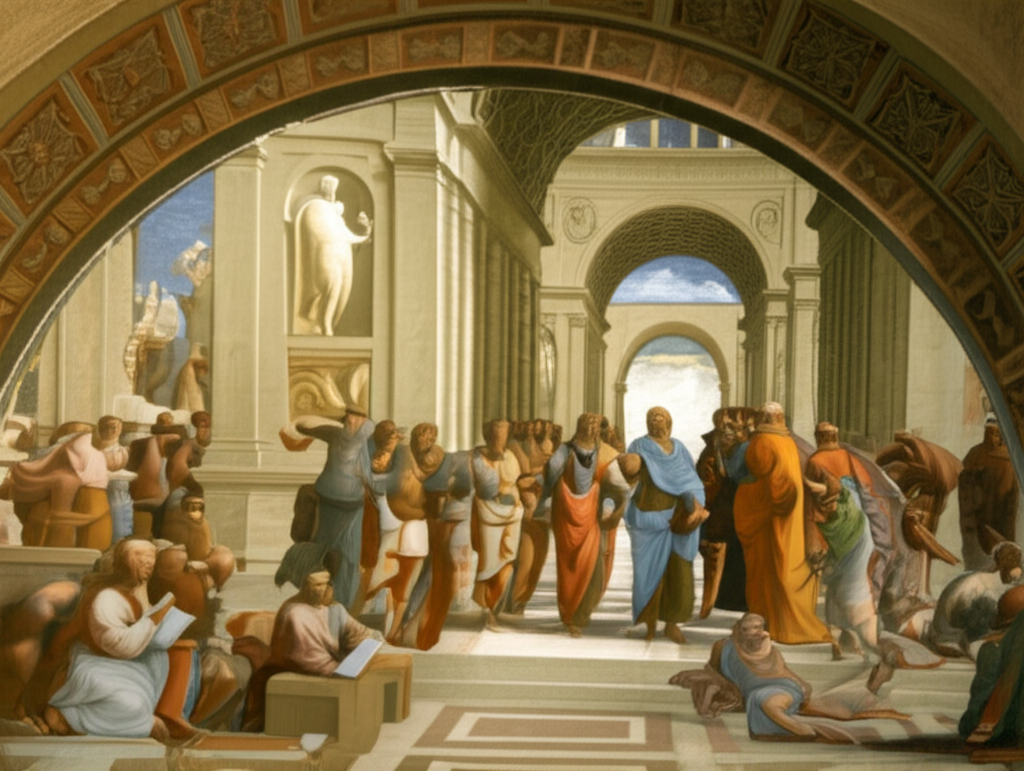
Oligarchy: A Stepping Stone to Tyranny
The concept of Oligarchy is crucial in understanding the path to tyranny. An oligarchy is a form of government where power rests in the hands of a small number of people, typically those distinguished by royalty, wealth, family ties, military control, or religious hegemony. While not inherently tyrannical, oligarchies often precede or enable tyranny.
- Self-Perpetuation: Oligarchies tend to be self-perpetuating, prioritizing the interests of the ruling class over others.
- Exclusion: They exclude the majority of the population from meaningful political participation.
- Internal Strife: Competition within the oligarchy can lead to one faction gaining absolute dominance, thereby transforming the oligarchy into a tyranny. Machiavelli, in The Prince, implicitly details how a cunning individual can exploit internal divisions to seize absolute power.
When an oligarchy fails to address the needs of the wider populace, or when one powerful individual within it manages to subdue the rest, the stage is set for a singular tyrant to emerge, often promising order or prosperity but ultimately delivering oppression.
The Role of the State in Preventing or Permitting Tyranny
The State, as the ultimate political authority within a defined territory, holds immense power. Its very structure and the principles upon which its Government operates are critical in determining whether it serves as a bulwark against tyranny or becomes its instrument.
The philosophers of the Great Books—from Locke's emphasis on natural rights and limited government to Montesquieu's advocacy for the separation of powers—all grappled with the fundamental question: How can the necessary power of the State be harnessed for the common good without succumbing to the temptation of tyrannical excess? Their insights underscore that the design of political institutions, the active vigilance of citizens, and a commitment to justice are perpetual requirements for safeguarding liberty against the corrosive effects of concentrated power. The lessons remain as pertinent today as they were millennia ago.
YouTube Video Suggestions:
-
📹 Related Video: PLATO ON: The Allegory of the Cave
Video by: The School of Life
💡 Want different videos? Search YouTube for: "Plato's Republic Tyranny Explained"
-
📹 Related Video: ARISTOTLE ON: The Nicomachean Ethics
Video by: The School of Life
💡 Want different videos? Search YouTube for: "Aristotle Politics Forms of Government Oligarchy"