

The Shadow of Power: Unpacking Tyranny and the Abuse of Government
The specter of tyranny has haunted political thought since antiquity, representing the most profound perversion of government and the gravest threat to human flourishing. At its core, tyranny is not merely harsh rule, but the exercise of power without legitimate bounds, where the interests of the ruler supersede the common good, and law becomes an instrument of oppression rather than justice. This article delves into the philosophical underpinnings of tyrannical governance, exploring its nature, its insidious rise, and the critical role of virtue and vice in shaping the fate of nations.
The Philosophical Roots of Tyranny: A Classical Perspective
Our understanding of tyranny begins with the foundational texts of Western philosophy. The great thinkers, observing the tumultuous cycles of states, meticulously documented the pathways to and from despotic rule.
Plato's Republic and the Degeneration of States:
In Plato's Republic, we witness a compelling psychological and political analysis of tyranny. Socrates argues that the tyrannical soul, driven by insatiable desires and irrational impulses, mirrors the tyrannical state. The ideal state, ruled by philosopher kings, progressively degenerates through timocracy, oligarchy, democracy, and finally, into tyranny. This descent is marked by:
- Erosion of Wisdom: Reason is supplanted by ambition, wealth, and ultimately, unbridled license.
- Concentration of Power: Power moves from the many to the few, then to a single individual who exploits the chaos of excessive freedom.
- Fear and Control: The tyrant maintains power through fear, surveillance, and the elimination of dissent, creating a state devoid of true freedom and justice.
Aristotle's Politics: The Perversion of Good Government:
Aristotle, in his Politics, offers a more empirical classification of constitutions, identifying tyranny as the perversion of monarchy. While a king rules in the interest of all, a tyrant rules solely for his own benefit. Aristotle outlines the characteristics of tyranny:
- Self-Interest: The tyrant governs for personal gain, not the welfare of the citizens.
- Arbitrary Rule: Law is disregarded or manipulated; decisions are made based on whim rather than established principles.
- Suspicion and Fear: The tyrant distrusts all, even friends, and relies on mercenaries rather than loyal citizens.
| Form of Government (Good) | Perversion (Tyranny/Abuse) | Ruling Principle |
|---|---|---|
| Monarchy (Rule by One) | Tyranny | Self-interest |
| Aristocracy (Rule by Few) | Oligarchy | Wealth |
| Polity (Rule by Many) | Democracy (Extreme) | Mob Rule |
The Mechanics of Abusive Government
The abuse of government power, leading to tyranny, rarely occurs overnight. It's often a gradual process, a slow erosion of checks and balances, and a subversion of institutions designed to protect liberty.
Key Mechanisms of Abuse:
- Centralization of Power: Consolidating authority in a single branch or individual, dismantling separation of powers (as advocated by Montesquieu in The Spirit of the Laws).
- Suppression of Dissent: Silencing opposition through censorship, intimidation, or violence.
- Manipulation of Law: Using the legal framework to legitimize unjust actions or to target political rivals.
- Control of Information: Spreading propaganda and limiting access to independent sources of news.
- Erosion of Rights: Systematically diminishing fundamental freedoms such as speech, assembly, and due process.
- Militarization of the State: Relying on force to maintain order rather than consent, often employing a secret police or loyal military units.
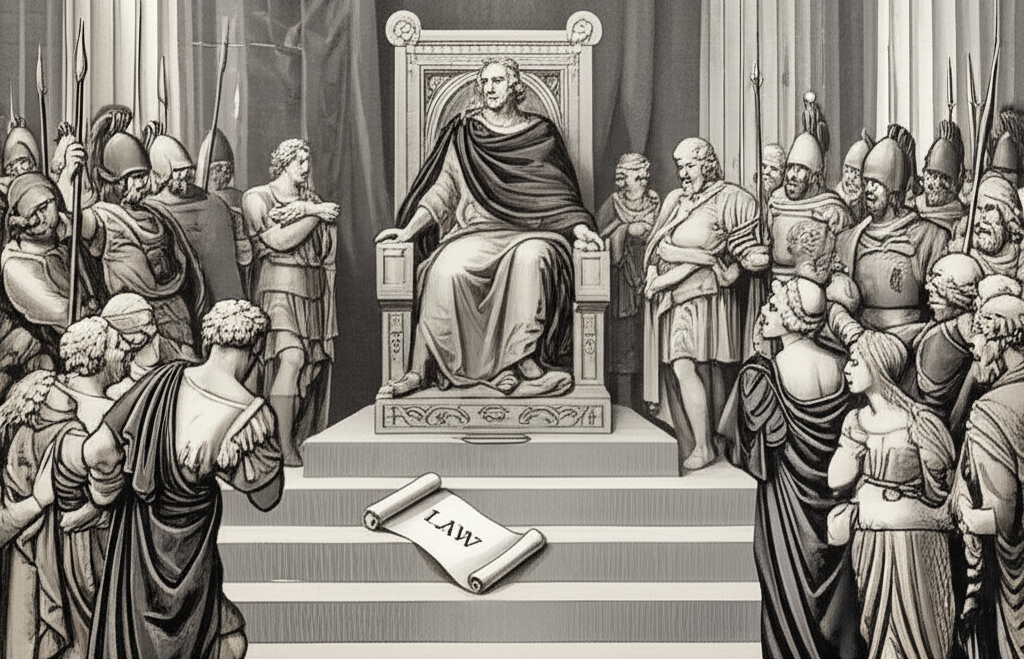
Virtue and Vice: The Moral Compass of Governance
The character of those in power, and indeed of the citizenry, plays a pivotal role in the rise or fall of just government. The philosophical tradition deeply intertwines political health with moral integrity.
The Tyrant's Vices:
A tyrant is almost invariably characterized by a constellation of vices:
- Hubris: Excessive pride and arrogance, leading to a belief in one's own infallibility and right to absolute power.
- Avarice: Insatiable greed for wealth and material possessions, often leading to corruption and exploitation of the populace.
- Cruelty: A willingness to inflict suffering and fear to maintain control.
- Deceit: The use of lies and manipulation to mislead citizens and rivals.
- Cowardice: Despite outward displays of strength, tyrants often fear their own people and potential challengers.
The Citizen's Virtues as a Bulwark:
Conversely, a robust defense against tyranny relies on the cultivation of specific virtues within the citizenry and among those who serve the state:
- Civic Courage: The willingness to speak truth to power and resist injustice, even at personal risk.
- Justice: A commitment to fairness, equality, and the rule of law.
- Prudence: The wisdom to discern sound judgment and the common good from self-serving rhetoric.
- Temperance: Moderation in desires, preventing the susceptibility to demagoguery and corruption.
- Vigilance: Constant awareness of the actions of government and a readiness to defend liberties.
John Locke, in his Two Treatises of Government, argues that when a government becomes tyrannical by acting against the trust placed in it by the people, the people retain the right to resist. This right is predicated on the idea that political power is derived from the consent of the governed, and a ruler who abuses this trust effectively puts themselves in a state of war with their own people.
Safeguarding Against Tyranny: Lessons from History
The recurring threat of tyrannical abuse has led societies to devise various mechanisms to protect liberty and ensure accountable government.
- Constitutionalism: Establishing fundamental laws and principles that limit governmental power and protect individual rights.
- Separation of Powers: Dividing governmental authority into distinct branches (legislative, executive, judicial) to create checks and balances.
- Rule of Law: Ensuring that all individuals, including those in power, are subject to the same laws, fairly and consistently applied.
- Independent Judiciary: A court system free from political interference, capable of impartially interpreting law and upholding justice.
- Free Press and Speech: Allowing open criticism and debate as a vital mechanism for holding power accountable.
- Active Citizenry: An engaged populace that participates in political life, monitors government actions, and demands accountability.
The study of tyranny is not merely an academic exercise; it is a vital endeavor for understanding the fragility of freedom and the enduring human struggle against arbitrary power. By examining the insights of the Great Books, we gain not only a historical perspective but also timeless wisdom applicable to the challenges of governance in any age. The eternal vigilance of a virtuous citizenry, coupled with robust institutional safeguards, remains our best defense against the abuse of government and the dark shadow of tyranny.
YouTube Video Suggestions:
-
📹 Related Video: PLATO ON: The Allegory of the Cave
Video by: The School of Life
💡 Want different videos? Search YouTube for: "Plato Republic Tyranny Explained"
2. ## 📹 Related Video: ARISTOTLE ON: The Nicomachean Ethics
Video by: The School of Life
💡 Want different videos? Search YouTube for: "Aristotle Politics Forms of Government"