

The Shadow of Power: Unpacking Tyranny and the Abuse of Government
A Perennial Philosophical Challenge
The question of power, its legitimate exercise, and its terrifying perversion into tyranny, has haunted human thought since antiquity. From the nascent city-states of ancient Greece to the complex nations of today, societies grapple with the inherent tension between the necessity of government for order and the ever-present danger of that very government turning against its people. This article delves into the philosophical underpinnings of tyranny and governmental abuse, drawing insights from the Great Books of the Western World to explore how the erosion of virtue and vice in leadership, the subversion of law, and the unchecked expansion of government power pave the path to despotism. We will examine the conceptual frameworks that distinguish just rule from arbitrary oppression, and consider the enduring lessons for safeguarding liberty.
The Anatomy of Tyranny: From Plato to Locke
What exactly constitutes tyranny? For many ancient thinkers, it was a perverted form of government, a deviation from the ideal. Plato, in his Republic, paints the tyrant as the ultimate embodiment of injustice, a soul utterly enslaved by his own desires, who in turn enslaves his people. He describes the tyrannical soul as one consumed by a "master passion," driving him to commit any atrocity to maintain power, becoming a "wolf" to his own citizens.
Aristotle, in his Politics, categorizes tyranny as one of the three "perverted" forms of rule, alongside oligarchy and democracy (when it becomes mob rule). He defines it as "monarchy which aims at the interest of the monarch only," rather than the common good. This distinction is crucial:
- Just Government: Aims at the common good (monarchy, aristocracy, polity).
- Perverted Government: Aims at the private interest of the ruler(s) (tyranny, oligarchy, democracy).
Centuries later, John Locke, in his Two Treatises of Government, shifted the focus from the ruler's character to the exercise of power. For Locke, tyranny is "the exercise of power beyond right," where a ruler, "however intitled, makes not the law, but his will, the rule." This introduces the critical role of law as a bulwark against arbitrary power. When the law becomes a mere instrument of the ruler's caprice, rather than a shared framework for justice, tyranny takes root.
Virtue, Vice, and the Character of the Ruler
The character of those who wield power is inextricably linked to the potential for abuse. The Great Books consistently highlight the profound impact of a ruler's moral compass.
The Spectrum of Leadership:
| Aspect | Virtuous Leader (e.g., Plato's Philosopher-King) | Vicious Leader (The Tyrant) |
|---|---|---|
| Motivation | Common good, justice, wisdom | Self-interest, personal gain, insatiable desires |
| Rule By | Reason, Law, Consent | Will, Force, Fear |
| Relationship to Citizens | Guardian, Servant, Educator | Master, Exploiter, Oppressor |
| Outcome | Stability, flourishing, liberty | Instability, suffering, slavery |
Machiavelli, in The Prince, offers a starkly pragmatic, though often misunderstood, perspective. While not advocating for tyranny, he famously suggests that a prince must learn "how not to be good" when necessary, prioritizing the maintenance of the state above individual moral purity. Yet, even Machiavelli acknowledges the dangers of being hated, suggesting that excessive cruelty can undermine a ruler's position. The abuse of government power, in Machiavelli's view, might secure power temporarily, but often at the cost of long-term stability and legitimacy.
The Subversion of Law: The Tyrant's Tool
The law is meant to be a protective shield for the governed, defining rights, duties, and the legitimate scope of government action. However, tyrants frequently manipulate or outright disregard it.
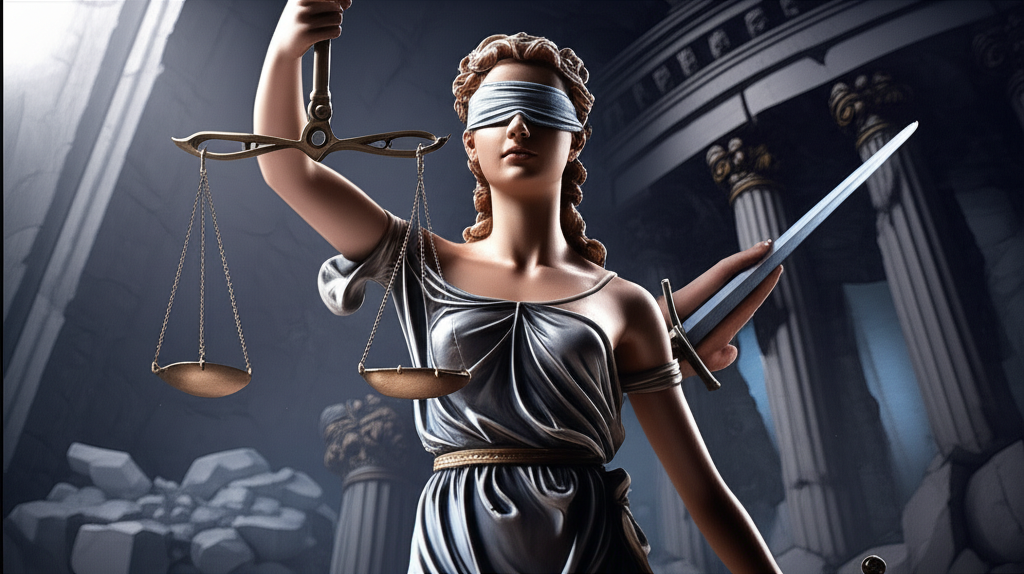
Consider the Roman Republic's struggle with figures like Sulla or the eventual rise of emperors, where legal norms were stretched or broken to consolidate personal power. Cicero, a staunch defender of republican ideals, emphasized the importance of lex (law) as the embodiment of reason and the foundation of a free society. When the rule of law is replaced by the rule of men – particularly men driven by vice – the path to oppression is clear.
Key ways law is subverted:
- Arbitrary Decrees: Rulers issue commands without legal basis or due process.
- Selective Enforcement: Laws are applied unequally, punishing opponents while excusing allies.
- Retroactive Legislation: Laws are changed to criminalize past actions.
- Ignoring Constitutional Limits: The fundamental framework of government is disregarded.
This subversion transforms the government from an instrument of justice into a weapon of control, where the very institutions designed to protect citizens become tools of their subjugation.
Safeguarding Against Abuse: Enduring Lessons
The Great Books offer not just diagnoses of tyranny, but also prescriptions for its prevention.
- Constitutionalism and Checks and Balances: The idea of limited government and distributed power, articulated by thinkers like Montesquieu in The Spirit of the Laws, is crucial. By dividing power among different branches, each can check the potential overreach of the others, making it harder for any single individual or group to amass absolute authority.
- Active Citizenship and Public Virtue: A vigilant citizenry, educated in virtue, willing to participate in public life, and capable of discerning just rule from oppressive government, is a powerful deterrent. Aristotle believed that a good constitution requires good citizens.
- The Primacy of Law: Upholding the supremacy of law over individual will, ensuring its fairness, transparency, and consistent application, is fundamental. This means resisting attempts to politicize the judiciary or undermine legal processes.
- Moral Education: Fostering virtue in both leaders and citizens, emphasizing temperance, justice, and prudence, can create a societal ethos less susceptible to the allure of absolute power or the complacency that allows it to flourish.
Conclusion: An Ongoing Vigilance
The study of tyranny and the abuse of government is not merely an academic exercise; it is a vital act of self-preservation for any free society. The lessons from the Great Books remind us that the seeds of despotism are often sown subtly, through the erosion of virtue, the perversion of law, and the unchecked expansion of power. Our continuous engagement with these philosophical debates, understanding the delicate balance between order and liberty, remains our best defense against the enduring shadow of oppression.
YouTube Video Suggestions:
- YouTube: "Plato's Republic Tyranny Explained"
- YouTube: "John Locke Government Abuse Rule of Law"
📹 Related Video: What is Philosophy?
Video by: The School of Life
💡 Want different videos? Search YouTube for: "Tyranny and the Abuse of Government philosophy"